

REFORM TALKS with Dr. Tope Fasua
In ‘A Compendium Of Reforms, Successes And Achievements of The Tinubu Administration’ by Dr. Tope Fasua, Special Adviser To The President On Economic Affairs Through The Office Of The Vice President, in which he sheds some light on the May 2025 Achievement of President Bola Ahmed Tinubu, the Special Adviser pens a note which runs thus:
A Note on The Compendium
The first two years of President Bola Ahmed Tinubu’s leadership could rightly be tagged as the Years of the Reforms. It is a truism that after sowing, an effluxion of time is necessary to be able to reap results. The history of economies could also be written around the many challenges that we all go through, and it takes valiance, perseverance, and great vision to be able to seize the gauntlet and determine to make a profound difference. This is what Mr. President, leading a team of hardworking, focused, and determined troop has determined to do. Indeed, challenges were inherited. The assets and liabilities culminating from all the governments that Nigeria has had over decades, and even in pre-colonial times, were confidently assumed by the current administration, and under the guidance of Mr. President, we have forged ahead, remaining forthright and astute to write a different, positive story from the past, away from blame-trading, but pressing into service all that we have in terms of intellect, optimal use of time, human capital and resources. And results are beginning to show – lasting, sustainable results. A number of those results have hereby been captured, and presented in graphic terms, emphasizing the numbers. We believe such a document is important to have as evidence of the sacrifice of the last two years, and as a marketing tool in Nigeria’s continued drive for domestic and foreign direct investment, as well as for the maintenance of a positive, progressive trajectory and image. The reforms have brought about the empowerment of subnational governments where the lives of most Nigerians will be touched, going forward. The reforms have also led to improved macroeconomic performance like the positive Balance of Payment, accretion to Net Foreign Exchange Reserves, and all-time high performance in non-oil Exports. Nigeria’s Petroleum and Gas sector has also transformed – from a past scenario where Nigeria could not refine a single barrel of crude oil at some point, to a current reality where Nigerian refineries are able to export refined products to some of the most industrialized nations on Earth.
Mr. President has assured that the next two years will be about delivery and about ensuring that the dividends of critical reforms are positively felt by businesses, households and individuals alike. The next few months will be about the commissioning of projects after projects which transform the landscape of Nigeria and upscales the standards of living of Nigerians from all works of life. Reforms will be consolidated and protected so that Nigeria can maximize the benefits therefrom.
The Critical Reforms
We have also inserted a brief about the critical reforms that have define President Bola Ahmed Tinubu’s administration, with a view to continue clarifying their importance and centrality to the evolution of Nigeria from a situation of mediocre growth and underdevelopment, to a bright new reality of uplifted human capital, attractiveness for investment, and an elevation of per capita incomes and standards of living for all Nigerians.
The reforms are as follows:
Oil Subsidy Removal
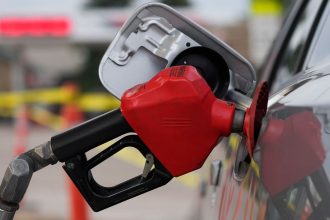
Mr. President declared on May 29, 2023, right at the grounds of his inauguration, that petroleum subsidies – which had in the past consumed as much as a quarter of Nigeria’s annual budgets, was gone. From his accountant’s perspective, he needed to be sure of how much exactly was the cash flow that Nigeria could work with, and to also get rid of the intractable subsidy frauds that has plagued the land for decades. Between these reforms and that of the Naira rebalancing, 5% of our Gross Domestic Product (GDP) disappeared into the pockets of those who were powerful enough to game the system. The oil sector reforms have also empowered local players in the sector, and recapacitated our local refineries, some of which now trade internationally, gaining global respect. Also, the odd $25 billion spent importing refined fuels in recent years has reduced considerably, thereby leading to relative stability in our local currency, and to considerable accretion of Foreign Reserves. Net Foreign Exchange Reserves grew from $3.99 billion to $23 billion between May 2023 and December 2024.
Removal Of DollarNaira Arbitrage
There was a period in time when a 75% arbitrage existed between the official and unofficial rates of the Naira vis-à-vis the US Dollar. And it was possible to take advantage of that arbitrage with the right ‘connections’. With the abolition of a multiple exchange rate regime, rates have converged, and the arbitrage advantage has disappeared. More importantly, this reform has released considerable Naira liquidity to the State and Local Governments, where many now see thrice the amount of Naira they used to have every month, and many have been able to double their Internally Generated Revenues (IGRs).Stoppage Of Arbitrary Ways-And-Means Advances
Not only has the practice of arbitrary overdrafts by the Central Bank of Nigeria to the Federal Government been halted, but over N30 trillion inherited in this basket has been resolved, through paydowns and restructuring/securitization. This is quite remarkable because most other countries – including advanced ones – have been unable to resolve the overdrafts they incurred stemming from the last global recession precipitated by COVID-19. Beyond resolving this overdraft, Nigeria has also paid off the principal of $3.4 billion emergency facility advanced by the International Monetary Fund (IMF), in record time, all the while accreting significantly more to net foreign reserves.
Declaration Of War Against Food Insecurity
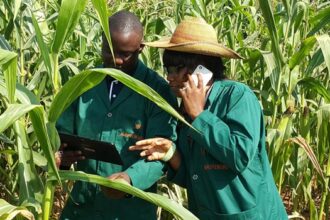
Mr. President also declared a war against food insecurity. This war has been largely successful and this fact is being borne out by decreasing food prices, and the smoothening out of seasonal volatilities. The drop in the prices of staples have also started to contribute to softer inflation numbers as Nigeria looks to achieve inflation figures of 15% or less by December 2025. Over 160,000 hectares of additional cultivation has been done in staples like Wheat and Rice, encouraged and driven by the Ministry of Agriculture and Food Security, and initiatives driven by the First Lady, Senator Mrs. Oluremi Tinubu have also contributed to urban farming, increasing Nigeria’s stock of food.
To Be Continued In Next Edition