By Anita Dennis
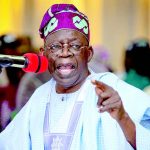
Nigeria’s push to stabilise public finances and keep the 2025 budget on track gained fresh momentum recently, after the House of Representatives approved President Bola Tinubu’s request to borrow N1.15 trillion from the domestic debt market.
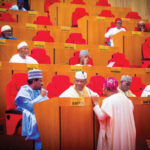
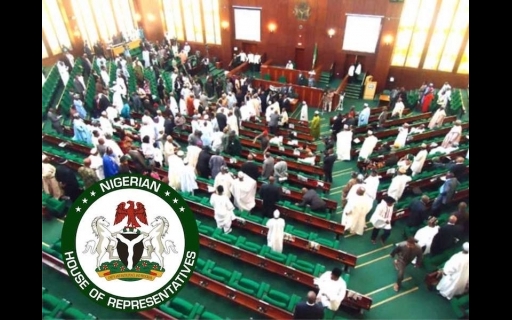
The approval, which followed the adoption of a report by the House Committee on Aids, Loans and Debt Management led by Hon. Abubakar Hassan Nalaraba, came during a plenary session presided over by Deputy Speaker Benjamin Kalu. Lawmakers agreed that the borrowing forms a critical part of the Domestic Debt Market Programme designed to bridge the widening deficit in the 2025 fiscal plan.
Their decision marked the latest step in a broader borrowing framework already set in motion by the executive and reviewed earlier in the Senate. The House explained that its approval aligns with an upwardly revised budget size of N59.99 trillion – an increase of N5.25 trillion from the original proposal – making additional financing inevitable to maintain fiscal balance.
A Strategy Rooted in Continuity and Financial Discipline
This House approval dovetails with a series of fiscal moves already unfolding at the Senate, where President Tinubu’s strategic financing requests have been examined with speed. Only days earlier, Senate President Godswill Akpabio read a presidential letter seeking the same N1.15 trillion domestic borrowing to close the 2025 budget gap – reinforcing the administration’s argument that the funds are essential to transition critical projects from document to delivery.
Sen. Akpabio referred the request to the Senate Committee on Local and Foreign Debt with a directive to return its report within a week. The urgency highlighted the government’s intention to prevent delays in executing the 2025 fiscal programme, particularly at a time of global economic headwinds.
Before this, the Senate had already approved a separate external borrowing plan totalling $2.847 billion, including a $500 million debut Sovereign Sukuk to expand infrastructure funding nationwide. The Senate Committee on Local and Foreign Debts, chaired by Senator Wamakko Magatarkada Aliyu, clarified that $2.347 billion would be sourced from the international capital market, while the Sukuk issue would anchor capital projects across key sectors.
This layered financing structure mirrors the federal government’s approach: blending domestic and external loans to avoid over-reliance on any single market – particularly vital at a moment when Nigeria’s total public debt sits above N97 trillion.
Why Lawmakers Say the Borrowing Is Necessary
Despite public concerns about rising debt, government officials and lawmakers have remained consistent in their justification. For them, borrowing is not the problem – borrowing without focus is. The Tinubu administration maintains that well-targeted loans remain one of the most effective tools for stimulating economic activity, maintaining investor confidence, and ensuring fiscal stability.
Senator Sani Musa, chair of the Senate Committee on Finance, warned that failing to approve these borrowings could slow or even stall implementation of the 2025 Appropriation Act. Senator Adetokunbo Abiru, who heads the Banking and Financial Institutions Committee, stressed that the loans are not new additions but part of the deficit-financing plan already captured in the Appropriation Act.
He added that the refinancing of a $1.12 billion Eurobond maturing in November 2025 is essential to avoid default – an event that would harm Nigeria’s credit profile.
Senator Adams Oshiomhole, chair of the Senate Committee on Interior, offered broader context. Loans tied to infrastructure, job creation, and productive sectors, he argued, generate economic returns strong enough to justify their cost. What matters is structure, purpose, and execution – parameters he insists the Tinubu administration is adhering to.
House Extends Mandate to External Borrowing
Alongside the domestic borrowing approval, the House also endorsed fresh external financing of $2.35 billion through Eurobonds, syndicated loans, bridge financing, or direct borrowing. These funds, lawmakers said, are required to support revenue shortfalls, finance core development projects, and maintain the country’s credit stability.
With both the House and Senate moving at a similar pace on multiple loan requests, a clear financial pattern is emerging: the federal government is consolidating a multi-pronged funding strategy to keep the 2025 financial framework operational despite rising obligations and a tightening global market.
A Deliberate Fiscal Reset Ahead of 2025
Viewed together, the efforts by both chambers of the National Assembly reveal a coordinated push to strengthen Nigeria’s fiscal base before the new financial year begins. The approvals are not isolated actions but part of a calibrated plan to insulate the economy from global volatility and domestic revenue pressure.
For the Tinubu administration, securing these borrowings is not merely an accounting exercise – it’s a signal of continuity, stability, and commitment to delivering the projects Nigerians expect in 2025.
With the House’s approval now in place and the Senate’s review window closing fast, Nigeria’s fiscal preparations for 2025 have entered a decisive phase – anchored on the belief that targeted financing, prudently managed, remains essential to sustaining national development.