
By Ahmed Ahmed
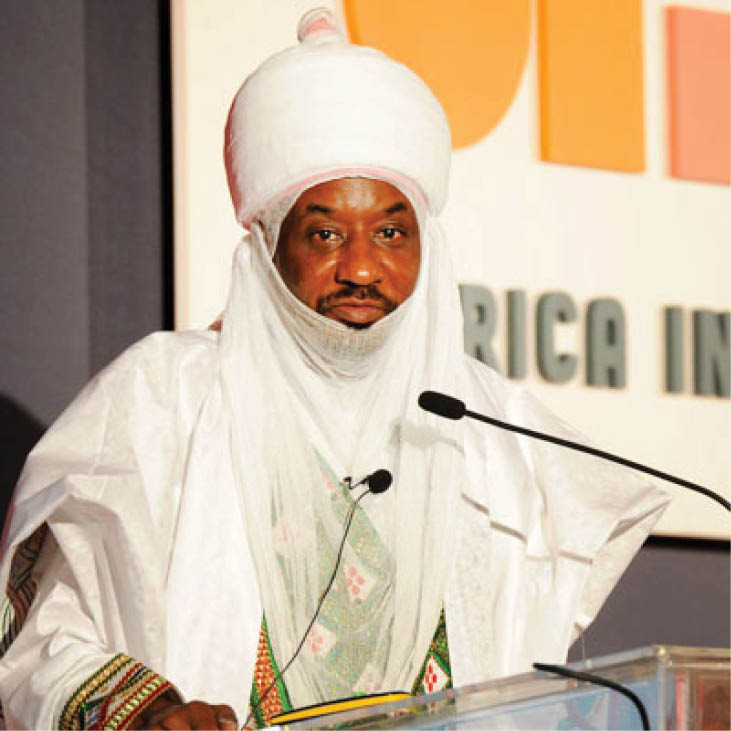
The Emir of Kano, Muhammadu Sanusi II, has raised fresh concerns over Nigeria’s fiscal direction, warning that continued borrowing following the removal of fuel subsidies risks undermining the credibility and long-term gains of the federal government’s economic reform agenda.
Speaking at the 5th annual lecture organised by TheNiche in Lagos, the former Governor of the Central Bank of Nigeria (CBN) questioned what he described as contradictions in the country’s fiscal management, arguing that the expected financial relief from ending subsidy payments should have translated into lower borrowing and more visible improvements in public welfare.
His intervention comes at a time of renewed debate over the President Bola Ahmed Tinubu administration’s debt strategy, particularly following the President’s request to the Senate for approval of a $516 million external loan to finance sections of the proposed Sokoto–Badagry Superhighway.
Addressing participants at the event, Emir Sanusi said the logic behind subsidy removal was to free up substantial fiscal resources for national development and reduce pressure on public finances.
He questioned why, despite this policy shift, the government continues to seek fresh loans.
“We’ve removed the subsidy. We’re not spending it. What we should not see is fiscal contradictions. You cannot remove the subsidy and continue borrowing. If you’re not paying the subsidy and you’ve got the money, why are we still borrowing and borrowing? What are we borrowing for?” he asked.
The remarks strike at the heart of growing public concerns over whether the economic pain associated with reforms is being matched by prudent fiscal discipline.
The removal of fuel subsidies and the liberalisation of the foreign exchange market were among the administration’s earliest and most consequential policy decisions.
Both measures triggered significant economic adjustments, including higher living costs and inflationary pressure, but were defended by government officials as necessary structural corrections.
Emir Sanusi, who has long advocated market-based reforms, reiterated his support for the policy direction.
He maintained that Nigeria’s past dependence on fuel subsidies and artificial exchange rate controls had created distortions that made eventual adjustment unavoidable.
“I have always said the subsidy regime was unsustainable. We cannot continue exporting jobs to foreign refineries when we are an oil-producing country and not refining our own products,” he said.
He pointed to recent gains in domestic refining as evidence that reform can yield strategic benefits.
“Today we have a situation where we have our own domestic refinery, we’re not importing petroleum products, we’re even exporting to Europe, and this is very good for the economy,” he added.
Yet, despite acknowledging these gains, Sanusi argued that poor sequencing and weak policy coordination have diluted the effectiveness of the reforms.
He particularly criticised the simultaneous removal of subsidies and exchange rate liberalisation without sufficiently tightening monetary conditions beforehand.
According to him, this sequencing intensified pressure on the naira and contributed to the sharp currency volatility witnessed during the transition period.
“Artificial exchange rates, especially when you’re printing money, cannot work. There was going to be devaluation,” he said.
He stated that timing was crucial to managing the transition.
“If you decide to remove subsidies and liberalise exchange rates in an environment of very loose monetary conditions, before you tighten the money supply, the naira drops into a bottomless pit. That was a timing issue.”
Sanusi argued that monetary tightening should have either preceded or accompanied exchange rate liberalisation to cushion the economy from excessive disruption.
On debt sustainability, the former CBN governor warned that Nigeria’s fiscal condition remains precarious.
“When you get to a point where 100 percent of your revenue goes to debt service, you cannot continue. Where is the money going to come from?” he asked.
His comments echo broader concerns from economic analysts who have repeatedly warned that debt-financed infrastructure expansion must be carefully balanced against fiscal sustainability.
Emir Sanusi also used the platform to reiterate his long-standing views on governance and public service ethics.
“Public service is an honour. If you want to make money, go into business,” he said, citing industrialist Aliko Dangote as an example of wealth creation through private enterprise rather than public office.
Also speaking at the lecture, Abia State Governor Alex Otti broadened the discussion by linking Nigeria’s economic difficulties to decades of poor leadership and weak civic engagement.
According to Otti, the country’s rising poverty, unemployment and institutional decline are the cumulative consequences of governance failures spanning several decades.
“If you have behaved badly for over 60 years, it will take you time to correct yourself,” he said.
He urged Nigerians to become more active participants in the political process, warning that disengagement only reinforces poor governance.
Looking ahead to the 2027 elections, Otti framed the stakes in stark terms.
“Poverty and prosperity, employment and joblessness, security and anxiety, prudence and rascality will all be on the ballot in 2027.”