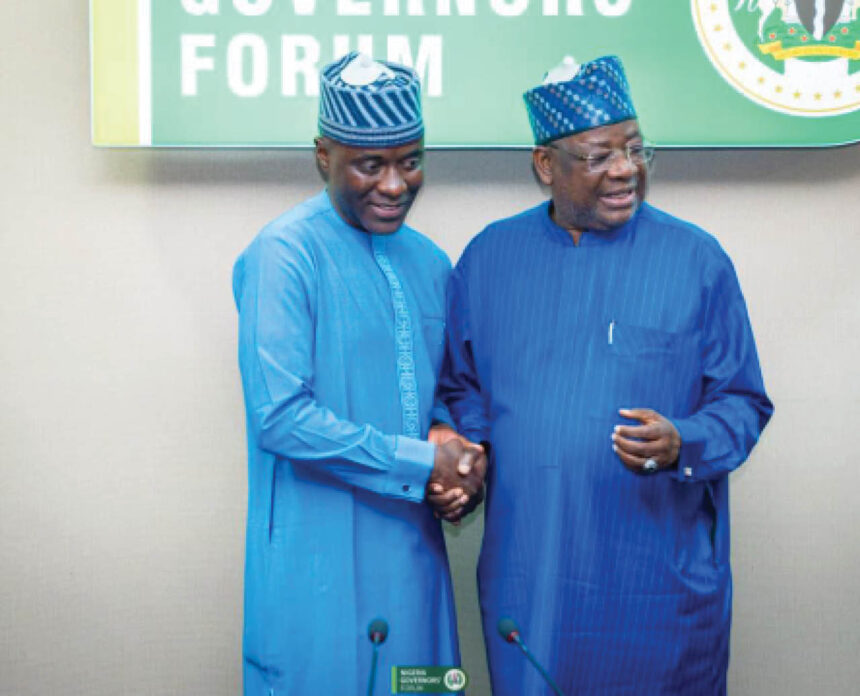
-
With NCC Reiterating Commitment To Broadband Expansion
Nigeria’s effort to reduce structural constraints to broadband expansion is being represented by the Nigeria Governors’ Forum (NGF) as a systemic economic adjustment rather than a narrow regulatory intervention.
The forum states that “broadband and secure information infrastructure are no longer optional inputs to development, they are foundational public goods,” situating digital infrastructure within the core architecture of economic growth.
Central to this position is the treatment of Right of Way (RoW), which the NGF describes as “a critical element in opening up the digital economy,” emphasising that state governments retain primary control over land access and administrative processes. The implication is that national broadband outcomes are contingent on subnational policy alignment and execution.
According to Abdulateef Shittu, Director-General (DG) of the NGF, the forum’s intervention since 2023 has focused on providing technical support to states to formalise RoW regimes through legal and administrative instruments including RoW regulation, application guidelines and disclosure of approved requests. He notes that “at least 27 states have published on their official websites, RoW legislation/regulations, application guidelines and list of approved RoW applications.”
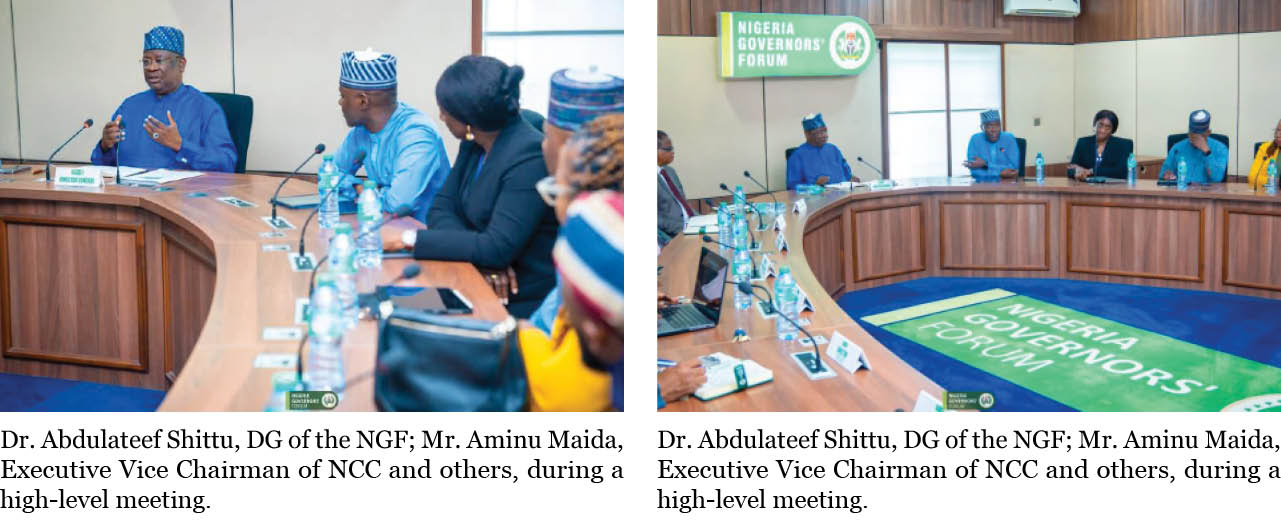
The NGF underscores that these measures are legally binding rather than declarative. “These are not just announcements as the legislations/regulations have the force of law,” it states, adding that their publication “ensures operators and investors now have a reliable premise to pursue legal redress where fees are charged outside or beyond those permitted.”
Procedural clarity is also emphasised. The forum explains that the application guidelines “state clearly the application requirements, process, relevant MDAs, applicable costs and timelines,” thereby reducing exposure to “fraudulent and illegitimate administrative processes.”
Within this framework, RoW charges have been capped at N145 per linear metre or eliminated in some states. The NGF links this directly to investment incentives, noting that states recognise “the economic potential of enhanced connectivity,” and that easing RoW barriers enables telecom operators “to create more value chains, benefiting citizens and increasing tax revenues for states.”
Deployment data referenced by the forum indicates that fibre rollout increased across most of the participating states between 2023 and 2024. While no explicit causal claim is made, the NGF presents the trend as consistent with reduced cost and administrative barriers to infrastructure expansion.
However, the DG acknowledges limitations in quantifying the broader economic impact. On whether reduced RoW fees are offset by gains elsewhere, the forum states, “we have no empirical data to share at this time,” while maintaining that “the cascading effect of the reform is intuitive,” referencing expected increases in employment, productivity, and commercial activity linked to improved connectivity.
To extend adoption, the NGF confirms that the State Action on Business Enabling Reforms programme, supported by the Federal Ministry of Finance, PEBEC, FDMO, NCC and other partners, is being considered for extension to May 2027. This programme is designed to enable additional states to “leverage technical assistance to domesticate reforms and benefit from the accompanying incentives.”
Dr Shittu also notes that implementation remains subject to regulatory oversight by the Nigerian Communications Commission (NCC), while it continues to “advocate compliance by State MDAs through relevant communities of practice.”
On infrastructure protection, the NGF references commitments from a multi-stakeholder roundtable involving regulators, operators, and security agencies to strengthen “state-level domestication” of Critical National Information Infrastructure (CNII) protections, improve information sharing, and ensure “appropriate prosecutorial charge with pursuit for stiffer penalties for vandals.”
In another development, the NCC reiterated its position on sector reforms and broadband expansion. Speaking during an engagement with industry stakeholders, the commission’s leadership indicated that regulatory stability remains central to attracting long-term investment, stating its commitment to “fostering an enabling environment for private sector participation in achieving universal broadband access across Nigeria.”