Like never before, security has moved from a background concern to a defining measure of governance in Nigeria. At the recent 2026 National Police Day, the federal government signalled a sharper commitment to policing reform. Enam Obiosio examines the intent, the language, and the credibility of that move through the voices shaping it.
Central to Nigeria’s evolving governance calculus is a simple but often under-enforced principle: without security, progress stalls. That principle framed the message delivered by President Bola Ahmed Tinubu at the 2026 National Police Day, where his administration outlined a more deliberate pathway to modernise the Nigeria Police Force (NPF) and reposition it as a functional instrument of state stability.
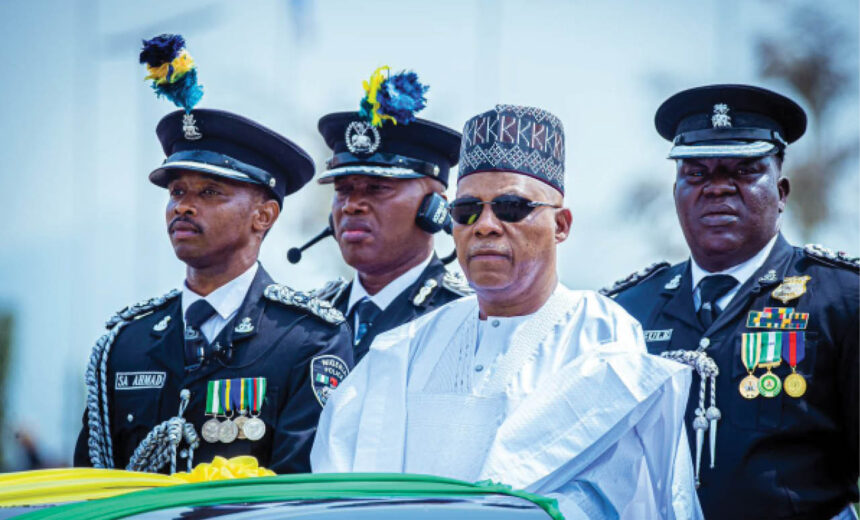
Speaking through Vice President Kashim Shettima at the grand parade in Abuja, the President moved beyond ceremonial rhetoric. He presented a policy direction anchored on capacity, intelligence, infrastructure, and welfare. His words were measured but pointed.
“We will continue to support these reforms through sustained investment in training and capacity development, modern equipment and technology, improved intelligence and investigative capabilities, and better welfare and working conditions for police personnel.”
That statement captures the architecture of the administration’s policing agenda. It reflects a shift from episodic reform to something more structured and sustained.
The President’s framing of security as “the first currency of progress” is not accidental. It places policing at the centre of economic and social stability. In practical terms, it suggests that investment flows, business confidence, and even citizen mobility are tied to the effectiveness of law enforcement.
This recalibration comes at a time when Nigeria’s security landscape has grown more complex. Urban crime, organised networks, and evolving threats have stretched the capacity of existing institutions. The gap between expectation and capability has widened. President Tinubu’s intervention attempts to close that gap by strengthening both the human and technical foundations of policing.
He was also deliberate in acknowledging the human cost behind the uniform. In a passage that resonated across the parade ground, he noted that while some professions attract public applause, others sustain society in quiet sacrifice.
“Every nation is only as safe as those who keep vigil while others sleep.”
It is a line that reframes policing as both duty and burden. It also subtly reinforces the argument for improved welfare and institutional support.
The administration’s reform pillars are clear.
Training sits at the base. The emphasis is not just on increasing personnel but improving competence. Modern policing requires analytical skills, familiarity with digital tools, and adherence to procedure. Without this, even the best equipment becomes ineffective.
Intelligence follows closely. Nigeria’s policing challenges have often been reactive, driven by events rather than anticipation. By prioritising intelligence gathering and investigative capability, the government is signalling a move toward preventive policing. This is a critical shift. It reduces operational strain and improves response precision.
Infrastructure and technology form the third pillar. Surveillance systems, forensic capacity, and digital record management are now essential components of law enforcement. The President’s commitment to “modern equipment and technology” reflects an understanding that credibility is tied to capability.
Then comes welfare. This remains the most sensitive and often neglected area. Poor living conditions, delayed remuneration, and limited institutional support have historically undermined morale within the force. President Tinubu’s inclusion of welfare within the reform agenda suggests a recognition that discipline and professionalism are difficult to sustain without addressing economic realities. “We are determined to build a Police Force that is well equipped, well trained, and well-motivated to confront the complex security challenges of our time,” he stated.
That determination, however, will be tested in implementation.
Nigeria’s reform history is crowded with well-articulated plans that struggled at execution. Funding inconsistencies, administrative bottlenecks, and weak accountability structures have often diluted impact. The credibility of this new push will depend on how these structural constraints are managed.
Beyond funding and systems lies the question of institutional culture.
In his address, the Inspector General of Police, Olatunji Disu, confronted this issue directly. His tone was both reflective and corrective, acknowledging the gap between public expectation and institutional performance.
“The NPF under my leadership is deeply aware of the expectations and concerns of Nigerians,” he said, before drawing a line on internal conduct. “We must rise above indiscipline, misconduct, and every action that tarnishes the image and reputation of the Force.”
This is a critical admission. It signals that reform is not only about external investment but internal recalibration.
Disu also attempted to reassure both officers and the public of a shift in leadership posture. “We will stand firmly with every officer who follows the rules and serves with dignity,” he stated, adding that the Force is being repositioned to be “intelligence-led and committed to professionalism in all ramifications.”
The emphasis on professionalism is not cosmetic. It is central to rebuilding trust.
Public perception remains one of the most fragile aspects of policing in Nigeria. For many citizens, engagement with law enforcement has been shaped by suspicion rather than cooperation. This weakens intelligence gathering and complicates enforcement.
President Tinubu addressed this directly, stressing that effective policing cannot exist in isolation from the communities it serves. “When citizens and law enforcement stand on opposite sides of suspicion, insecurity thrives.”
That line carries operational significance. It underscores the importance of community-centred policing, where trust becomes a working asset rather than an abstract ideal.
He extended this logic further. “The uniform you wear is not a licence for arbitrariness; it is a covenant of service. The badge on your chest is not an ornament of power; it is a reminder of duty.”
This is both instruction and warning. It defines the behavioural expectations tied to reform. It also signals that authority must be exercised within the boundaries of law and accountability.
The institutionalisation of National Police Day adds a symbolic layer to these reforms. Established to recognise the contributions and sacrifices of police personnel, the event serves as a platform to reinforce identity and morale.
The President used the occasion to honour officers who lost their lives in the line of duty, framing their sacrifice as part of the nation’s moral inheritance.
“Their sacrifice is written into the conscience of our country,” he said. “Their memory must remain a lamp to those who wear this uniform today and to those who will wear it tomorrow.”
Such language humanises the institution. It shifts the narrative from abstract criticism to individual sacrifice. However, symbolism alone cannot sustain reform.
Citizens will ultimately measure progress through experience. Response times, conduct during operations, transparency in investigations, and accountability for misconduct will define public judgment.
The presence of private sector actors such as Wema Bank and Premium Trust Bank at the event introduces a complementary dimension. Their goodwill messages and pledges of support suggest a growing recognition that policing can benefit from broader institutional partnerships.
These collaborations could extend to technology deployment, financial systems integration, and capacity support. If structured with clear governance, they could accelerate reform outcomes.
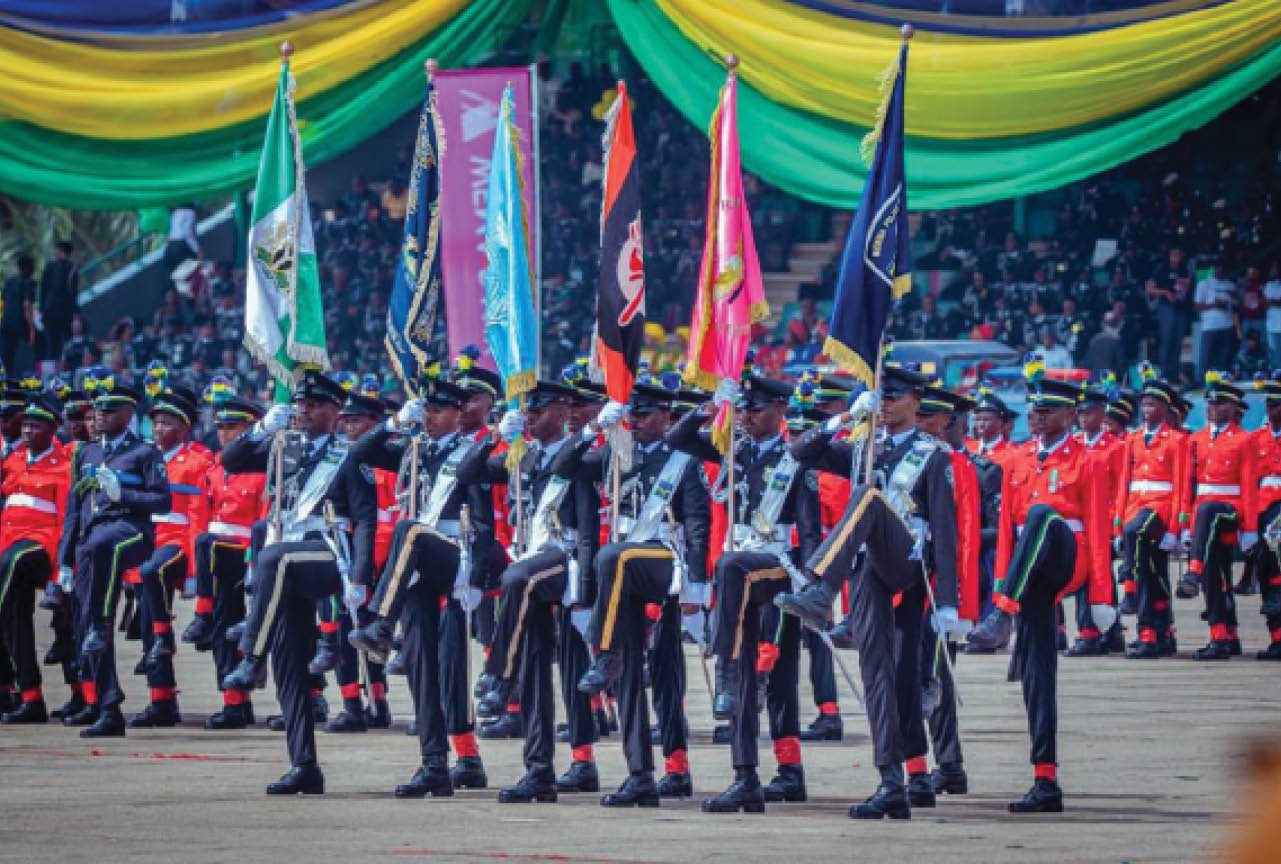
The event itself, marked by parade, procession, and tactical displays, projected a sense of institutional order and capability. Attendance by senior government officials, former Inspectors General, and members of the diplomatic corps reinforced the national significance of the moment.
Nigeria’s security environment remains fluid. The effectiveness of the announced reforms will depend on speed, consistency, and measurable impact. Without clear benchmarks, it will be difficult to assess progress or sustain public confidence.
Metrics such as crime reduction, case resolution rates, and public trust indicators should form part of an evaluation framework. Transparency in these areas will be essential.
President Tinubu’s vision of a police force defined by “excellence, accountability, courage and service” sets a high bar. Achieving it will require sustained political will and disciplined execution.
It will also require coordination across the broader security architecture. Policing intersects with intelligence services, the judiciary, and community systems. Fragmentation across these layers can undermine even the most well-funded reforms.