
By Jennete Ugo Anya
As Nigeria pushes for deeper industrialisation, food security, renewable energy development, and reduced import dependence, the National Sugar Development Council (NSDC) says the country’s sugar sector is being repositioned as a major integrated industrial platform capable of driving power generation, ethanol production, rural employment, and export diversification. In this interview with The Reforms, the council outlines the opportunities, financing structures, and policy reforms under the Renwed Hope Agenda shaping the next phase of Nigeria’s sugar industry transformation.
Q: Most people do not associate sugar with electricity. Yet this is increasingly central to the sector’s value proposition globally. Explain the connection, and why it matters for Nigeria?
This is one of the most underappreciated dimensions of the sugar story, and frankly, one of the most exciting. When you crush sugarcane, you get sugar, yes, but you also get a fibrous residue called bagasse. Each tonne of cane yields approximately 250 kilograms of bagasse, capable of producing 100 to 120 kilowatt-hours of electricity. In a modern integrated mill, that bagasse is burnt in high-pressure boilers to produce steam, which drives turbines and generates electricity. The technology is called cogeneration, the simultaneous production of heat and power from a single biomass feedstock.
In Brazil, India, and Mauritius, sugar mills meet all their own energy needs and sell substantial surplus electricity into the national grid. Bagasse-based cogeneration is now a meaningful source of grid power in those countries. There is no technical reason Nigeria cannot do the same.
Q: What is the scale potential here, for Nigeria specifically?
At projected production levels of 2 million metric tonnes of refined sugar, which translates to about 17 million metric tonnes of crushed cane, the sector could generate 350 to 400 megawatts of renewable power. That is not a marginal contribution; it is meaningful, dispatchable, baseload-quality electricity from an agricultural by-product, with essentially zero additional fuel cost and a low carbon footprint.
In addition, bagasse cogeneration offsets up to 100 percent of factory energy demand, reducing operational costs and improving the reliability of power supply in remote industrial zones. Modern mills are also designed to contribute between 20 and 60 percent of their output to the national grid, depending on configuration.
Q: And what’s the ethanol story?
Molasses, another by-product of sugar production, is the feedstock for ethanol. At full Phase 1 commission of the master plan, we are targeting approximately 1,240 million litres of ethanol annually; volumes that enable targeted petrol blending, reduce dependence on imported petroleum products, and save roughly $144 million annually in fuel imports for a meaningful blending ratio.
There is also a sustainable aviation fuel dimension. Sugarcane-derived ethanol is a viable feedstock for Sustainable Aviation Fuel through the Alcohol-to-Jet conversion pathway. As global aviation faces mandatory decarbonisation, integrating SAF production into Nigeria’s sugar-ethanol value chain creates a new industrial opportunity for the country.
Q: So we are talking about sugar as an energy story as well as a food story?
It goes further. The sector’s other by-products complete what is essentially a circular industrial system. Vinasse, the liquid residue from ethanol production, replaces chemical fertilisers through fertigation. Filter cake and press mud are composted into nutrient-rich organic manure. Condensate water is treated and reused for irrigation, while molasses serves as feedstock for biochemicals and bioplastics.
When you put all of this together, sugarcane stops being a single-commodity crop and becomes a diversified industrial platform. The combined effect of bagasse cogeneration, ethanol substitution, and bioplastics production could offset approximately 2 million tonnes of CO2 equivalent annually, directly supporting Nigeria’s Energy Transition Plan and Net-Zero 2060 commitments.
Q: How does NSDC ensure greenfield investors actually build cogeneration and ethanol capacity, rather than just sugar mills?
This is precisely why the SPAF feasibility standard matters. When we say a project must be bankable, we mean the financial model must reflect the full revenue stack: sugar, power, ethanol, feed, fertiliser, and biochemicals, not sugar alone. A 20th-century sugar factory is no longer competitive anywhere in the world. We are interested in funding 21st-century agro-industrial platforms.
Q: You have publicly identified greenfield projects across the country. What gives you confidence that this pipeline is real?
It is real because we have done the structural work that previous iterations of the master plan did not do. Each project in the pipeline has a named promoter, a defined location across 13 states, a verifiable land position, a milling capacity target, an annual output target, and an indicative capital structure.
Currently, NSDC has identified about 11 greenfield projects involving operators such as Saro Africa International, Rite Foods, Lee Group, KIA Africa, Legacy Group, Illaj Holdings, Brent Sugar, Niger Foods, Legacy Sugar, and UMZA.
Q: What role does the Sugar Project Acceleration Fund play?
SPAF is a N10 billion fund established in partnership with the Bank of Industry. Its purpose is to take early-stage sugar projects and bring them to bankable standard so they can attract the major financing required for full development.
The reality is that development finance institutions globally already manage large pools of agro-industrial capital. The challenge is not the absence of money, but the shortage of properly structured, de-risked projects that institutions can fund. SPAF is designed to close that gap.
Q: Beyond the big estates, why is the Outgrower Development Programme strategically important?
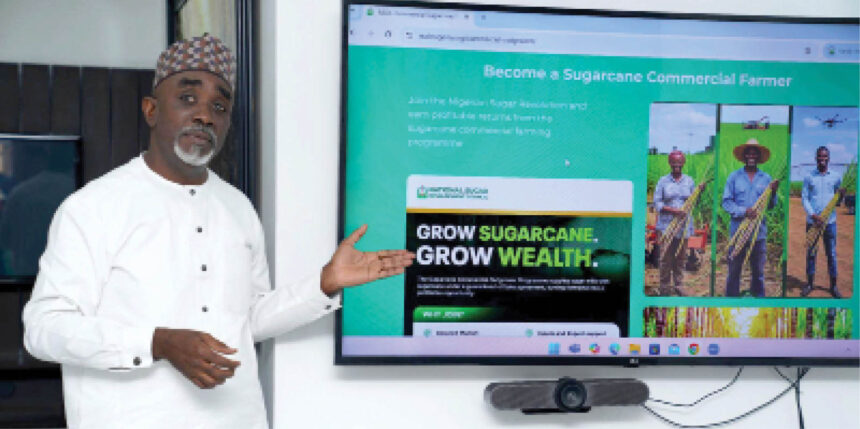
No country has ever achieved sugar self-sufficiency on the back of large estates alone. Brazil, India, and Thailand all rely heavily on outgrowers feeding cane into the mills. We have therefore designed a structured outgrower development programme that formally integrates farmers at every scale into the national sugar value chain.
Under the framework, 15 percent of total land under cane cultivation must be operated by outgrowers, including smallholder farmers and organised farming cooperatives within host communities.
Q: How are participating farmers supported?
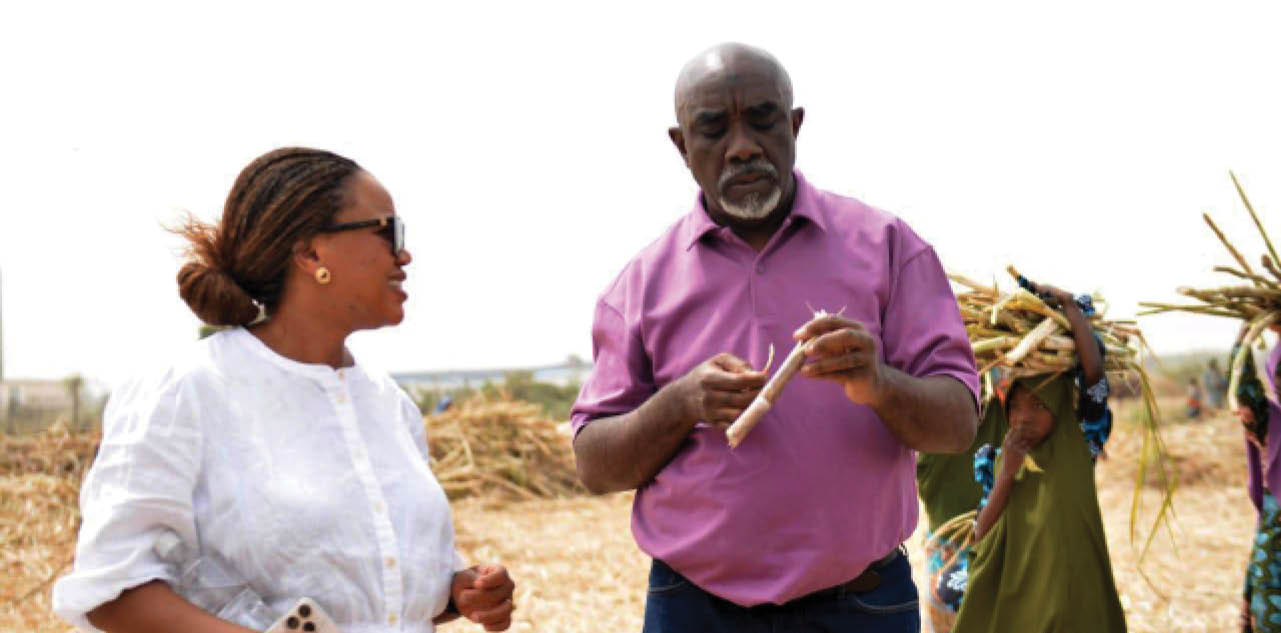
Participating farmers receive guaranteed offtake agreements, access to quality seedcane and inputs, technical training through collaboration with the Nigerian Sugar Institute, and support for sustainable land and water-use practices.
The financing model is also structured to reduce lending risk. Millers pay directly into the fund account before loan obligations are settled and net proceeds are disbursed to farmers. That structure removes one of the biggest risks in agricultural lending, which is repayment collection.
Q: Why should Nigerians believe this master plan will succeed where previous ones struggled?
First, the policy architecture is now codified in law, not merely administrative directives. Second, the financing architecture is operational, with SPAF already active alongside partnerships involving the Bank of Industry, the Nigeria Governors’ Forum, and SINOMACH. Third, current macroeconomic realities now favour local production because imports are no longer cheap.
To Nigerians, the sugar in tea, soft drinks, bread, and confectionery still largely comes from imports paid for in foreign exchange. We are working to change that. To investors, the pipeline is real, the financing rails are operational, the policy is codified, and the investment fundamentals are increasingly favourable.