By Jennete Ugo Anya
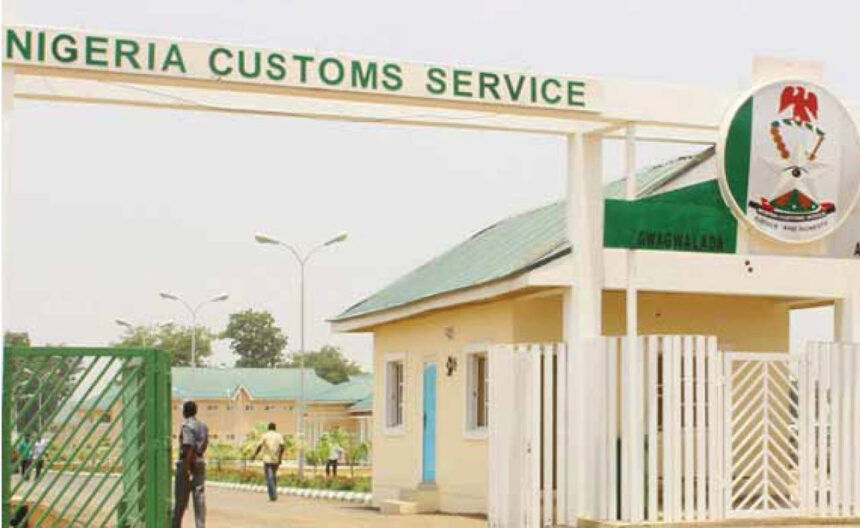
The federal government’s decision to slash import duties on vehicles has placed Nigeria’s automobile market at the centre of a broader economic balancing act, as the administration seeks to reduce the cost of vehicle ownership while maintaining an ambitious revenue target for the Nigeria Customs Service (NCS).
Under the 2026 fiscal policy measures, import duty on used vehicles has been reduced from 15 percent to five percent, while duties on brand-new vehicles have been cut from 20 percent to 10 percent.
The policy, announced by the Comptroller-General of Customs, Mr. Adewale Adeniyi, during the defence of the service’s 2026 budget proposal before the House of Representatives Committee on Customs and Excise, represents one of the government’s latest interventions aimed at easing trade barriers and stimulating economic activities.
But beyond the immediate relief expected by vehicle importers and consumers, the tariff reduction presents a critical question for policymakers: can lower duties expand trade volumes enough to compensate for the potential decline in revenue from vehicle imports?
Mr. Adeniyi acknowledged this concern while presenting the service’s outlook for 2026, noting that while some fiscal measures are expected to improve revenue collection, the reduction in vehicle tariffs could have an opposing effect.
“We have the new excise tariff, which is provided in the 2026 fiscal policy. We believe that these measures will increase our revenue collection,” he told lawmakers.
“Conversely, during the same tariff measures that were given to us, tariffs on vehicles and levies on vehicles have been reduced significantly. For used vehicles, the tariff has been reduced from 15 percent to five percent, and for brand-new vehicles, from 20 percent to 10 percent. So, we believe that this is something that may also negatively affect revenue.”
The reduction comes at a time when the cost of acquiring vehicles in Nigeria has risen sharply due to foreign exchange pressures, inflation, and high import-related charges. For many Nigerians, vehicle ownership has increasingly become a financial burden, particularly as transportation costs continue to contribute significantly to household expenses.
By lowering import duties, the government appears to be responding to long-standing concerns from businesses and consumers who have argued that excessive tariffs encourage informal trade channels and make vehicles unnecessarily expensive.
However, lawmakers questioned whether the new tariff regime would be enough to discourage importers from using neighbouring countries’ ports, where traders have historically sought cheaper clearance alternatives.
During the committee session, Alex Mascot, a member representing Abia State, challenged the service on the effectiveness of the policy.
“If five percent has been reduced from the fee that is paid when you import goods into the country, why then do people still move their goods to Cotonou?” he asked.
The lawmaker argued that beyond tariff reduction, the government must address wider concerns around port efficiency, clearance procedures, and competitiveness, which have contributed to cargo diversion.
Responding, Mr. Adeniyi explained that implementation of the revised tariff structure began in May, stating that the service was also pursuing technology-driven reforms to improve trade facilitation.
For the Chairman of the House Committee on Customs and Excise, Leke Abejide, the reduction represents a positive development for Nigerians who have consistently demanded lower import duties.
He described the policy as a reflection of the administration’s responsiveness to public concerns and commended President Bola Tinubu’s approval of the measure.
While reducing vehicle tariffs may create short-term revenue concerns, the service is entering 2026 with a higher revenue ambition. The agency has projected N11.074 trillion in revenue collection for the year, a significant increase from its 2025 performance.
According to Mr. Adeniyi, the service generated N7.258 trillion between January and December 2025, exceeding its target by N1.153 trillion, representing an 18.89 percent increase.
The strong performance, however, was achieved despite several government policies that reduced customs collections. These included the suspension of excise duty on telecommunications services, the continued suspension of the proposed green tax introduced in 2023, and incentives aimed at encouraging local production of healthcare products.
The Customs boss also highlighted the impact of the government’s Compressed Natural Gas (CNG) and electric vehicle initiatives, which reduced import-related revenue in those sectors as part of efforts to promote cleaner energy alternatives.
Another major factor affecting collections was the volume of imports granted exemptions through various government concession programmes.
Mr. Adeniyi disclosed that imports valued at N34.538 trillion benefited from revenue waivers in 2025. Petroleum products accounted for 56.40 per cent of the concessions, military imports represented 40.52 percent, while Import Duty Exemption Certificates and other qualifying imports accounted for the remaining 3.08 percent.
Despite these challenges, the service believes automation and stronger enforcement mechanisms will provide the foundation for achieving its 2026 target.
The agency plans to accelerate the deployment of the Unified Customs Information System, also known as B’Odogwu, to automate customs operations and improve efficiency. It will also expand post-clearance audits, strengthen compliance monitoring, extend the Authorised Economic Operator programme, deploy geospatial technology, and intensify joint border patrol operations to tackle smuggling.
The projected N11.074 trillion revenue target will come from several sources, including N5.542 trillion contribution to the federation account, N1.491 trillion in non-federation revenue, N2.773 trillion from import VAT, and N1.266 trillion from free-on-board collections.
To support these activities, the service has proposed a N1.235 trillion expenditure plan for 2026. The budget includes N421.70 billion for personnel costs, N307.77 billion for overheads, and N565.93 billion for capital projects.