
By Ahmed Ahmed
Nigeria’s quest for inclusive growth may be entering a new phase following deliberations at the National Economic Council (NEC), where federal and state leaders considered a comprehensive framework aimed at tackling one of the country’s most enduring challenges: uneven development across regions.
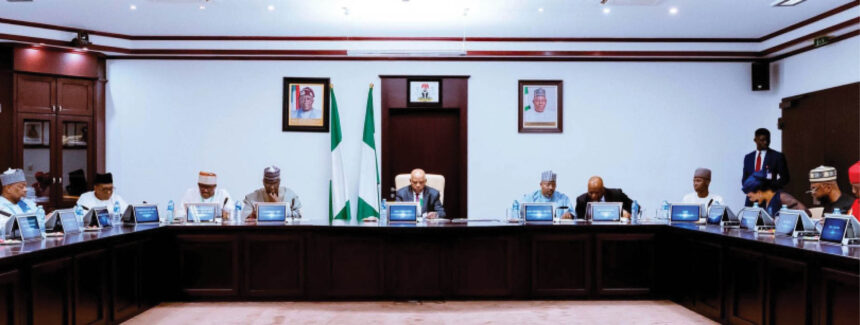
At its latest meeting, NEC examined the proposed National Regional Development Policy (NRDP) 2026-2030, a strategic framework developed by the Ministry of Regional Development to address spatial inequalities, improve coordination among development agencies and align regional interventions with national economic priorities.
The proposal comes at a critical period for Nigeria. While some regions have recorded significant infrastructure and economic progress over the years, others continue to struggle with poverty, unemployment, insecurity, weak infrastructure and limited access to investment opportunities. These disparities have often fuelled migration pressures, social tensions and uneven economic outcomes across the federation.
For policymakers, the new framework represents an attempt to create a more coordinated approach to development planning, one that moves beyond isolated projects and focuses instead on long-term regional transformation.
According to details presented before the Council, the policy seeks to provide strategic oversight for regional development initiatives, coordinate development master plans for regional development commissions in collaboration with state governments and strengthen supervision of the commissions’ operations.
The framework also seeks to align regional programmes with the priority areas of President Bola Tinubu’s administration, including economic growth, food security, infrastructure expansion, industrialisation, innovation, healthcare, education, energy development and the digital economy.
The significance of the proposal lies not only in what it seeks to achieve but also in how it intends to achieve it. One of the recurring criticisms of development initiatives in Nigeria has been fragmentation. Various intervention agencies often operate independently, resulting in overlapping mandates, duplicated projects and inefficient use of resources.
By introducing a unified regional development framework, government officials hope to improve coordination among federal institutions, state governments and regional commissions while ensuring that development plans contribute directly to broader national objectives.
Among the major proposals considered by NEC were endorsement of the National Regional Development Policy, approval of a Regional Development Policy Framework mechanism, support for state-level adoption of the policy and backing for the establishment of a Regional Development Bank.
The proposal for a dedicated Regional Development Bank is particularly noteworthy. Development experts have long argued that sustainable regional growth requires access to long-term financing tailored to infrastructure, industrial and economic development projects. If successfully implemented, such an institution could provide critical funding for projects that may struggle to attract conventional commercial financing.
Recognising the importance of state government participation, NEC directed the Minister of Regional Development to circulate the draft policy to governors for review and input. The Council also mandated consultations with the Nigeria Governors’ Forum to ensure broad ownership and support across the federation.
The emphasis on collaboration reflects a growing recognition that many development challenges cannot be solved through federal interventions alone. Effective implementation will require active participation from states, local communities and private sector stakeholders.
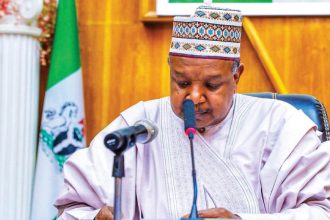
Speaking at the meeting, Vice President Kashim Shettima underscored the urgency of translating reforms into measurable improvements in the lives of Nigerians.
His remarks reflected a broader concern increasingly shared by both government and citizens. After several years of economic reforms, public expectations are shifting from policy announcements to tangible outcomes that can be seen and felt in communities across the country.
the Vice President stressed that government performance must ultimately be judged by its impact on farmers, manufacturers, vulnerable citizens, unemployed youth and future generations.
His comments also linked regional development to economic productivity and export competitiveness. He argued that Nigeria must move beyond exporting raw materials and begin creating value through domestic production and industrialisation.
That position aligns with current efforts to diversify the economy, strengthen manufacturing and improve Nigeria’s participation in global value chains. According to Shettima, national prosperity depends on building a complete value chain that connects agriculture, industry, logistics and international markets.
His emphasis on export standards and efficient port operations highlights another reality confronting policymakers. Economic growth is not determined solely by production levels but also by the ability to move goods efficiently and compete successfully in international markets.