
By Musa Ibrahim
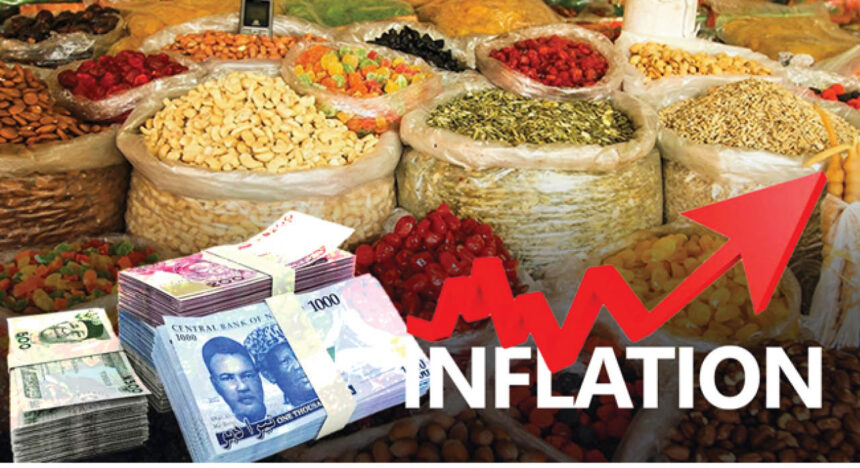
Nigeria’s headline inflation rose to 15.93 per cent in May 2026, marking the third consecutive monthly increase and reinforcing concerns that price pressures are gradually rebuilding across Africa’s largest economy despite earlier signs of moderation.
Fresh data from the National Bureau of Statistics show that the Consumer Price Index climbed to 140.7 in May, up from 138.3 in April. This represents a continued upward movement in the general price level, even though the pace of increase slowed on a month-on-month basis.
Month-on-month inflation stood at 1.75 percent in May, a decline from 2.13 percent recorded in April. On the surface, this suggests a mild easing in short-term price acceleration. However, the broader annual trend tells a different story. Inflation has now risen steadily from 15.38 percent in March to 15.69 percent in April before reaching 15.93 percent in May.
The pattern highlights a familiar tension in Nigeria’s price dynamics. Short-term fluctuations may soften, but underlying structural pressures continue to push the general price level higher over time.
A striking feature of the May report is the continued dominance of food inflation. Food and non-alcoholic beverages contributed 6.38 percentage points to the headline figure, making it the single largest driver of inflation across the consumption basket. This reflects persistent pressure in staple food markets where supply constraints, logistics costs and insecurity continue to affect production and distribution.
Items such as onions, maize, cassava products, yam, tomatoes, pepper, wheat grain and plantain were among the key contributors to rising food costs. These commodities form the core of household consumption, which means inflationary pressure is being felt most directly in daily living expenses.
Food inflation stood at 16.96 percent year-on-year, down from 24.55 percent in May 2025. On a monthly basis, it eased to 2.98 percent from 3.63 percent in April. Despite this moderation, the level remains high enough to sustain cost-of-living pressures, particularly for low and middle-income households.
Beyond food, inflationary pressure is also visible across services and essential household categories. Restaurants and accommodation services contributed 2.06 percentage points to headline inflation. Transport added 1.70 percentage points, while housing, water, electricity, gas and other fuels contributed 1.34 percentage points. Education and healthcare services also maintained notable pressure on the index.
Core inflation, which strips out volatile agricultural produce and energy prices, rose to 16.82 percent year-on-year. This indicates that underlying price pressures remain entrenched in the economy beyond food shocks. On a monthly basis, core inflation accelerated sharply to 1.94 percent from 1.03 percent in April, signalling renewed momentum in non-food price increases.
This divergence between easing food inflation and rising core inflation suggests a more complex inflation environment. While some relief is emerging in food markets, broader cost structures in services, logistics and manufactured goods are still under strain.
Urban households recorded a year-on-year inflation rate of 16.07 percent, slightly higher than rural inflation at 15.60 percent. However, rural areas experienced a sharper slowdown in monthly inflation, dropping to 1.17 percent from 2.80 percent in April. Urban inflation, by contrast, rose marginally to 1.99 percent.
Energy and imported food inflation remained comparatively lower in headline terms but continue to exert pressure on specific consumption channels. Services inflation stayed elevated at 17.92 percent year-on-year, reflecting persistent demand pressures and structural cost challenges.
At the state level, disparities remain pronounced. Yobe recorded the highest annual inflation rate at 24.94 percent, followed by Anambra at 23.29 percent and Sokoto at 22.60 percent. In contrast, Niger recorded the lowest rate at 3.07 percent, with Plateau and Edo also posting relatively subdued figures.
Food inflation trends also varied widely across regions. Adamawa recorded the highest annual food inflation at 29.62 percent, while Borno reported food deflation at minus 6.53 percent. These variations reflect differences in supply chains, security conditions and agricultural output across states.
Monthly movements further highlight volatility in local markets. Bauchi recorded the highest food inflation increase at 7.73 percent, while Niger and Katsina saw declines, indicating uneven price adjustments across regions.
Despite the upward trajectory in headline inflation over the past three months, the year-on-year comparison shows significant easing from 26.06 percent recorded in May 2025. This suggests that while inflationary pressures remain, the economy is still operating below last year’s peak stress levels.
Still, the gradual month-on-month rise signals that the disinflation process is losing momentum. The persistence of food, services and core inflation pressures points to a fragile price environment where gains can easily reverse if shocks intensify.