
By Kingsley Benson
Africa’s vast mineral wealth has long powered industries across the world, yet much of the continent continues to export raw materials while importing finished products at significantly higher costs. That long-standing paradox came under renewed scrutiny in Abuja this week as policymakers, investors and industry leaders gathered ahead of the 5th African Natural Resources and Energy Investment Summit (AFNIS), where the focus shifted from resource extraction to resource transformation.
At the centre of the conversation was a clear message from Nigeria’s Honourable Minister of Solid Minerals Development, Dr. Dele Alake, who urged African countries to end their dependence on raw mineral exports and embrace value addition, industrialisation and regional cooperation as pathways to sustainable economic growth.
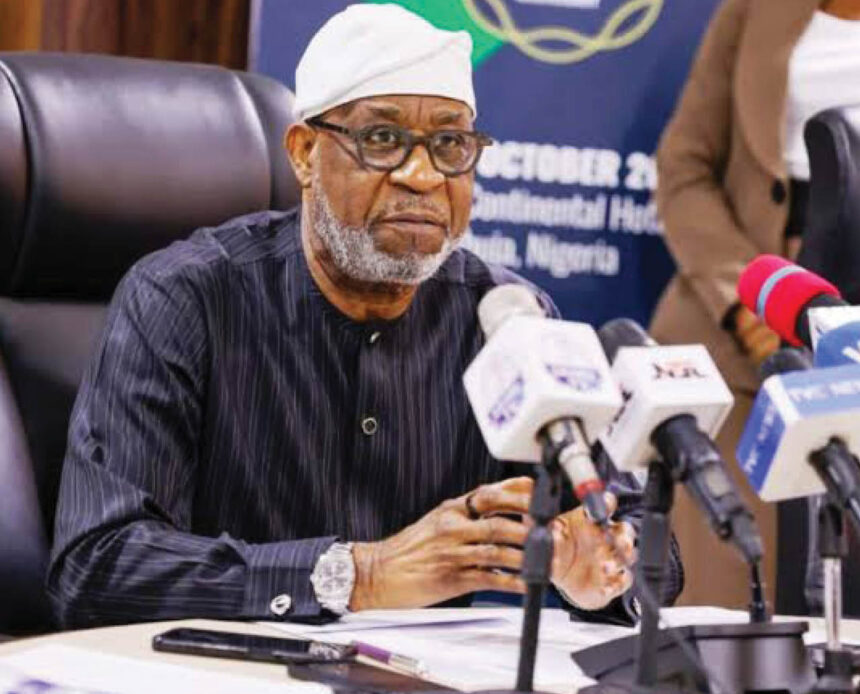
Represented by the Managing Director and Chief Executive Officer of the Nigeria Solid Minerals Company, Martins Imonitie, the minister argued that Africa can no longer afford to remain merely a supplier of raw materials to industrialised economies.
His remarks reflect a growing consensus across the continent that the next phase of Africa’s economic development must be built around processing, manufacturing and technology-driven industries capable of creating jobs and retaining wealth within African economies.
The urgency of that shift is becoming increasingly evident. Global demand for critical minerals used in electric vehicles, renewable energy technologies, batteries and advanced manufacturing continues to rise. Countries around the world are racing to secure supply chains for minerals such as lithium, cobalt, graphite and rare earth elements, many of which are found in abundance across Africa.
For resource-rich nations, the opportunity extends far beyond exporting ore. It lies in building domestic industries that process minerals into higher-value products before they reach international markets.
According to Alake, Africa’s mineral resources should serve as catalysts for economic transformation, technological advancement, infrastructure development and long-term prosperity. The argument aligns closely with broader efforts by African governments to diversify economies that have historically relied on commodity exports with limited domestic value creation.
The theme of this year’s summit, ‘One Africa, One Resource Vision’, reflects that ambition. It also highlights increasing recognition that no single African country can fully unlock the potential of its natural resources in isolation. Regional collaboration on infrastructure, financing, technology transfer and industrial development is becoming increasingly important as nations seek to compete in a rapidly evolving global economy.
The summit is expected to attract government officials, investors, financiers, mining and energy companies, technology providers and policymakers from several African countries, including the Democratic Republic of Congo, Kenya, Uganda, South Sudan, Somalia, Liberia and Mauritania.
Beyond policy discussions, AFNIS has also demonstrated measurable investment outcomes. Director of Strategy and Platform Development at Core International, Archibald Troko, disclosed that the platform has attracted more than $600 million in investments over the past four years.
That figure is significant at a time when many African countries continue to struggle with attracting long-term capital into mining and energy projects. Investors often cite regulatory uncertainty, inadequate infrastructure and financing risks as major barriers to investment.
Troko acknowledged those challenges while stressing the importance of attracting development partners capable of reducing investment risks and expanding access to capital. He noted that efforts are underway to encourage stronger participation by local investors who have historically played a limited role in financing large-scale mining and energy projects.
The emphasis on de-risking investment also points to a larger challenge facing Africa’s resource sector. While the continent possesses some of the world’s most valuable mineral deposits, converting geological potential into industrial and economic prosperity requires stable policies, reliable infrastructure and access to affordable financing.
AFNIS has evolved considerably since its inception five years ago. What began as a dialogue platform connecting governments, investors and industry stakeholders has grown into one of Africa’s leading forums for discussions on mining, energy, industrialisation and sustainable development.