By Jennete Ugo Anya
Nigeria’s ambition to build a $1 trillion economy could be undermined unless the country dramatically accelerates the deployment of Fibre-to-the-Home (FTTH) infrastructure, the Nigerian Communications Commission (NCC) has warned.
The regulator says Nigeria’s digital economy is approaching a critical turning point. While demand for high-speed internet is rising rapidly, driven by artificial intelligence, cloud computing, video streaming and digital businesses, fixed fibre broadband infrastructure remains significantly underdeveloped.
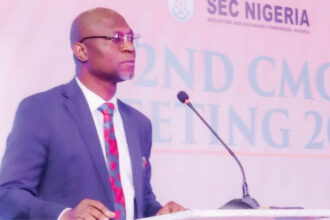
Speaking at the Association of Telecommunications Companies of Nigeria (ATCON) High-Level Industry Forum on FTTH in Lagos, Executive Vice Chairman of the NCC, Dr. Aminu Maida, described fibre broadband as the foundation upon which Nigeria’s future digital economy must be built.
According to him, reliable, high-capacity broadband is no longer a luxury but an essential requirement for economic competitiveness, innovation and investment.
The figures illustrate the scale of the challenge. Nigeria currently has only about 265,000 active FTTH subscriptions, placing its broadband penetration below Africa’s average of 2.5 percent and far behind mature markets, where penetration has reached about 47 percent.
Rather than viewing the numbers as a failure, Dr. Maida said they highlight the enormous opportunity available to investors and policymakers.
“This low base should not discourage us; it should help us focus. It reveals the sheer scale of opportunity and reinforces the urgent need to create the right conditions for fibre to expand faster, more sustainably, and far more widely,” he said.
His remarks come as Nigeria seeks to deepen its digital economy, a sector increasingly recognised as a major driver of productivity, innovation and non-oil growth.
As businesses migrate to cloud-based operations, financial services become increasingly digital and artificial intelligence applications demand greater computing capacity, broadband infrastructure is emerging as a critical component of national competitiveness.
Dr. Maida argued that fibre networks provide the speed, resilience and scalability required to support these technologies while preparing the country for future technological advancements.
He noted that wider fibre deployment would improve business productivity, expand access to digital services, strengthen enterprise competitiveness and attract investment into Nigeria’s growing technology ecosystem.
To stimulate investment, the NCC announced plans to undertake a Wholesale Fixed Broadband Market Assessment aimed at evaluating competition within the sector.
The exercise is expected to encourage infrastructure sharing among operators, strengthen open-access models and ultimately reduce broadband costs for consumers by lowering the cost of network deployment.
However, the commission believes regulation alone cannot solve the country’s broadband deficit.
Dr. Maida renewed his call on state governments to eliminate one of the industry’s biggest obstacles: the high cost and lengthy approval process associated with Right of Way (RoW) permits required for laying fibre optic cables.
According to him, excessive charges, multiple approval layers and administrative delays continue to discourage investment and slow broadband expansion across the country.
There has, however, been measurable progress.
The NCC disclosed that 13 states have completely waived RoW charges, while another 16 states have adopted the National Economic Council’s recommended fee of N145 per linear metre.
The commission said it would continue engaging the remaining states to harmonise RoW policies and remove barriers that increase deployment costs.
To improve transparency and simplify investment decisions, the regulator also unveiled an Ease of Doing Business Portal, a digital platform providing state-by-state information on RoW charges, approval procedures, infrastructure maps and other regulatory requirements.
Beyond government reforms, the commission challenged private developers to rethink how telecommunications infrastructure is incorporated into urban planning.
Dr. Maida urged property developers to integrate fibre connectivity into residential estates, commercial buildings and new urban developments from the design stage rather than installing networks after construction has been completed.
“Just as new developments provide for electricity, water, and drainage, they must also provide for telecommunications,” he said.
According to him, embedding fibre infrastructure during construction significantly lowers deployment costs, shortens installation timelines and allows residents and businesses to access broadband services immediately after completion.
While accelerating deployment remains a priority, the NCC cautioned against compromising technical standards.
The Commission’s message reflects a broader reality confronting Nigeria’s digital economy. As the country pursues its $1 trillion economic ambition, roads, power and transport infrastructure will remain important, but digital infrastructure is becoming equally indispensable. Expanding fibre broadband is no longer simply a telecommunications objective. It is increasingly a national economic imperative capable of determining how successfully Nigeria competes in an economy driven by data, innovation and digital connectivity.