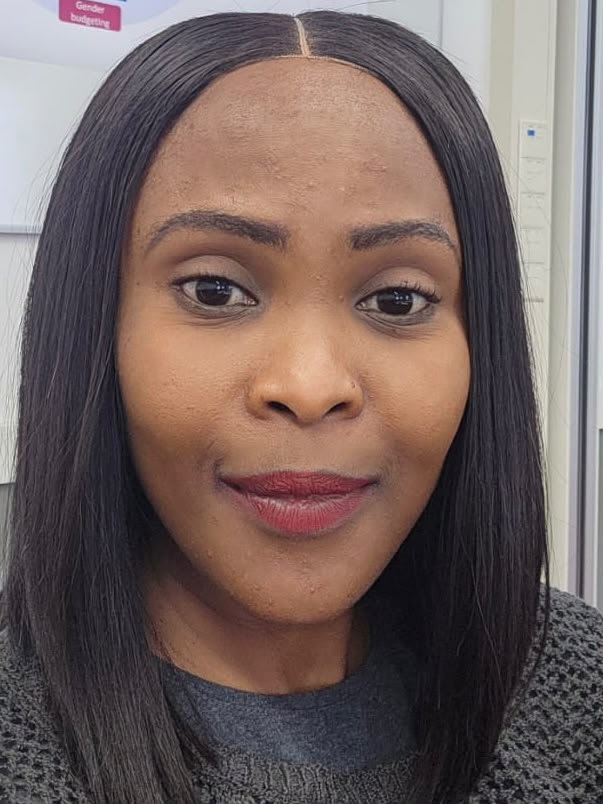
By Racheal Victor Pindar
Across Nigeria, women are working, building businesses, farming, trading, providing services and contributing significantly to their families and communities.
For many households, what a woman earns is no longer simply additional income. It helps pay school fees, meet healthcare costs, put food on the table and keep families going.
This progress matters. But there is another question we should be asking:
What does earning actually enable a woman to do?
A woman can earn an income and still struggle to save. She can work hard and still lack the resources or opportunities to move forward. She can contribute substantially to her household and still have little room to plan for her own future.
And sometimes, earning simply means she is doing more.
Consider a woman whose income begins to grow. On paper, she is doing better. But her daily responsibilities have not necessarily reduced. She may still be managing work, children, household responsibilities and other family needs.
She may find herself making constant trade-offs: between taking an opportunity and being present for her family, between investing in her work and meeting immediate household needs, or between pushing herself further and finding time to rest.
This does not mean that work and family are in conflict. It simply shows that earning more does not automatically make life easier.
The real question is whether economic progress is giving her more choices, greater security and a better quality of life, or simply adding more responsibilities.
Earning should expand choices
Much of the conversation about women’s economic empowerment focuses on jobs, access to finance, skills and entrepreneurship. These are important and should continue.
But income alone does not tell us whether a woman’s circumstances have meaningfully improved.
Can she save and invest? Can she plan for emergencies? Can she take advantage of opportunities when they arise? Does she have a meaningful voice in decisions that affect her life? Is her household becoming more secure?
These questions give us a fuller picture of progress.
This does not mean that a woman must control every financial decision by herself. In many Nigerian families, husbands and wives make important decisions together, and partnership can be a source of strength.
What matters is that a woman’s contribution is recognised, her voice counts, and greater economic participation expands rather than limits her choices.
Looking beyond the numbers
This should also influence how we think about initiatives designed to improve women’s economic opportunities.
We often hear impressive figures: thousands of women trained, thousands receiving loans, thousands supported through different programmes.
These numbers are useful. They tell us how many people were reached.
But they do not tell us what happened afterwards.
Did incomes become more stable? Were women able to grow what they started? Could they save or invest? Did their households become more financially secure? Did the opportunity improve their ability to plan for the future?
There is a difference between providing an opportunity and ensuring that the opportunity leads somewhere.
If a woman receives training but cannot apply what she has learnt, we should be interested in why. If she receives finance but struggles to turn it into sustainable progress, understanding what is holding her back is just as important as providing the finance itself.
Perhaps our measure of success should therefore go beyond what was provided to ask what changed because of it.
The environment around women matters
No one succeeds through effort alone. The environment around people can either support their progress or make it unnecessarily difficult.
For women, this may mean access to finance and markets, safe and reliable infrastructure, useful information and technology, supportive workplaces, childcare and other services that make it possible to take advantage of economic opportunities.
Not every woman will need the same support. What matters is understanding what stands between an opportunity and her ability to benefit from it.
This is where families, communities, employers, financial institutions, the private sector, development organisations and public institutions all have a role to play. Sometimes relatively simple changes in the environment around women can determine whether an opportunity grows into something sustainable.
The same thinking applies at home.
As more women contribute financially to their households, families may also need to consider how responsibilities are shared. When both partners are economically active, responsibilities for children, the home and family wellbeing still have to be managed.
This is not a women-versus-men conversation. It is about partnership and recognising that economic life and family life are connected.
A woman should not have to prove her success by doing everything at once—earning, caring, parenting and managing a household—with no room for her own wellbeing. At the same time, economic progress should not mean that family relationships or time with children become unimportant.
The goal is not simply for women to do more. It is for greater economic opportunity to help women and their families live better.
A better way to think about progress
Nigeria does not lack hardworking women. Women are already contributing enormously to households, communities and the wider economy.
The opportunity before us is to ensure that all this effort translates into something meaningful and lasting: stronger livelihoods, greater security, healthier families and more choices about the future.
That requires us to ask better questions.
Instead of only asking how many women received loans, attended training, found employment or started businesses, we should also ask:
What can she do now that she could not do before?
Can she build something more secure? Can she make meaningful choices? Can she plan for the future with greater confidence? Is her family better off? Has the opportunity made her life more secure, or simply made her busier?
Those questions tell us much more about whether progress is real.
Women’s economic empowerment should not be measured simply by how much women are doing. It should also be reflected in what their effort makes possible—for themselves, their families and their communities.
Because earning matters.
But the real value of earning is in the choices it creates, the security it builds and the possibility of a better life.
Racheal Victor Pindar is a gender, social inclusion and public policy practitioner. She writes on gender, health and inclusive development.