
By Kingskey Ani
The Presidency has called on organised private sector operators to develop a financing and implementation blueprint for Nigeria’s proposed state police system, arguing that sustainable security institutions are critical to investment growth, job creation and economic resilience.
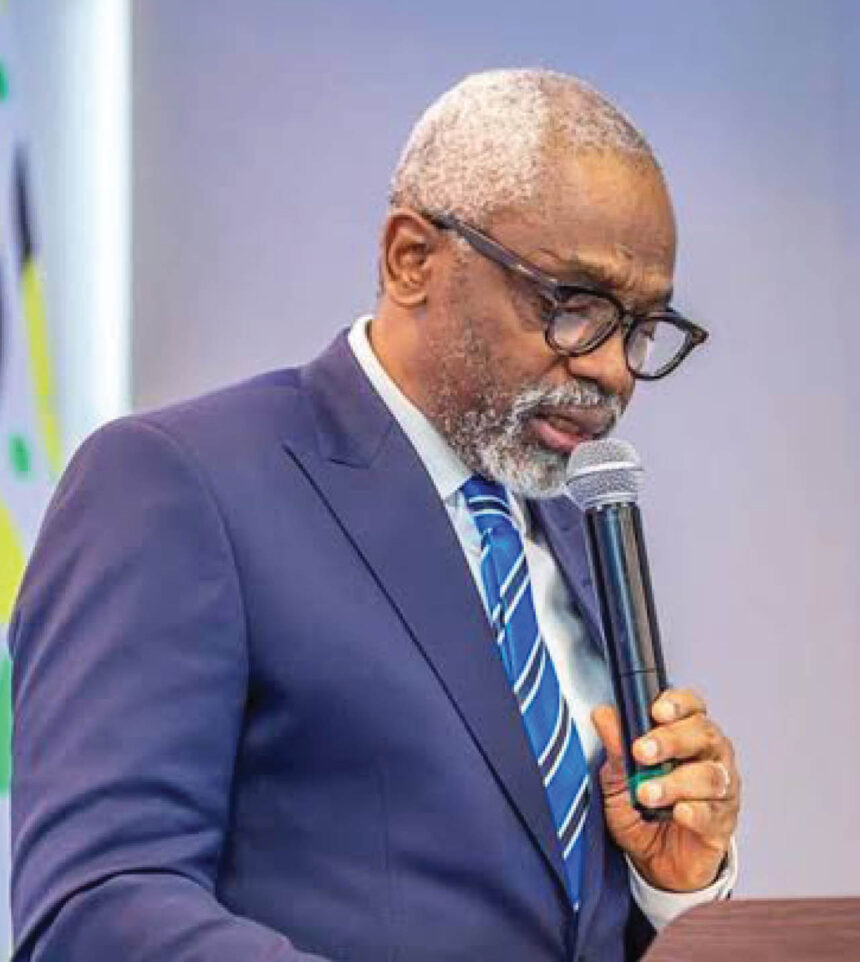
Chief of Staff to the President and Chairman of the Presidential Working Group on the National Policing Bill, Hon. Femi Gbajabiamila, made the appeal at a plenary session on ‘Security, Stability and Economic Resilience’ during the 32nd Nigerian Economic Summit in Abuja.
He specifically urged the Nigerian Economic Summit Group (NESG), chambers of commerce and business associations to develop practical proposals covering financing, institutional management and accountable partnerships to support the proposed decentralisation of policing.
According to Gbajabiamila, insecurity is already imposing substantial costs on businesses through disrupted supply chains, abandoned investments, postponed factory expansions and lost economic opportunities.
“I therefore ask the NESG to carry this engagement beyond our meeting. Bring forward a considered private sector contribution on financing and implementing state police, with practical proposals for accountable partnerships,” he said.
He maintained that businesses should extend their engagement to the legislative process and state governments, bringing their experience in financial management, institutional oversight and risk assessment to the design of the proposed policing framework.
However, the Chief of Staff cautioned against allowing private sector participation to compromise police independence, insisting that contributions must operate within transparent legal and accountability structures.
“Where businesses provide resources, those contributions need published accounts and independent scrutiny. Public funding must remain dependable, and a donation must never purchase influence over an investigation or preferential treatment,” he warned.
Gbajabiamila also identified financial sustainability as a major requirement for states seeking to establish their own police services. He explained that providing vehicles, uniforms and equipment would be insufficient without reliable funding for personnel salaries, professional training and operational maintenance.
Providing an update on the constitutional process, he disclosed that 24 State Houses of Assembly had approved the constitutional amendment providing for state police as of October 23, 2026, meeting the required two-thirds threshold.
He stated that the Presidential Working Group submitted the draft National Policing Bill and 29 consequential amendment bills to the Federal Ministry of Justice on October 19 for legislative review. The proposals are expected to be presented to President Bola Tinubu before transmission to the National Assembly.
The proposed framework would allow willing and financially capable states to establish their police services while retaining a federal police institution for interstate crimes and specialised national security responsibilities.
Addressing concerns about possible political interference and abuse of police powers, Gbajabiamila promised enforceable safeguards, national professional standards and independent oversight mechanisms.
“The concern that police powers could be used against political opponents or vulnerable communities is serious. Our answer is to place enforceable limits on those powers and provide remedies when they are abused,” he said.
Acknowledging persistent insecurity despite government interventions, he admitted that improvements in national security capacity had yet to guarantee protection in every community.
Ultimately, the proposed reform will depend not only on constitutional approval and private sector participation but also on sustainable financing, institutional independence and effective accountability. These will determine whether decentralised policing can deliver the security required to restore investor confidence and protect economic activity.