
For millions of Nigerian students, the internet is no longer a luxury in education. It is increasingly the classroom, library, tutorial centre and training ground rolled into one. But access to that classroom has often depended on one basic question: can the learner afford the data?
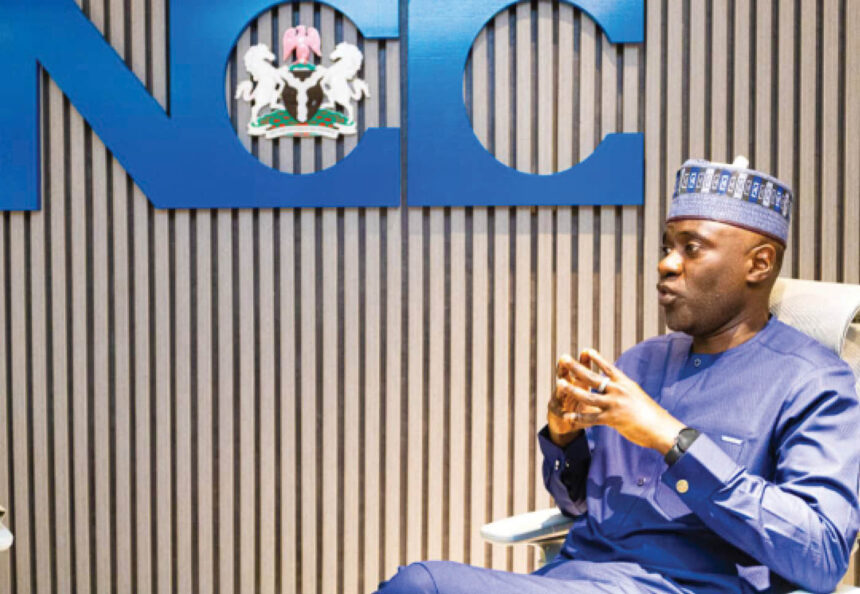
The Nigerian Communications Commission (NCC) is now attempting to remove that barrier with a new initiative that will provide free daily access to approved educational platforms and digital content.
Launched on Thursday, the Zero-Rated Data Access to Educational Platforms and Content initiative is designed to make digital learning more affordable and equitable, while supporting Nigeria’s wider digital economy ambitions and long-term investment in human capital.
Under the initial Operator-Sponsored Model, eligible users will receive up to 100 megabytes of free data every day when accessing designated educational platforms. That translates to about 700MB a week, roughly 3GB a month and up to 36.5GB annually for each learner.
The numbers become more significant when viewed against Nigeria’s large student population and the growing dependence on digital resources for learning.
The Executive Vice Chairman of NCC, Dr. Aminu Maida, described the initiative as an investment in the country’s economic future. He argued that President Bola Tinubu’s ambition of building a $1 trillion economy cannot be separated from the quality of Nigeria’s human capital.
“We need to appreciate how critical education is to economic development because of the role of human capital,” Maida said.
The potential impact of 100MB a day also depends on how learners use it. Text-based educational materials, PDFs and online searches generally consume relatively little data, meaning the allowance could support several hours of learning. Text-based online courses could similarly provide substantial study time, while audio lessons would consume more data.
The initiative therefore has particular relevance for students whose educational opportunities are constrained by household income or location.
Connectivity, Dr. Maida noted, could help narrow regional disparities by connecting learners to teachers and educational resources beyond their immediate communities. In areas where schools face shortages of qualified teachers, digital platforms could provide access to knowledge and instruction that might otherwise be unavailable.
But the programme also represents a substantial commitment from the telecommunications industry. Industry estimates suggest that providing the benefit to five million students could cost operators about N15 billion monthly, or N180 billion annually.
The NCC, however, sees that expenditure as a strategic investment rather than simply an industry cost.
The initiative will not provide unrestricted free internet. Access will be limited to educational platforms that meet defined eligibility requirements and are approved and whitelisted through a governance framework involving the Federal Ministry of Education and the NCC.
Eligible platforms include learning management systems, digital libraries, educational repositories, teacher development services, and technical and vocational training platforms.
The framework also incorporates requirements covering cybersecurity, consumer protection, child protection, data protection, fair competition and net neutrality.
Ayuba Shuaibu, Director, Policy, Competition and Economic Analysis at the NCC, said that the programme would be monitored through indicators including platform usage, data consumption, network performance, service availability, consumer complaints and regulatory compliance.
Several platforms have already been assessed and approved, with more expected to join as the programme develops.
The Minister of Education, Dr. Tunji Alausa, described the initiative as an important intervention because it tackles one of the most persistent obstacles to digital education: the cost of internet access.
For Nigeria, however, the real test will come after the launch. Free access can open the door, but meaningful digital education will ultimately depend on the quality of content, reliability of networks, availability of devices and the ability of students to convert connectivity into learning.
The NCC’s initiative is therefore more than a telecommunications programme. It is an experiment in whether cheaper connectivity can become a practical instrument for expanding educational opportunity and, ultimately, strengthening Nigeria’s human capital.