
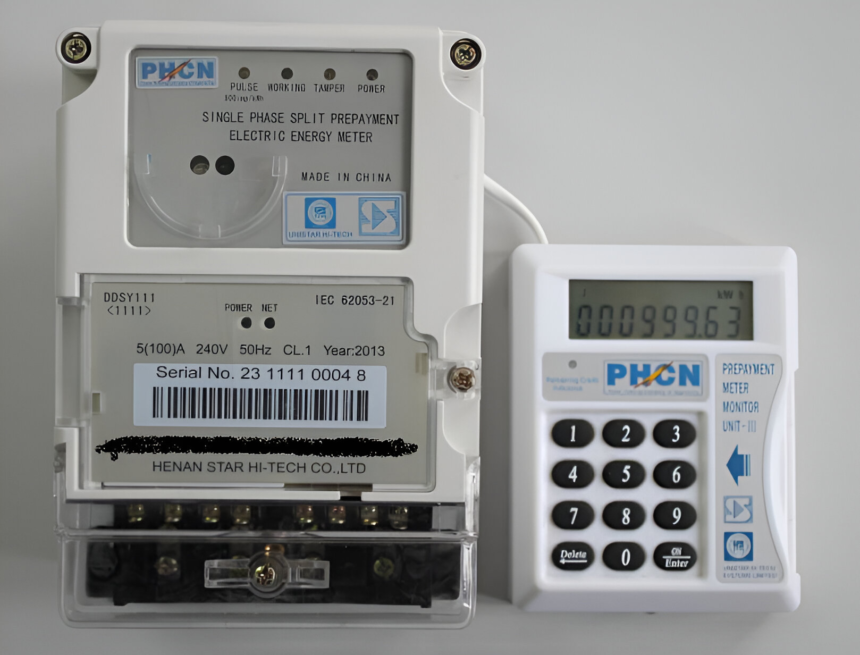
Nigeria’s electricity sector has witnessed numerous reforms over the past two decades. Successive administrations have introduced new policies, reviewed tariffs, attracted private investment and sought to improve power generation. Yet, one persistent challenge has continued to undermine these efforts: the country’s huge metering deficit. In our opinion, the federal government’s plan to deploy about 7 million electricity meters under the Presidential Metering Initiative and the World Bank-supported Distribution Sector Recovery Programme represents one of the most significant interventions in recent years because it addresses the foundation upon which a sustainable electricity market must be built.
For too long, estimated billing has been a source of frustration for millions of Nigerians. Consumers have complained about arbitrary charges, while electricity distribution companies have struggled with revenue leakages, customer distrust and weak commercial performance. We believe no electricity market can function efficiently when a substantial number of customers are billed without accurate measurement of their consumption.
The decision to combine multilateral financing with domestic policy initiatives demonstrates that the government recognises the strategic importance of universal metering. According to the Bureau of Public Enterprises (BPE), the combined implementation of the Presidential Metering Initiative and the Distribution Sector Recovery Programme is expected to deliver about 7 million meters, exceeding the country’s estimated metering deficit of 5.6 million. If successfully implemented, the initiative could significantly improve billing transparency, strengthen utility revenues and restore consumer confidence.
However, we believe Nigerians should measure the programme by results rather than projections. The country’s power sector has never suffered from a shortage of ambitious announcements. Instead, it has often struggled with delayed execution, procurement bottlenecks and incomplete implementation. This initiative must not become another well-designed programme that falls short of its objectives.
In our opinion, the true success of the metering programme will not be determined by the number of contracts awarded or meters procured. It will be measured by the number of households and businesses that receive functional meters within the promised timelines. Government agencies, electricity distribution companies and installation contractors must therefore be held accountable for delivering measurable progress.
We also commend the programme’s emphasis on engaging trained young Nigerians in meter installation. Beyond expanding electricity access, the initiative has the potential to create employment opportunities, develop technical skills and stimulate local economic activities. Such an approach demonstrates that infrastructure investment can generate broader economic benefits when properly designed and effectively implemented.
We urge the federal government to institutionalise transparent monitoring of the programme. Publishing periodic progress reports showing the number of meters delivered, installed and activated across each distribution company would strengthen public confidence and improve accountability. Consumers deserve regular updates on a programme that directly affects their daily lives and economic activities.
At the same time, electricity distribution companies must recognise that universal metering comes with greater responsibility. As estimated billing gradually gives way to accurate measurement, consumers will rightly expect improved service delivery, faster complaint resolution and greater operational efficiency. Metering should not simply improve revenue collection. It should also strengthen the relationship between service providers and their customers.
Ultimately, we believe universal metering is more than an infrastructure project. It is a structural reform capable of addressing one of the electricity sector’s longest-standing weaknesses. A transparent and fully metered electricity market will improve investor confidence, reduce commercial losses and create a stronger foundation for future reforms. Nigeria’s power sector does not merely need more electricity. It needs a system built on fairness, accountability and trust. Universal metering offers that opportunity, and the government must ensure it is fully realised.