
-
Understanding The Real Drivers Of Nigeria’s Rising Debt
-
Why Stronger Revenues Must Now Deliver Measurable Improvements For Citizens
Public debt has become one of the defining issues in Nigeria’s economic conversation. Every announcement of a higher debt stock triggers fresh concerns about fiscal sustainability, future generations and the country’s ability to finance development. Yet, debt figures alone rarely tell the full story. Behind every headline are policy decisions, exchange rate movements, inherited liabilities and budget realities that require careful examination. The recent engagement between Nigeria’s economic management team and the Senate Committee on Finance offered more than a defence of government policies. It exposed the difficult balance between restoring macroeconomic stability and delivering tangible improvements in the lives of Nigerians. For the country, the real issue is not simply how much has been borrowed, but whether public finance is being managed in a way that advances national development. Enam Obiosio writes…
For months, public discourse has been dominated by claims that President Bola Tinubu’s administration borrowed between N75 trillion and N80 trillion, fuelling fears that Nigeria’s debt burden has expanded at an alarming pace.
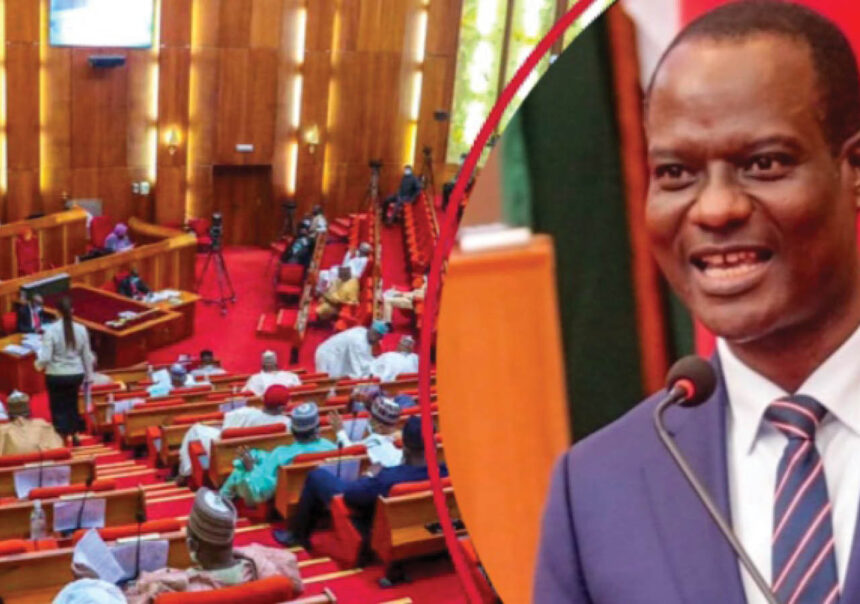
The figures have become a rallying point for critics and a source of concern for many Nigerians already grappling with high living costs. However, during a four-hour engagement with the Senate Committee on Finance, the Honourable Minister of Finance and Coordinating Minister of the Economy, Mr. Taiwo Oyedele, argued that the public conversation has largely overlooked the factors responsible for the increase in the country’s debt stock.
His explanation deserves attention, not because it settles the debate, but because it introduces important context that should inform it.
According to Mr. Oyedele, the President Tinubu administration has not borrowed anywhere close to the figures circulating in public discussions.
“For external loans, we always require the approval of the National Assembly. What usually happens is that once the National Assembly approves a borrowing plan, many people interpret that as money already borrowed. We have not even taken half of what the National Assembly approved.”
The minister explained that over N40 trillion of the increase in Nigeria’s public debt resulted from the depreciation of the naira following exchange rate reforms. Since a significant portion of Nigeria’s external obligations is denominated in foreign currencies, the weakening of the naira automatically increased their value when converted into local currency.
He also noted that another N33 trillion reflected the securitisation of inherited Ways and Means advances from the previous administration rather than fresh loans contracted by the current government.
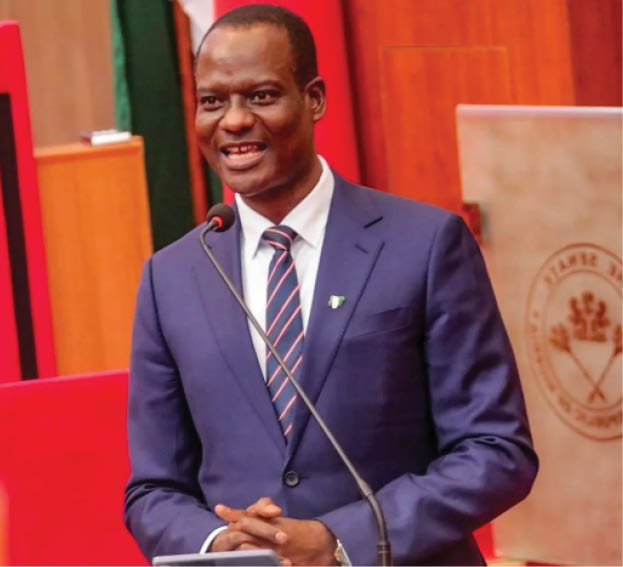
“The actual amount this administration has borrowed is nowhere near what many people believe. Even for domestic borrowing, much of it is refinancing. Debt that was borrowed previously matures, and the government raises new debt to refinance it. That is not new borrowing.”
These explanations distinguish between new borrowing, currency revaluation and debt restructuring, three issues that are often treated as one in public discussions. They also highlight why interpreting debt statistics requires more than looking at headline numbers.
However, providing context should not be mistaken for resolving every concern surrounding Nigeria’s public finances.
While the administration’s explanation clarifies why the debt stock increased so sharply, it does not diminish the fact that Nigeria’s debt obligations remain substantial. Regardless of how the increase occurred, government must still service those obligations from public revenues.
That is precisely why the Senate’s intervention during the session was equally significant.
Rather than disputing the accounting explanations, lawmakers focused on a more practical question. If federal government revenues are improving, why are citizens not seeing faster implementation of national budgets and capital projects?
That question came most forcefully from the Senate Chief Whip, Senator (Sen.) Tahir Monguno.
“If revenue performance has improved so significantly, it appears inherently contradictory that the government is still struggling to implement the budget. Where is the revenue going?”
His concern reflects a broader public expectation. Economic reforms are not judged solely by improved fiscal indicators. They are ultimately assessed by whether they improve roads, hospitals, schools, security and economic opportunities.
Sen. Monguno further observed that the 2025 Appropriation Act had required an extension because implementation remained incomplete, while implementation of the 2026 budget had barely gathered momentum.
He warned: “The dividends of democracy are delivered through the implementation of the budget, particularly capital projects. If the budget is not being implemented, then the fundamental purpose of government is undermined.”
Perhaps his strongest criticism concerned security funding. “All the security agencies that have appeared before this committee informed us that they have received zero capital releases.”
That observation raises legitimate policy questions. If revenues are rising, then the efficiency of expenditure deserves the same level of scrutiny as revenue generation.
The administration, however, maintains that stronger revenues are already beginning to strengthen Nigeria’s economic fundamentals.
Mr. Oyedele disclosed that tax revenue reached N21.6 trillion between January and June 2026, representing a 49 percent increase over the corresponding period of the previous year.
He attributed the growth to tax reforms, digitalisation and stronger compliance.
“Allowing tax evasion to persist amounts to taxing honest taxpayers while rewarding non-compliance. That is not the kind of country we seek to build.”
The minister also highlighted improvements in other macroeconomic indicators.
According to him, Nigeria recorded 3.8 percent gross domestic product (GDP) growth in the first quarter of 2026, while external reserves rose above $51 billion, their highest level in 17 years.
He argued that reforms initiated over the past three years have helped stabilise an economy that was previously under severe strain.
“Three years ago, our economy was on the brink of severe distress. Today, we have made significant progress.”
These indicators suggest that some aspects of Nigeria’s macroeconomic environment are improving.
Yet macroeconomic stability and citizens’ welfare are not always achieved at the same pace.
Higher reserves do not immediately reduce food prices. Improved tax collections do not automatically create jobs. Stronger GDP growth does not instantly repair public infrastructure.
This explains why many Nigerians continue to question whether recent reforms have translated into meaningful improvements in their daily lives.
The Senate Committee on Finance also looked beyond debt and revenue by questioning the country’s budgeting framework itself.
Committee Chairman, Sen. Sani Musa, argued that Nigeria should gradually move towards a performance and priority-based budgeting system, where public expenditure is more closely aligned with measurable outcomes.
“Nations have been adopting performance and priority-based budgeting systems and it has been working for them.”
He stated that government must scrutinise recurrent expenditure and overhead costs to ensure that available revenues produce greater public value.
This recommendation deserves serious consideration. For years, Nigeria’s fiscal debate has centred largely on how government can generate more revenue. Equally important is how efficiently those resources are allocated and monitored.
A country can improve revenue collection significantly and still struggle to achieve development if public spending remains inefficient or poorly prioritised.
That is why the Senate’s oversight role remains critical. Healthy democratic governance requires lawmakers to challenge official assumptions, demand transparency and ensure that public resources are used effectively.
At the same time, the executive has a responsibility to communicate complex economic reforms in language that citizens can understand.
Much of the public misunderstanding surrounding Nigeria’s debt profile stems from the absence of sustained public communication on how exchange rate movements, refinancing and inherited liabilities affect official debt statistics.
Improving that communication would help build greater public confidence in ongoing reforms.
Ultimately, the Senate hearing revealed two realities that can exist simultaneously.
The first is that Nigeria’s fiscal reforms appear to be strengthening important macroeconomic indicators. Rising tax revenues, improved external reserves and moderate economic growth provide evidence that policy adjustments are beginning to stabilise the economy.
The second is that these gains have yet to produce the level of budget implementation and public service delivery that citizens rightly expect. Lawmakers’ concerns over delayed capital releases, infrastructure spending and accountability remain valid and require urgent attention.
The national interest is therefore best served by avoiding two extremes.
It would be inaccurate to dismiss every reform as ineffective simply because economic challenges persist.
It would be equally premature to declare complete success while significant implementation gaps remain.
Nigeria’s fiscal debate should move beyond arguments over whether the debt stock is N75 trillion or N80 trillion.
The more important questions are whether the country’s debt remains sustainable, whether borrowed funds are financing productive investments, whether stronger revenues are being translated into better public services and whether reforms are improving the lives of ordinary Nigerians.
The President Tinubu administration has provided a detailed explanation of the country’s rising debt profile. The National Assembly has responded with equally important demands for accountability and better budget execution.
Both positions serve the national interest.
Going forward, the administration’s credibility will depend not only on explaining debt figures but also on demonstrating that improved fiscal performance leads to faster infrastructure delivery, stronger institutions, better security, quality healthcare, improved education and expanded economic opportunities.