
We should stop treating livestock movement across Nigeria’s borders as merely a commercial or agricultural matter. It is also a public health, food security and national economic issue.
The federal government’s decision to establish animal health border posts and quarantine facilities along 12 major international livestock corridors is therefore an intervention we should take seriously. If properly implemented, it could strengthen one of the weakest links in Nigeria’s livestock value chain: the control of animals entering the country without adequate health certification.
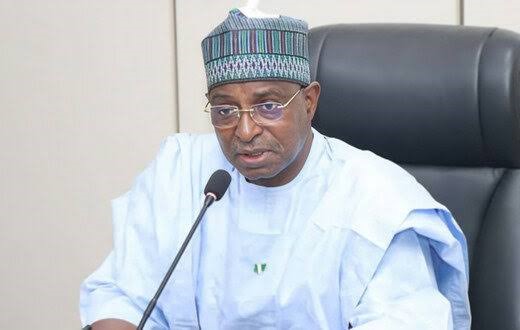
The Minister of Livestock Development, Alhaji Idi Maiha, has raised an important concern. Nigeria receives thousands of cattle weekly from Sudan, Mali, Burkina Faso, Chad, Niger and Benin Republic through international routes. Where such movements occur without effective certification, inspection and quarantine, we expose our livestock population and, potentially, our people to transboundary and zoonotic diseases.
We should understand the scale of that risk. Diseases such as Peste des Petits Ruminants, Contagious Bovine Pleuropneumonia, anthrax, Foot-and-Mouth Disease, Newcastle disease and Lumpy Skin Disease can damage livestock production, reduce farmers’ incomes, disrupt trade and create wider public health concerns. Preventing disease is therefore cheaper and more responsible than responding after outbreaks have spread.
We welcome the fact that the first facility has already been inaugurated at Umfum in Etung Local Government Area of Cross River State and handed over to the Nigeria Agricultural Quarantine Service, with another facility expected in Adamawa State. The planned extension to Borno, Yobe, Jigawa, Kano, Katsina, Sokoto and other strategic border states should follow with urgency.
But we should be clear about what makes these facilities effective. Buildings alone will not protect Nigeria’s livestock. We need trained veterinary personnel, functioning laboratories, reliable surveillance systems, proper documentation, digital traceability and the authority to enforce quarantine decisions.
We also need cooperation with neighbouring countries. Livestock corridors do not stop at national boundaries, and disease control cannot succeed through unilateral action alone.
This is why we should welcome the wider disease surveillance and post-vaccination monitoring programme being undertaken by the ministry. Surveillance must become continuous rather than something activated only when an outbreak occurs.
We should equally recognise the central role of veterinary professionals. Dr Junaid Maina was right to identify research, digital surveillance, food safety and the One Health approach as areas requiring stronger professional leadership. Livestock health, human health and environmental health are interconnected, and our policies should reflect that reality.
The new Federal Ministry of Livestock Development gives us an opportunity to treat livestock as an organised economic sector rather than a collection of disconnected activities. Better disease control can improve productivity, protect rural livelihoods, strengthen domestic supply and make Nigerian livestock products more credible in regional and international markets.
We should therefore see the proposed quarantine network as part of a larger economic infrastructure.
If we secure our livestock borders, strengthen veterinary capacity and improve traceability, we protect farmers, consumers and traders while creating the conditions for a more productive livestock economy.
The objective should not simply be to stop diseased animals at the border. It should be to build a livestock system in which health certification, surveillance and professional veterinary oversight become normal features of production and trade.
That is the standard we should expect from this reform. Nigeria needs a livestock sector that is not only bigger, but healthier, safer, more productive and capable of competing beyond our borders.