
By Anita Dennis
The growing cost of climate disasters is exposing a financing challenge for developing economies: countries most vulnerable to floods, droughts and extreme weather are often required to borrow more to protect themselves, deepening the debt pressures that limit their capacity to respond. The UN Climate Chief, Simon Stiell, has therefore called for a redesign of climate finance to prevent developing countries from becoming trapped in a cycle of debt and disaster.
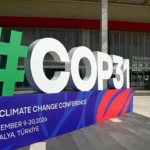
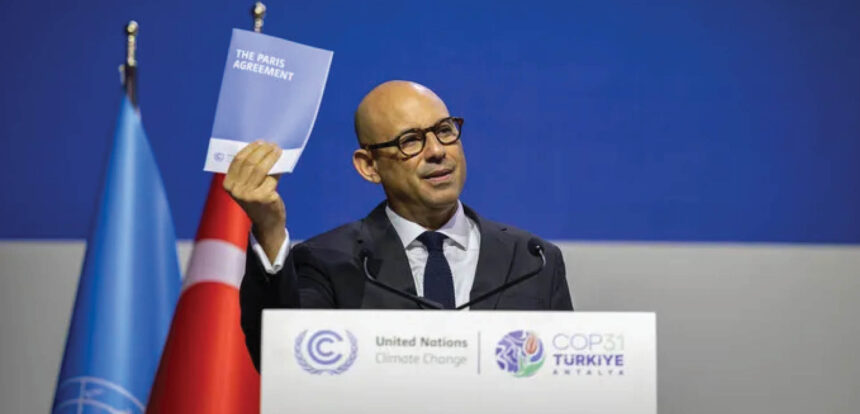
Speaking last Friday at a high-level ministerial dialogue on climate finance at COP31 in Antalya, Turkey, Mr. Stiell said the success of international climate financing should be measured not only by the amount mobilised but also by the conditions under which it is provided.
“Meeting a financial target does not always meet countries’ needs. To do that, we need to look at how finance is delivered,” he said.
The intervention comes as countries work towards implementing the COP29 agreement for developed nations to lead in providing $300 billion annually by 2035, within a broader ambition to mobilise $1.3 trillion each year from all sources.
Mr. Stiell warned that many developing economies face rising borrowing costs because their exposure to climate disasters increases perceived investment risks, even before extreme weather events occur.
“Many developing countries are trapped in a downward loop of debt, disaster, and devastating capital costs,” he said, stressing that grant-based and highly concessional financing must remain available to countries with limited fiscal capacity.
He acknowledged the importance of private investment, commercial loans and guarantees but argued that financing arrangements must reflect countries’ different debt positions. He also called for broader action on sovereign debt to prevent governments from having to choose between debt repayments and climate resilience.
The scale of the challenge is reflected in international financing patterns. A UN Women flagship report released during the summit put international climate finance to developing countries at approximately $137 billion in 2024, with almost 70 per cent delivered as loans.
Similarly, an analysis by the Heinrich Böll Foundation found that sub-Saharan African countries paid more than twice as much in external debt service between 2021 and 2023 as they received in climate finance. In 2024, interest payments also consumed more than 10 per cent of government revenue in 27 African countries.
For Nigeria, the financing debate has direct implications. The National Council on Climate Change estimates that the country requires approximately $337 billion between 2026 and 2035 to implement its climate commitments.
Its Director-General, Omotenioye Majekodunmi, said more than 80 percent of the required funding would need to come from private investment, commercial debt and international carbon finance.
However, Climate Policy Initiative tracking shows that Nigeria received approximately $2.5 billion annually for climate action in 2021 and 2022, combining domestic and international sources. This highlights the scale of the financing gap.
Nigeria is not classified among the UN’s least developed countries, meaning its financing options are likely to include greater reliance on private capital and commercial instruments than grant-dependent economies.
For Nigeria and other African economies, the central question is whether international climate finance can move beyond headline pledges to provide affordable, accessible and sustainable funding without worsening existing debt vulnerabilities.