By Kingsley Benson
Nigeria’s affordable housing sector is witnessing a broader institutional expansion as Family Homes Funds Limited (FHFL) deepens interventions across mortgage financing, student accommodation, social housing and large-scale residential development, reflecting the federal government’s growing emphasis on inclusive socio-economic development under the administration of President Bola Ahmed Tinubu.
The institution’s increasing footprint across critical segments of the housing value chain highlights how housing policy is gradually evolving beyond physical construction into a wider economic and social development instrument targeted at employment generation, financial inclusion, welfare support and infrastructure expansion.
FHFL stated that its operations have been strategically aligned with key federal initiatives designed to improve living conditions and stimulate economic participation, including the Nigerian Consumer Credit Corporation, Nigerian Education Loan Fund, Renewed Hope Infrastructure Development Fund and the Renewed Hope Cities and Estates Programme.
The company said its interventions are structured to support low and middle-income Nigerians while simultaneously strengthening local economic activity through construction financing, skills development and private sector participation.
According to FHFL, the company reaffirmed its commitment to expanding affordable housing access through the rollout of new strategic housing projects and the introduction of innovative mortgage products aimed at addressing financing barriers confronting ordinary Nigerians.
The institution noted that beyond housing delivery, its interventions are also designed to create sustainable social impact through partnerships and targeted support for underserved populations, including students, widows and vulnerable households.
The approach reflects increasing recognition within government circles that housing development can serve as both an economic stabilisation mechanism and a social welfare tool capable of improving living standards while stimulating productive activities across multiple sectors of the economy.
Financing Affordable Homes at The Renewed Hope Cities and Estates – Karsana, Abuja
FHFL’s financing support for the Renewed Hope City project in Karsana, Abuja, represents one of the institution’s most significant interventions within the Federal Government’s expanding affordable housing framework.
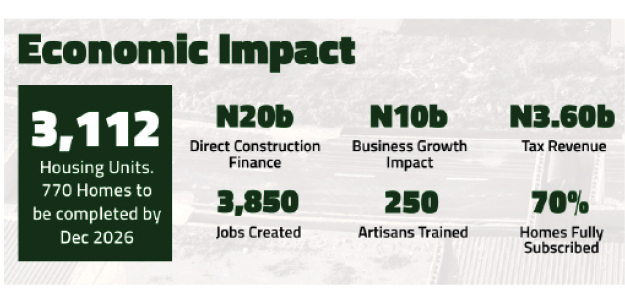
The company disclosed that it committed N20 billion toward financing the development of affordable homes within the project.
According to FHFL, the development is expected to deliver 3,112 housing units, with 770 homes projected for completion by 2025.
Beyond residential delivery, the project is also generating broader economic activity through construction financing, job creation and support for local businesses. FHFL stated that the intervention has already created about 3,850 jobs, generated N10 billion in business growth impact and contributed N3.60 billion in tax revenue.
The company further disclosed that 250 artisans had been trained through the initiative, while 70 percent of the homes had already been fully subscribed, suggesting growing demand for structured affordable housing schemes in urban centres.
The project also reflects the administration’s attempt to position housing development as a driver of economic activity, employment and private sector participation.
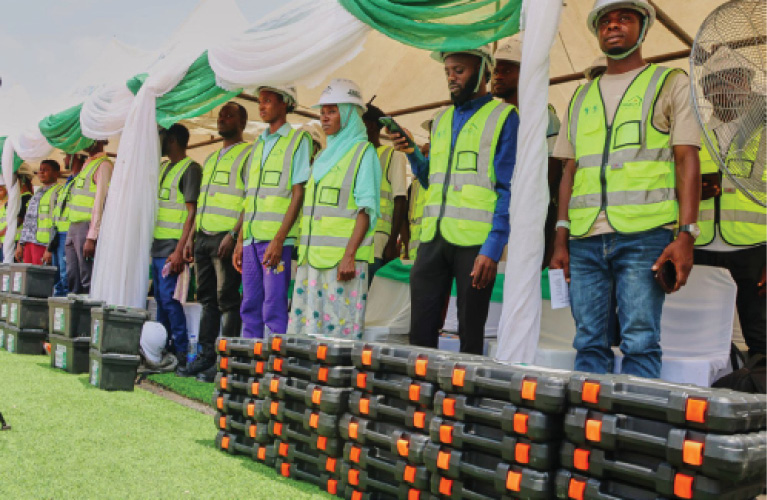
Students Housing Development across Nigeria
FHFL’s expansion into student accommodation financing signals a widening policy focus on educational welfare infrastructure.
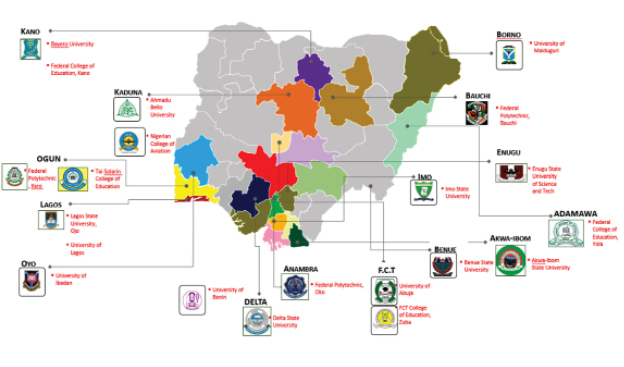
In 2024, the company launched the National Student Housing Programme in collaboration with TetFund, public tertiary institutions and private sector partners to address persistent accommodation shortages across publicly owned institutions.
Under the first phase of the programme, 38,400 bed spaces are expected to be delivered across 24 institutions nationwide.
FHFL disclosed that it committed N5.2 billion toward the construction of 3,200 bed spaces at two pilot locations, while an additional N10.4 billion was approved for four more project locations across Akwa Ibom, Delta, Kaduna, Abuja, Ogun and Bauchi States.
The company stated that the initiative is designed around affordability, student welfare, safety and improved hostel infrastructure, with the first project at Akwa Ibom State University expected to be completed by October 2025.
The intervention reflects broader efforts to improve learning conditions and reduce infrastructure pressures within Nigeria’s tertiary education system.
Delivering Affordable Mortgages through Help-to-Own
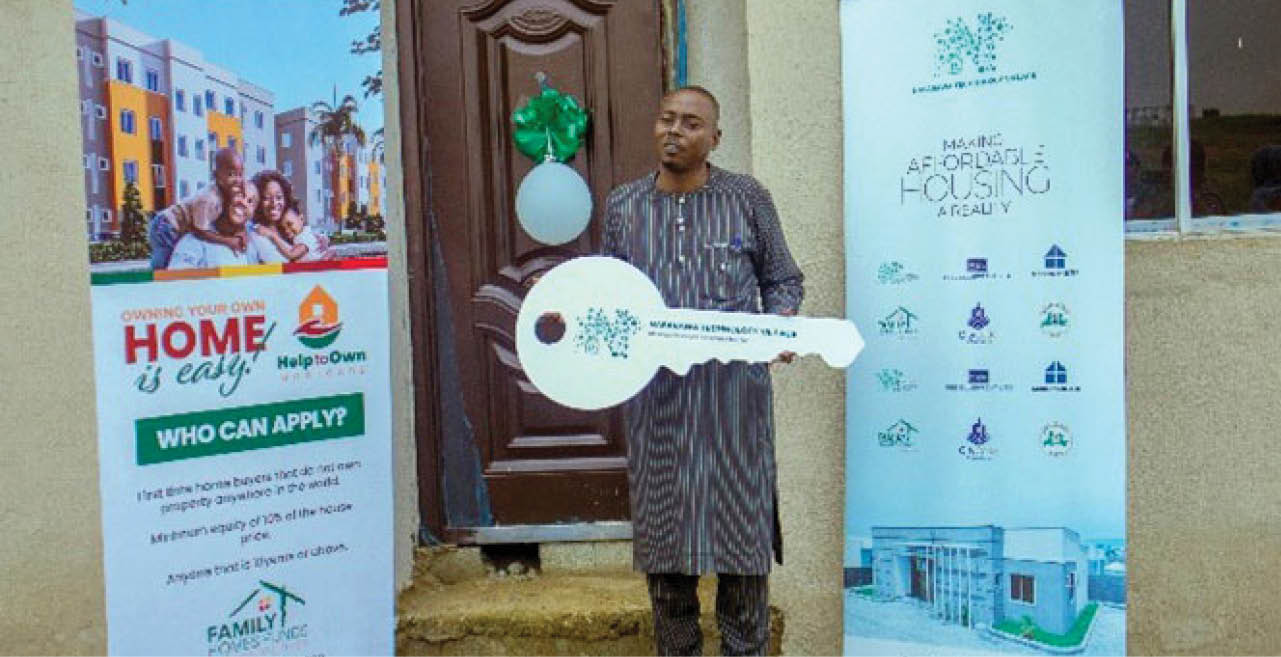
FHFL’s introduction of the Help-to-Own mortgage scheme in March 2024 marked another major expansion in affordable housing financing for low and middle-income Nigerians.
Developed in partnership with the African Development Bank, the mortgage product provides long-term financing options with reduced equity requirements and flexible repayment structures targeted at first-time homeowners.
The company stated that the programme has already disbursed N7.18 billion in mortgages and mobilised N4.53 billion in private sector capital.
According to FHFL, the scheme has impacted 1,012 beneficiaries while generating about 800 direct and indirect jobs. Women accounted for 34 percent of total mortgages issued under the programme.
The mortgage product also received industry recognition after emerging Mortgage Product of the Year at the African Housing Awards 2024.
The initiative reflects increasing policy attention on expanding access to mortgage financing in a country where homeownership remains constrained by limited long-term credit availability and high financing costs.
Development of Sustainable Homes for Widows in Kaduna, Calabar, Ibadan
FHFL’s social housing interventions for vulnerable populations also underscore the growing integration of welfare-focused programmes into Nigeria’s housing development framework.
The company stated that it launched dedicated housing projects targeted at disadvantaged widows, internally displaced persons and other vulnerable groups through the provision of sustainable and affordable homes.
Under its pilot project, FHFL developed 100 energy-efficient two-bedroom semi-detached homes using environmentally friendly and locally sourced materials.
The programme also integrated skills acquisition, artisanal training and entrepreneurship support aimed at improving long-term self-sufficiency among beneficiaries.
According to FHFL, 100 widows and 100 local artisans were trained and empowered under the initiative, while more than 500 workmen were engaged during project execution.
The company added that the programme contributed to reduced carbon footprint and improved household income opportunities for beneficiaries.
The intervention highlights increasing efforts to combine housing delivery with broader social protection and economic empowerment objectives.
FHFL Rating Upgraded to “Aa-” by Agusto & Co.
FHFL’s expanding developmental role has also translated into improved investor and institutional confidence.
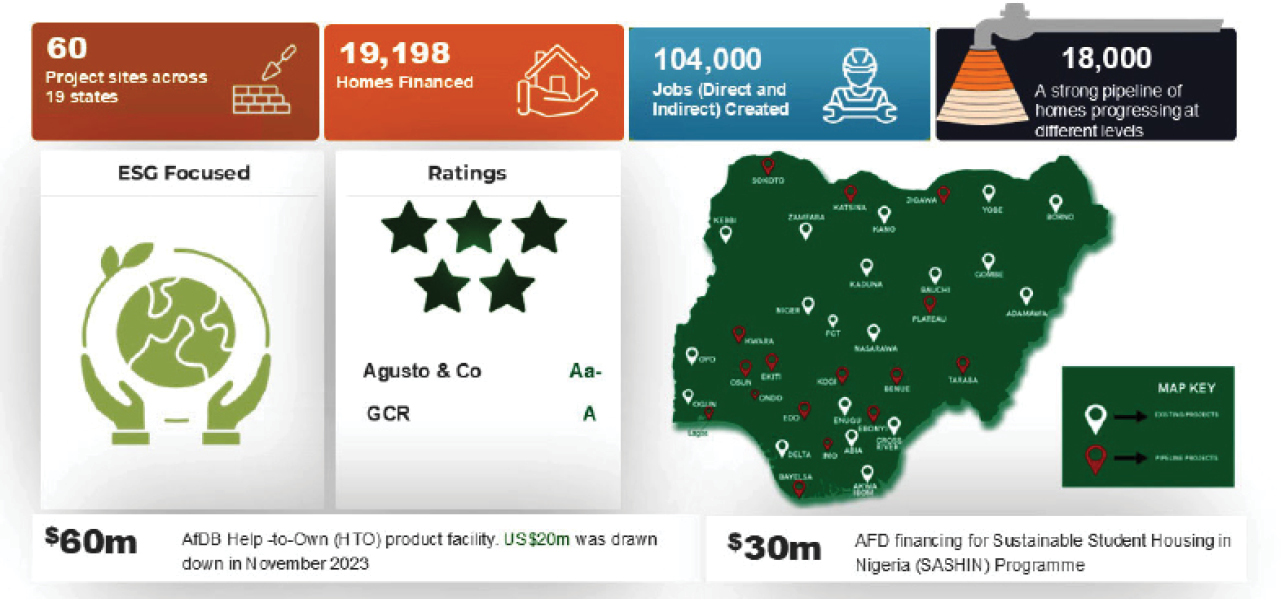
In August 2024, Agusto & Co. upgraded the company’s rating from “A+” to “Aa-”, citing FHFL’s financial stability, developmental impact and strategic approach to affordable housing delivery.
The rating agency stated that the upgrade reflected sustained Federal Government support through capital injections used to support business activities.
Agusto & Co. also cited the company’s liquidity profile, experienced management structure, strong asset quality and absence of non-performing loans as key factors supporting the improved rating.
FHFL Rating Upgraded to A(NG)/A1(NG) from BBB+(NG)/A2(NG) by GCR with Stable Outlook
Further validation came in October 2024 when GCR Ratings upgraded FHFL’s national scale issuer ratings to A(NG) and A1(NG).
The agency also upgraded the company’s Sukuk Issuance Programme ratings and revised the outlook to Stable.
According to GCR, the rating action reflected FHFL’s sustained growth trajectory, increasing role in affordable housing finance and continued access to support from the Federal Government and Development Finance Institutions.
The agency further noted that FHFL’s capitalisation, liquidity position and risk management profile remained major strengths supporting the revised outlook.
About Family Homes Funds Limited
Established in 2017 by the federal government through the Ministry of Finance Incorporated (MOFI) and the Nigeria Sovereign Investment Authority (NSIA), FHFL operates as a housing finance institution focused on large-scale affordable housing delivery and infrastructure development across Nigeria.
The company disclosed that it has financed more than 18,000 homes, 3,200 student bed spaces and several low-cost mortgage schemes while generating over 87,000 jobs nationwide.
FHFL’s assets under management currently stand at about $100 million, while the institution has declared dividends for three consecutive years.
The company added that its operations are aligned with the United Nations (UN) Sustainable Development Goals (SDGs), particularly those related to sustainable cities, decent work, economic growth and strategic partnerships.