
Nigeria’s budgeting culture has become dangerously detached from economic reality. The latest warning from the International Monetary Fund (IMF) should therefore not be dismissed as routine external commentary. It is a blunt exposure of a fiscal culture built increasingly on unrealistic assumptions, weak execution discipline, and politically convenient projections.
In its report titled Budget Credibility in Sub-Saharan Africa, examining fiscal outcomes across 39 African countries between 2021 and 2024, the IMF concluded that deficits across the region have become “persistent and often large” because governments routinely overestimate revenues while underestimating expenditure realities. That diagnosis fits Nigeria perfectly.
We have gradually normalised a system where budget announcements sound impressive on paper but collapse under implementation pressure. Revenue forecasts routinely fail to materialise, borrowing rises beyond initial projections, and capital projects become the first casualties whenever fiscal strain emerges. Meanwhile, recurrent expenditure, salaries, subsidies, government operations, and political obligations remain largely protected regardless of economic conditions.
The result is a dangerous structural imbalance. We are borrowing aggressively, but not necessarily building proportionately. We are expanding budgets faster than we are expanding productive economic capacity. And most worrying of all, we appear increasingly comfortable governing through fiscal improvisation.
The numbers themselves are alarming.
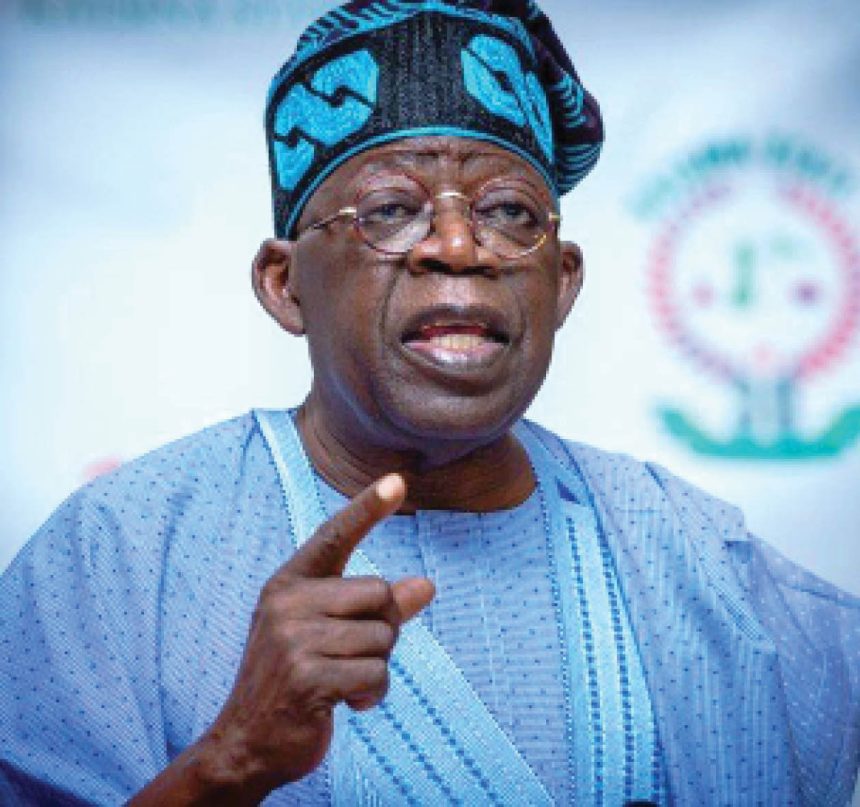
Nigeria’s proposed 2026 budget was initially set at N58.4 trillion. It has now risen to N67.4 trillion following President Bola Ahmed Tinubu’s request for an additional N9 trillion in spending approval. Planned borrowing also surged dramatically from N17.89 trillion to N29.20 trillion.
That is not a marginal adjustment. That is a massive fiscal expansion occurring at a time when debt-servicing pressures already consume enormous portions of public revenue. We must stop pretending this trend is sustainable.
There is a dangerous political temptation in Nigeria to equate bigger budgets with stronger governance. But budget size means little without budget credibility. A N67 trillion budget financed by unrealistic assumptions is not necessarily evidence of economic ambition. It can also become evidence of institutional overreach and fiscal indiscipline.
The IMF’s central argument is important because it reframes Africa’s fiscal problem entirely. The issue is not simply revenue scarcity. The deeper problem is governance quality and institutional execution. In other words, many African governments are not merely poor. They are budgeting poorly. That distinction matters.
Nigeria is not a country entirely lacking resources. We remain Africa’s largest oil producer by reserves, one of the continent’s biggest consumer markets, and a major recipient of foreign investment interest. Yet fiscal outcomes remain persistently weak because budgeting itself has become politically inflated and operationally unreliable.
We continue approving expenditure plans disconnected from implementation realities. We continue projecting revenues that depend excessively on optimistic oil assumptions, uncertain tax performance, or financing inflows that may never fully materialise. And when the inevitable shortfalls emerge, governments respond the same way, more borrowing. This is precisely why debt is becoming one of the greatest long-term threats to Nigeria’s economic stability.
Borrowing itself is not inherently dangerous. Every major economy borrows. The real issue is what borrowing finances. Debt used to build productive infrastructure, industrial capacity, export systems, energy networks, and long-term economic productivity can generate future growth. But debt used primarily to sustain recurrent expenditure eventually becomes economically suffocating. Unfortunately, Nigeria increasingly appears trapped in the second category.
The IMF specifically warned that recurrent spending across African economies consistently exceeds approved limits while capital expenditure suffers during periods of fiscal strain. We are already seeing this pattern repeatedly in Nigeria.
Roads are delayed. Hospitals remain incomplete. Education infrastructure deteriorates. Power projects slow down. Industrial expansion weakens. Yet government operational spending continues almost untouched.
This creates a deeply troubling national pattern, consumption remains protected while development becomes negotiable. That is not sustainable economic management. It is fiscal short-termism.
Even more concerning is the political timing surrounding these expanding expenditure pressures. As election cycles gradually approach, fiscal discipline often weakens further. Governments become more vulnerable to populist spending pressures, political bargaining, subsidy demands, and administrative leakages.
History shows that election periods across many African economies often coincide with deteriorating expenditure controls and wider fiscal slippages. Nigeria cannot afford that pattern again.
We must also confront another uncomfortable truth. Borrowing has become politically easier than reforming the structural inefficiencies draining public finances.