

By Kingsley Benson
In a bold stride toward transforming Nigeria’s energy landscape, the Rural Electrification Agency (REA) has unveiled an ambitious $1.6 billion funding pipeline aimed at accelerating the deployment of solar mini-grids and clean energy solutions across the country.
The initiative signals a defining moment in Nigeria’s drive to achieve universal electricity access, with underserved and off-grid communities set to be the biggest beneficiaries.
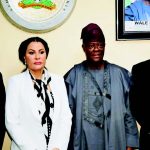
At a recent roundtable engagement themed ‘From Access to Impact: Unlocking Ondo’s Renewable Energy Potential for Economic Transformation and Socioeconomic Inclusion’, The Managing Director of REA, Mr. Abba Aliyu, laid out the roadmap for this expansive renewable energy rollout. Held in Abuja, the engagement brought together policymakers, technical experts, and state stakeholders, including the Governor of Ondo State, Hon. Lucky Aiyedatiwa, whose government is emerging as a frontrunner in subnational energy reforms.
According to Mr. Aliyu, the $1.6 billion funding—sourced from a blend of multilateral partners, public-private partnerships, and climate finance windows—is primed to deliver lasting impact. The pipeline includes $200 million from the Japan International Cooperation Agency (JICA), $50 million in repatriated funds from the U.S. Department of Justice, and close to N500 billion in capital budget commitments. “We are ready,” Mr. Aliyu asserted. “We have the technical ability and resources to partner with states and crystallize private sector funding into real infrastructure.”
REA’s strategy is anchored on decentralized energy models—solar mini-grids, standalone systems, and solarisation of public institutions—which are more adaptable for Nigeria’s rural and semi-urban populations. Highlighting the role of Renewable Energy Service Companies (RESCOs), Mr. Aliyu commended their deployment of over $2 billion worth of infrastructure to Nigeria’s hardest-to-reach areas, noting their competence in community engagement, equity financing, and long-term sustainability.
Yet beyond the figures and funding streams lies a critical pivot in governance: Nigeria’s 2023 Electricity Act, which decentralizes electricity regulation and implementation to the states. REA’s state-by-state readiness assessment rates Ondo State highly—scoring 4 out of 5 on policy capacity—though gaps remain in funding and data readiness.
Governor Aiyedatiwa welcomed the partnership as ‘catalytic,’ marking a new phase in the state’s ambitious electrification roadmap. The signing of a Memorandum of Understanding (MoU) with REA formalizes this commitment. “This MoU is not just symbolic,” he said. “It is a springboard for co-created solutions, scaled investments, and institutional progress.”
Underpinning Ondo’s progress is its 2020 Electric Power Sector Law, which created a robust legal framework for state-level electricity markets and birthed the Ondo State Electricity Regulatory Bureau—an independent body that mirrors the REA in function and collaboration. The state also established its own Rural Electrification Agency to expedite the delivery of energy to remote communities.
As a result, Ondo State now boasts more operational mini-grids than any other subnational entity in Nigeria. Its clear regulatory framework, streamlined permitting, and investor-friendly policies have made it a preferred destination for renewable energy developers.
Governor Aiyedatiwa disclosed that the state’s energy roadmap is designed to power agro-processing clusters, digital infrastructure, healthcare centres, and schools, especially in rural areas such as Golo, Nduru, Idowe, Oro, and Akoko. He also urged REA to consider establishing renewable energy manufacturing hubs in the state. “This vision,” he said, “is anchored in sustainability, inclusion, and resilience.”
With 119 million Nigerians still lacking electricity access and 22 million households off-grid, the stakes could not be higher. But the REA’s strategy, as detailed by Mr. Aliyu, is more than just about power—it is about equity, economic inclusion, and shared prosperity. Through strategic collaboration, sound legislation, and private sector innovation, states like Ondo are lighting the path forward for a cleaner, more connected Nigeria.
As both federal and state actors align under a shared electrification vision, the message is clear: renewable energy is not only the future—it is the fastest route to economic empowerment, job creation, and sustainable national development.