
REFORM TALKS with Enam Obiosio
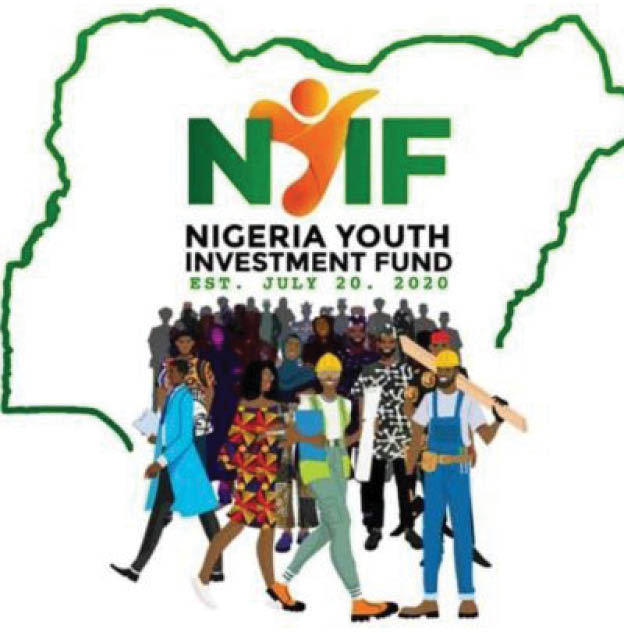
The announcement by the National Orientation Agency (NOA) of a N110 billion National Youth Investment Fund (NYIF) to support 150,000 young Nigerians is, on the surface, a commendable move. At a time when our nation’s youth often feel abandoned, frustrated, or forced to migrate in search of opportunity, the signal of intentional investment is refreshing. Yet, if history has taught us anything, it is that grand pronouncements mean little without credible execution, transparency, and impact that can be measured in the lives of ordinary Nigerians.
Mallam Lanre Issa-Onilu, the Director-General (DG) of the NOA, unveiled this programme in Zamfara, alongside four other flagship federal initiatives. His message was clear: this administration wants Nigerians to know that government is not sleeping. Beyond the youth fund, he spoke of N59 billion already disbursed for student loans to over 600,000 applicants, of 2million households benefiting from Conditional Cash Transfers, of 700 rural schools under renovation, and of TraderMoni and FarmerMoni loans being revived. On paper, the list is impressive. In reality, Nigerians will judge these programmes not by their breadth but by their depth, by whether they actually transform daily lives.
For the youth fund in particular, the stakes are even higher. Over the years, many similar schemes have been announced with great fanfare: YOUWIN, N-Power, GEEP, and more. Some helped, but many collapsed under the weight of bureaucracy, corruption, or poor follow-through. Will this N110 billion end differently? Will it be the seed that births new startups, artisans, and innovators – or will it simply circulate among politically connected beneficiaries, as has too often been the case?
The encouraging sign is the structure. The agency explained that the Industrial Training Fund (ITF) is finalizing the SUPA project to certify artisans, while the Federal Ministry of Youth is coordinating the fund with relevant agencies. This layered approach – youth ministry, NOA, ITF, and others—suggests a recognition that no single arm of government can succeed alone. But layered coordination also risks layered confusion. Without clear accountability, good initiatives become tangled in bureaucratic webs. Nigerians have seen this movie before.
Yet, I find hope in one thing: the new push for digital applications. It is stressed that the student loan system, run through NELFUND, is fully online, eliminating middlemen. If the NYIF follows this same route – transparent portals, real-time tracking, and verifiable disbursements – it could sidestep many of the leakages that plagued past programmes. Imagine a Nigeria where a welder in Enugu, a fashion designer in Kaduna, or a young tech innovator in Lagos can apply from their phone, get approved without knowing a senator, and use the funds to build a sustainable business. That is the promise this fund carries.
But even money is not enough. We must confront the environment into which these youths are investing. What good is a N500,000 loan if epileptic power supply doubles their costs, or if insecurity makes it unsafe to operate in their local communities? What is the point of certifying artisans if the markets are flooded with cheaper imports from Asia that undercut local workmanship? What does it profit a farmer to access “FarmerMoni” when roads are so poor that produce rots before reaching buyers? These systemic challenges mean that any youth fund, however well-intentioned, will achieve only limited success unless accompanied by broader reforms in infrastructure, governance, and security.
Another reason this fund must not fail is its potential to serve as a signal to the global investment community. The world is watching how Nigeria treats its young people. With over 60% of our population under 30, success stories from the NYIF could position Nigeria as a youth-powered economy worthy of international partnerships. Conversely, if the fund flounders, it will reinforce the damaging stereotype of Nigeria as a nation incapable of managing its own opportunities. That reputational cost would be far greater than the N110 billion being spent.
Furthermore, the fund represents a rare chance to democratize access to capital. In today’s Nigeria, it is often only the well-connected who can raise the seed money to start a business. Banks are too risk-averse, interest rates are punishing, and collateral requirements are out of reach for most young people. A properly managed NYIF would level the playing field by ensuring that a brilliant idea from a village in Ekiti or a mechanic in Kano has the same opportunity as a startup in Victoria Island. That is how inclusive growth begins.
We must also be honest: monitoring and evaluation will make or break this initiative. Too many government schemes collapse because after disbursement, there is little follow-up on whether the funds were used productively. If the NYIF builds a culture of continuous tracking, mentorship, and support—checking on businesses, offering guidance, and publishing progress reports—it will not only improve outcomes but also build public confidence. Nigerians deserve to know, quarterly and publicly, how many jobs have been created, how many loans have been repaid, and what lessons have been learned.
Finally, the youth themselves must take ownership of this opportunity. Government can provide funds and structures, but no policy can manufacture discipline, creativity, and resilience. Young Nigerians must see this not as “free money” but as a platform to prove what they can do. They must repay loans so others can benefit, showcase their success stories, and hold government accountable for promises. Only then can the NYIF become not just a fund but a movement—a demonstration that when Nigerian youths are trusted and invested in, they rise to the challenge.
Still, I return to the symbolism of this announcement. At a time when cynicism is growing, when citizens are weary of empty speeches, the NOA is saying: “we want to talk with you, not at you.” The agency promised town hall meetings, advocacy visits, school engagements, and outreach to markets and motor parks. This is significant. For too long, Nigerians have been talked down to by government; real dialogue was missing. If the NOA truly creates a feedback loop – listening, answering questions, adjusting policies – it might just rebuild some of the trust deficit that plagues our democracy.
So, what do I think of the N110 billion youth fund? I think it is a lifeline waiting to happen. But lifelines can either pull people up or snap under the weight of expectation. For it to work, transparency must be absolute, targeting must be real, and monitoring must be relentless. Nigerians must not only hear about 150,000 beneficiaries; they must see their neighbours, cousins, and colleagues becoming those beneficiaries. Success stories must multiply until skepticism gives way to belief.