By Musa Ibrahim
In Nigeria, over 28 million housing units are needed to meet the demand for safe, affordable homes. For many, that figure represents a complex policy challenge. But for women like Aisha Isiyaku and Tabitha Iliya, it represents years of insecurity, poverty, and broken dreams lived out in overcrowded compounds, leaking roofs, and communities without toilets, clean water, or safety.
These women aren’t just statistics. They are mothers, entrepreneurs, and survivors – until recently, forgotten by a system ill-equipped to provide meaningful shelter. But all of that is changing through a quiet revolution taking shape in Kaduna State.
Enter Family Homes Funds Limited (FHFL), a government-backed institution redefining what social housing can look like in Nigeria. In partnership with the Federal Ministry of Budget and Economic Planning, the Adashe Women Society, and technical partner NASENI, FHFL has launched a bold pilot program aimed at transforming not just where people live – but how they live.
At the heart of FHFL’s initiative is a simple but powerful idea: social housing must be about more than walls and roofs – it must be about people.
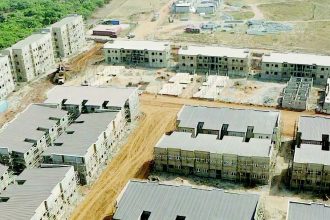
The pilot project includes 100 energy-efficient homes, designed and built for disadvantaged women from across Kaduna State. Each beneficiary belongs to the Adashe Women Society, a grassroots network of widows, single mothers, displaced persons, uneducated women, and the physically challenged.
But the program doesn’t stop at providing keys to a house.
Each woman receives:
- A 2-bedroom, prefabricated home with modern, sustainable architecture
- Hands-on training in a productive skill – tailoring, cosmetology, horticulture, soap-making, spice blending, or food processing
- Startup capital to launch a business
- Essential machinery and equipment tailored to their trade
- Ongoing entrepreneurial development and financial literacy
“The idea is to break the cycle of poverty from every angle – shelter, skills, and income,” said an FHFL spokesperson. “We are not just giving homes. We are building the economic resilience of women who have long been excluded.”
How It Works: Sustainability Meets Strategy
The homes themselves are built using Expanded Polystyrene (EPS) prefabricated panels – a cutting-edge building material that reduces both cost and carbon emissions, while enabling rapid, high-quality construction. These materials, combined with passive design techniques such as cross ventilation, natural lighting, and solar readiness, create homes that are affordable to maintain and environmentally friendly.
“This is not just about housing poor people,” says a senior project engineer on the site. “It is about sustainable urban planning and building homes that last.”
What is more, the program generated local jobs during construction, as FHFL trained community artisans and engaged local labor for everything from site clearing to finishing. This skills transfer is a strategic component of the initiative, creating employment even before the homes are occupied.
Real Women, Real Change
The impact is best seen in women like Aisha, a 32-year-old mother of seven, whose life unraveled after her husband died. Cramped in a room without water or privacy, her children slept on the floor while she tried to run a petty trade business. After being selected for the program, she not only received a house but was trained in tailoring and given startup support.
“Now, I work from home, and my children sleep in peace,” she says. “We have a future again.”
Or Tabitha, a 48-year-old widow who sold sugarcane to survive. With no schooling and six mouths to feed, every day was a battle. After her selection, she trained in cosmetology, received startup tools, and now runs a small salon in her living room.
“I never imagined I would own a home and a business,” she says, smiling. “FHFL gave me more than shelter – it gave me my life back.”
These are not isolated successes. Dozens of women have gone from homeless to home-owning, from helpless to self-employed.
A Blueprint for National Replication
Nigeria’s housing crisis is as much a social issue as it is an economic one. Rapid urbanisation, low-income levels, high building costs, and limited financing access have pushed millions into slums or informal settlements. While the government’s Renewed Hope Agenda has earmarked N11.5 billion for housing, experts say the country needs to build 550,000 homes annually to make a dent in the deficit.
FHFL’s pilot project offers a working model for addressing this gap, especially for low-income women and vulnerable populations.
It aligns perfectly with Nigeria’s National Poverty Reduction and Growth Strategy (NPRGS) and the United Nations Sustainable Development Goals – particularly SDG 1 (No Poverty), SDG 5 (Gender Equality), SDG 11 (Sustainable Cities and Communities), and SDG 8 (Decent Work and Economic Growth).
By blending housing with empowerment, FHFL is demonstrating that meaningful development must be people-centered, scalable, and sustainable.
The next phase of the program aims to replicate the model in multiple states, expand to include more women, and attract donour, diaspora, and private sector investment. With a projected cost of N200 billion for 10,000 homes, FHFL is already exploring carbon credit schemes and impact investment vehicles to fund future expansion.
As the ripple effects of this pilot continue to grow, communities are stabilising, families are thriving, and women are reclaiming their agency.
For Aisha, Tabitha, and countless others, the gift of a home is just the beginning.
“You give a woman a home, and she gives you a business, a school, a garden, a future,” says a community elder. “That is the real power of this project.”