REFORM TALKS with Enam Obiosio
I look at the disruption currently shaking global commodity markets and I see a familiar pattern in the way the world suddenly rediscovers the strategic importance of certain resources. When supply chains run smoothly, few people think deeply about where critical commodities come from. But the moment conflict erupts, shipping routes close and production slows, the global economy remembers an uncomfortable truth, modern civilisation runs on a fragile web of strategic inputs. One of those inputs is fertiliser.
The war involving Iran has done more than ignite geopolitical tension in the Middle East. It has shaken the foundations of the global fertiliser trade, and the consequences are already unfolding across international markets. Shipping routes through the Strait of Hormuz have been disrupted, fertiliser plants in the Gulf region have been forced to shut down, and global buyers are scrambling to secure supplies before planting seasons begin. I see this moment as a serious test of whether Nigeria understands the economic leverage embedded within its own natural resource base.
For decades, Nigeria’s economic story has been dominated by crude oil. Oil revenues have shaped fiscal policy, foreign exchange stability and national development debates. Yet while oil has occupied the centre stage, another resource has quietly positioned Nigeria within a different strategic market, the global fertiliser industry.
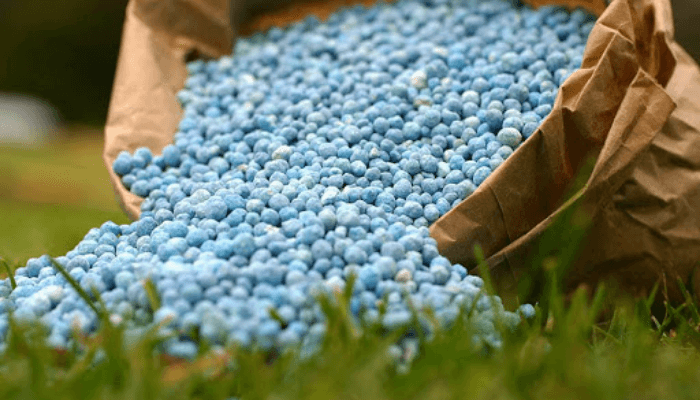
Urea, the most widely used fertiliser in the world, is now at the centre of a rapidly tightening global supply situation. Without nitrogen based fertilisers such as urea and ammonia, modern agriculture would struggle to sustain global food production. Crop yields would fall dramatically and food shortages would intensify across continents. This is not an exaggeration. Fertilisers are the invisible foundation beneath global food systems.
That is precisely why the disruption of fertiliser supply chains carries enormous implications. The Strait of Hormuz is not merely a shipping corridor for crude oil. It is also one of the most critical transit routes for the global fertiliser trade. Roughly one third of global urea shipments move through that narrow waterway. When conflict disrupts traffic there, the effects ripple quickly across international markets. That ripple has now become a surge.
Countries that depend heavily on fertiliser imports are beginning to feel the pressure. Supply disruptions are emerging, prices are becoming volatile and buyers are urgently seeking alternative sources. Fertiliser plants in the Gulf region have already been forced offline, while rising natural gas prices are squeezing producers in other parts of the world.
Gas, after all, is the central feedstock for producing ammonia and nitrogen fertilisers. When gas prices spike, fertiliser production becomes more expensive and sometimes commercially unviable. That is precisely what Europe is experiencing.
Natural gas prices across European markets have surged sharply since the outbreak of the Iran conflict. Bloomberg reports that gas prices have risen by more than fifty percent. For fertiliser producers, this is devastating. High gas costs mean factories cannot operate profitably. Production is therefore reduced or suspended entirely.
Slovakia’s largest fertiliser manufacturer has already announced a cutback in ammonia production because of soaring gas prices. Similar pressures are emerging across other parts of Europe and the Middle East. As production contracts, the global fertiliser market tightens. And that is where Nigeria enters the equation.
I find it striking that many Nigerians still fail to grasp how significant the country’s fertiliser industry has become. Nigeria is not a minor participant in this market. It is already one of the world’s major producers of urea, and its production capacity places it firmly within the global fertiliser supply chain.
The country hosts three major urea production facilities, Notore Chemical Industries, Indorama Eleme Fertiliser and Chemicals Limited, and Dangote Fertiliser Limited. Together, these plants possess a combined production capacity of roughly 6.5 million metric tons annually.
These are not dormant projects waiting for investment. They are operational industrial assets already supplying markets across several continents.
In 2023 alone, Nigeria produced approximately 3.65 million metric tons of urea. By 2024, the country exported about 3.2 million tons, earning roughly 850 million dollars in export revenue according to United Nations Comtrade data.
Those figures deserve careful attention because they represent something more than export statistics. They demonstrate that Nigeria already occupies a strategic position in a commodity that underpins global food security.
The ongoing disruption of fertiliser supply is now magnifying that position.
Industry insiders confirm that international demand for Nigerian urea is increasing rapidly. Fertiliser buyers across multiple regions are placing new orders as shortages begin to appear in global markets. One employee at Indorama acknowledged that orders have been rising steadily since the Iran conflict disrupted supply chains.
Even major industry leaders are confirming the surge. Devakumar Edwin of Dangote Industries Limited has stated that demand for urea produced by Dangote Fertiliser has increased substantially due to tightening supply in international markets. This should not surprise anyone who understands the structure of the fertiliser industry.
When production declines in one region and gas prices rise elsewhere, global buyers begin searching for stable suppliers. Nigeria, with its large natural gas reserves and expanding fertiliser production capacity, suddenly becomes a critical alternative source.
For Nigerian producers, this is clearly a commercial opportunity. Rising international demand could translate into stronger export revenues, higher production levels and deeper integration into global commodity markets. But I refuse to treat this moment as a simple export boom.
Opportunity without careful management can quickly produce unintended consequences.
One of those consequences is already emerging inside Nigeria itself. While international demand is rising, fertiliser prices within the domestic market are also climbing. A 50-kilogram bag of fertiliser that sold for about thirty three thousand naira just a week ago is now selling for roughly thirty six thousand five hundred naira.
That eleven percent increase may appear modest at first glance, but it carries deeper implications for Nigeria’s agricultural economy.
Fertiliser affordability directly affects farm productivity. When fertiliser prices rise sharply, farmers reduce application rates in order to control costs. Reduced fertiliser use leads to lower crop yields. Lower yields push food prices upward.
Nigeria is already grappling with high food inflation. Any additional pressure on agricultural productivity could worsen the situation dramatically. This is why I believe policymakers must approach the current fertiliser boom with strategic caution.
Nigeria must expand production in order to capture the global demand emerging from this crisis. Industry leaders such as Gideon Negedu, former executive secretary of the Fertiliser Producers Suppliers Association of Nigeria, are correct in urging increased output from local producers.
The world needs fertiliser, and Nigeria has the industrial capacity to supply it.
But domestic agriculture must not be sacrificed in the process. Nigerian farmers must continue to have access to fertiliser at prices that remain economically sustainable. If local fertiliser becomes unaffordable because export markets are absorbing supply, the country could face rising food insecurity despite exporting millions of tons of fertiliser abroad. That would be a tragic contradiction.
I believe the government must therefore strike a delicate balance between export opportunity and domestic food security. Strategic allocation policies, production expansion incentives and targeted support for local farmers may all be necessary to maintain that balance.
Beyond the immediate commercial implications, there is a broader lesson emerging from the global fertiliser disruption.
The world is entering an era in which control of strategic commodities increasingly shapes geopolitical influence. Oil once dominated that conversation. But food security is becoming equally powerful.
Countries that control fertiliser supply chains now possess leverage within the global agricultural system. When fertiliser supply tightens, nations dependent on imports must negotiate with producers in order to secure access. Nigeria is now part of that group of producers.
For a country that has long struggled with economic diversification, this development should command serious strategic attention. Fertiliser production represents an industrial sector where Nigeria possesses genuine comparative advantage. The country has abundant natural gas reserves, expanding petrochemical infrastructure and growing industrial expertise. Those ingredients form the foundation of a globally competitive fertiliser industry.
Yet industries do not expand automatically. They require policy stability, infrastructure support and long-term planning. Nigeria must ensure that gas supply remains reliable for fertiliser producers. Transportation and export logistics must be strengthened. Industrial policies must support capacity expansion rather than create bureaucratic bottlenecks.
If those conditions are met, Nigeria’s fertiliser sector could evolve into a powerful pillar of non-oil export revenue.
But beyond revenue, fertiliser production also connects Nigeria to a larger global conversation about food security. As climate change, geopolitical conflict and supply chain disruptions continue to reshape agricultural systems, reliable fertiliser suppliers will become increasingly valuable. Nigeria can be one of those suppliers.
Nigeria is already producing millions of tons of urea annually. It possesses the raw materials needed to expand production further. Global demand is rising at precisely the moment when other producers are struggling with energy costs and logistical disruptions. The pieces are already on the table. The real question is whether Nigeria will assemble them into a coherent strategy.