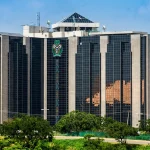
As Nigeria charts a bold course toward industrialization, economic diversification, and mass poverty alleviation, one institution stands at the center of the transition: the Bank of Industry (BOI). The nation’s oldest and most influential development finance institution is being repositioned as a key driver in President Tinubu administration’s push for inclusive, private sector-led growth.
The Managing Director and Chief Executive Officer (MD/CEO) of the bank, Dr. Olasupo Olusi, who is also a seasoned economist and development finance expert, has launched a sweeping strategic pivot in alignment with the Renewed Hope Agenda, signaling a new direction for industrial finance in Nigeria.
The bank’s renewed focus is reflected in several priority areas: The BOI has revamped its internal risk assessment frameworks to curb non-performing loans, enhance loan recovery, and strengthen compliance and accountability; beyond funding machines and infrastructure, the bank now prioritizes financing ideas and people—particularly youth, women, and micro-entrepreneurs—embedding financial inclusion into its industrialization mandate; the bank has attracted over $1 billion in concessional funding from partners including the AfDB, AFD, and KfW—unlocking affordable, long-term capital for industrial growth. In line with President Tinubu’s digital governance reforms, the BOI has launched a Digital Lending and Analytics Hub, enabling data-driven, transparent loan approvals and streamlined customer service.
From Intervention to Transformation
President Tinubu’s reform blueprint rests on four foundational pillars: economic stability, fiscal and monetary discipline, infrastructure renewal, and job creation through industrial growth. The BOI’s evolving role mirrors these national priorities. The key reforms include:
- Scaling Up Development Finance Capacity to meet Nigeria’s industrial demands.
- Fostering Industrial Ecosystems instead of just disbursing loans.
- Deepening MSME Access to Capital in collaboration with state governments and international partners.
- Targeted Inclusion of women and youth, often the most underserved entrepreneurial demographics.
The bank is no longer just a financier—it is now a builder of industries, central to the president’s ambition to transform Nigeria into a $1 trillion economy by 2030.
MSMEs: Powering Grassroots Prosperity
BOI’s support for micro, small, and medium-sized enterprises (MSMEs) has intensified under the current administration. Industrial development is now approached as a grassroots imperative, not a privilege for a few.
Working alongside the Federal Ministry of Industry, Trade and Investment, BOI has disbursed over N100 billion in SME loans since 2023—many with interest rates as low as five percent, extended tenors, and simplified application processes.
These efforts have:
- Enabled over 2 million MSMEs to access formal credit.
- Created or preserved more than 1.5 million jobs.
- Boosted productivity in sectors like agribusiness, fashion, furniture, and ICT.
Through flagship initiatives like the BOI-FG MSME Fund, Fashion and Beauty Accelerator, and the Graduate Entrepreneurship Fund, the bank provides not only financing but also training, digital tools, and mentorship to ensure sustainability.
Driving Industrialization, Value Chain Development
A key component of President Tinubu’s industrialization strategy is backward integration—maximizing value from local production. In response, the BOI launched the Strategic Industrial Intervention Framework (SIIF) in 2024 to channel funds toward:
- Agro-processing and food storage to reduce post-harvest losses.
- Reviving textile and garment clusters in Northern Nigeria.
- Supporting leather and footwear clusters in Aba and Kano.
- Refurbishing industrial parks and shared facilities across the six geopolitical zones.
Development Finance with Impact
BOI’s transformation under this administration transcends conventional lending. It now functions as a development finance institution (DFI) with defined social and environmental impact goals, including sustainability, gender equity, and inclusion.
Expanding Local, Global Partnerships
In response to renewed calls for foreign direct investment and private sector engagement, the BOI has broadened its strategic alliances. Between 2023 and 2025:
- Over $1 billion was secured from global DFIs, including AfDB, Afreximbank, KfW, and AFD.
- Co-financing agreements were signed with state governments in Ogun, Lagos, Edo, and Kaduna state—supporting agro-industrial clusters and light manufacturing.
- A Creative Industry Fund was launched in partnership with private equity firms to finance Nigeria’s booming film, music, and gaming sectors.
Digitization, Transparency at the Core
Aligned with President Tinubu’s public sector reform push, the BOI has undergone a digital overhaul. A new online portal now allows real-time loan tracking, application submission, and AI-based risk analysis—cutting red tape, improving access, and eliminating inefficiencies.
Bringing Development Finance Closer People
The BOI’s grassroots expansion continues. Speaking at the commissioning of the bank’s new office in Kogi State, Dr. Olusi emphasized that the event was more than a ribbon-cutting—it marked the bank’s firm commitment to bringing industrial finance to underserved communities.
“Our presence here will empower MSMEs, cooperatives, and youth- and women-led ventures in Kogi to grow, create jobs, and drive inclusive development,” he said.
The new office aligns with the bank’s strategy of:
- Expanding outreach to MSMEs across all 36 states.
- Promoting local manufacturing and entrepreneurship.
- Delivering sector-specific support to industries like agriculture, solid minerals, and the circular economy.
Through instruments like the N200 billion MSME Intervention Fund, the BOI continues to fund businesses that are driving Nigeria’s growth, jobs, and innovation.