
By Kingsley Benson
The Central Bank of Nigeria (CBN) is quietly reshaping the composition of the nation’s external reserves. At the centre of that shift is gold, a traditional store of value that has regained global prominence as central banks respond to economic uncertainty, inflation pressures, and geopolitical risks.
Recently, the CBN has confirmed that its gold reserves have risen to $3.5 billion following the addition of responsibly sourced gold refined to the London Bullion Market Association (LBMA) Good Delivery standard. The development signals a growing commitment by the apex bank to diversify reserve assets and strengthen the country’s financial buffers.
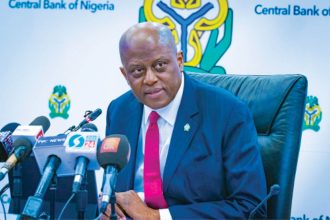
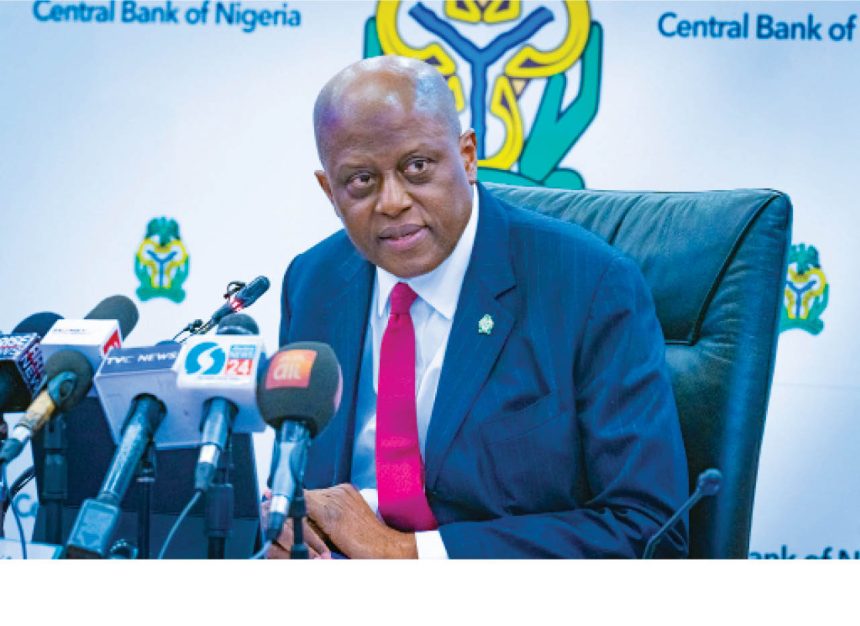
The announcement came as policymakers and industry stakeholders gathered in Abuja for a one-day workshop focused on strategies to maximise the economic value of Nigeria’s mineral resources. At the event, CBN Governor, Mr. Olayemi Cardoso, explained that the gold was sourced locally and aggregated through the Solid Minerals Development Fund (SMDF) under the National Gold Purchase Programme.
Unlike conventional reserve accumulation that relies heavily on foreign currency assets, the arrangement allows the CBN to purchase monetary grade gold in naira while pricing it against international LBMA benchmarks. This approach protects Nigeria’s foreign exchange reserves while simultaneously increasing the country’s holdings of physical gold.
According to Mr. Cardoso, the strategy aligns with a broader global shift among central banks that are strengthening their balance sheets by increasing exposure to gold. The metal has regained importance in recent years as a hedge against inflation and financial volatility.
By purchasing domestically refined gold without deploying foreign exchange, the apex bank is able to expand its reserve portfolio while supporting the local mining ecosystem. The arrangement also creates a formal market for gold produced by artisanal and small-scale miners, provided it meets internationally recognised responsible sourcing standards.
The governor noted that the initiative follows global best practices, including the Organisation for Economic Cooperation and Development due diligence guidelines and the World Gold Council’s London Principles on responsible sourcing. These frameworks ensure that gold entering the financial system is traceable, responsibly mined, and compliant with international ethical standards.
Industry stakeholders present at the workshop described the programme as an important step toward integrating Nigeria’s mineral wealth into the country’s macroeconomic strategy.
Executive Secretary of the SMDF, Hajiya Fatima Umaru Shinkafi, said the successful delivery of LBMA standard gold reflects the strength of the agency’s formalisation framework and its supply chain monitoring processes. According to her, the system has helped organise segments of the mining industry that previously operated outside formal channels.
International partners also expressed support for the programme. Ms. Kurtulus Taskale Diamondopoulos, Director of Central Banks and Public Policy at the World Gold Council, commended the design of the Nigerian Gold Purchase Programme. She observed that the structure, which positions the CBN as the sole off taker while the SMDF manages the supply chain, provides a workable model for other resource rich economies seeking to formalise artisanal mining.
Beyond the financial sector, the programme is also attracting interest from development finance institutions. President and Chief Executive Officer of the Africa Finance Corporation (AFC), Mr. Samaila Zubairu, reaffirmed the organisation’s commitment to supporting the growth of Nigeria’s mineral sector. He emphasised that improved geological data and expanded mineral processing capacity are essential to unlocking investment and improving gold recovery rates.
For industry operators, the conversation extends beyond immediate reserve gains. Ms. Nere Emiko, Executive Vice Chairman of Kian Smith Gold Company, stressed the need for Nigeria to accelerate the building of strategic gold reserves while strengthening the country’s commodity exchange infrastructure. She pointed out that Nigeria’s gold holdings remain relatively small when compared with those of several emerging economies.
Expanding reserves, she argued, would require deeper investment in exploration, greater transparency in the mining sector, and stronger institutional coordination.
While the workshop focused largely on mineral development, the broader economic context also featured in policy discussions in Abuja. On the same day, the Senate moved to reposition the CBN as the coordinating authority for regulating the country’s rapidly expanding financial technology ecosystem. Lawmakers also called for stronger legislative measures and enforcement mechanisms to combat the growing number of Ponzi schemes targeting Nigerian investors.
Together, the developments highlight the evolving role of the central bank at a time when the Nigerian economy is confronting complex financial and structural challenges. On one hand, the expansion of gold reserves reflects a deliberate attempt to strengthen the nation’s financial resilience. On the other, the push for tighter oversight of digital finance signals a recognition that innovation must be matched with effective regulation.
For Nigeria, the emerging strategy is becoming clearer. The country is beginning to treat its mineral resources not simply as export commodities but as strategic financial assets capable of supporting long term economic stability. In that calculation, gold is once again assuming a central place in the architecture of national reserves.