
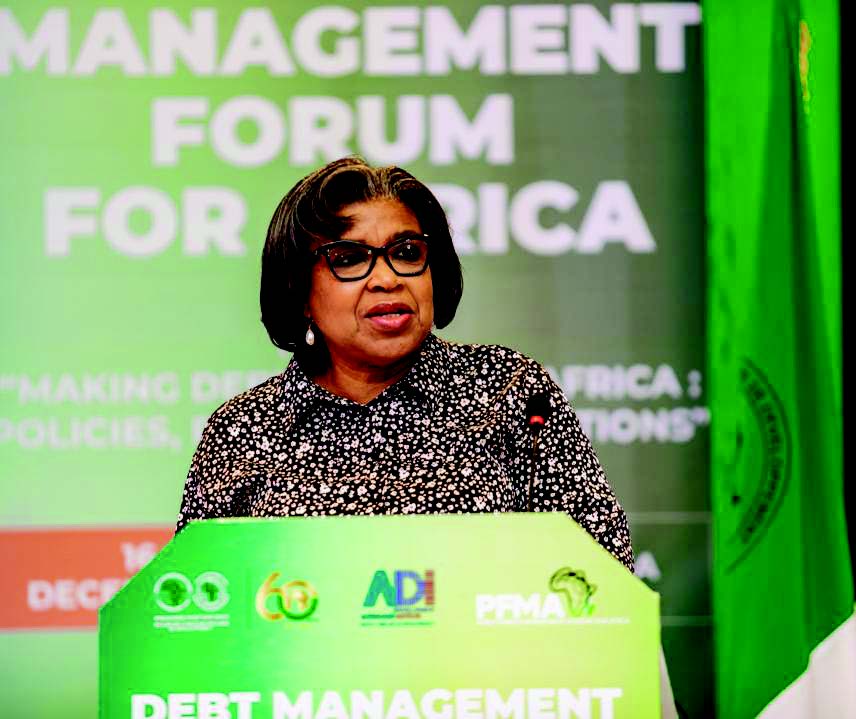
In a rapidly changing economic landscape, where infrastructure development is seen as the backbone of national growth, Nigeria is gradually finding innovative ways to fund critical projects without overburdening its finances. At the heart of this evolving fiscal architecture is the Debt Management Office (DMO), led with quiet confidence and competence by Ms. Patience Oniha. Under her stewardship, the agency has repositioned the use of Sukuk—as a powerful tool to address the nation’s pressing infrastructure deficits, particularly in the road transport sector.
As part of President Bola Ahmed Tinubu’s broader reform agenda, which aims to recalibrate the economy through prudent fiscal management and strategic investment in public goods, the deployment of Sukuk by the DMO stands out as a model of innovation, transparency, and impact.
What is Sukuk, and Why Does it Matter?
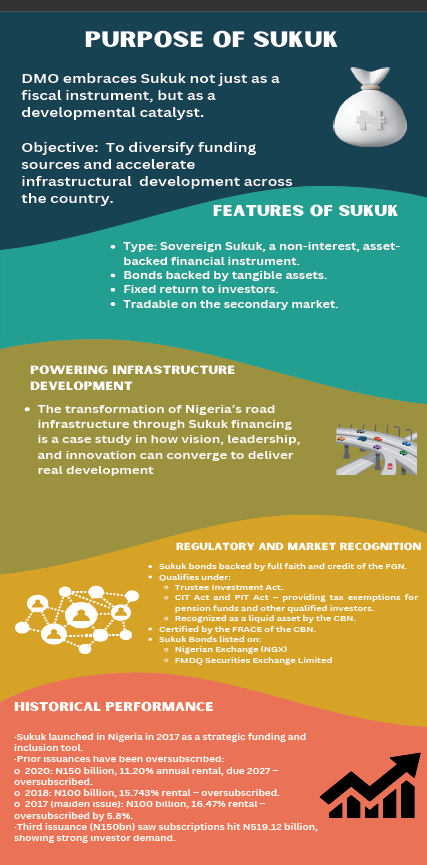
Sukuk, in Nigeria’s context, provides a stable, long-term, and ethical financing option, one that aligns perfectly with the need to build sustainable public infrastructure without deepening conventional debt exposure.
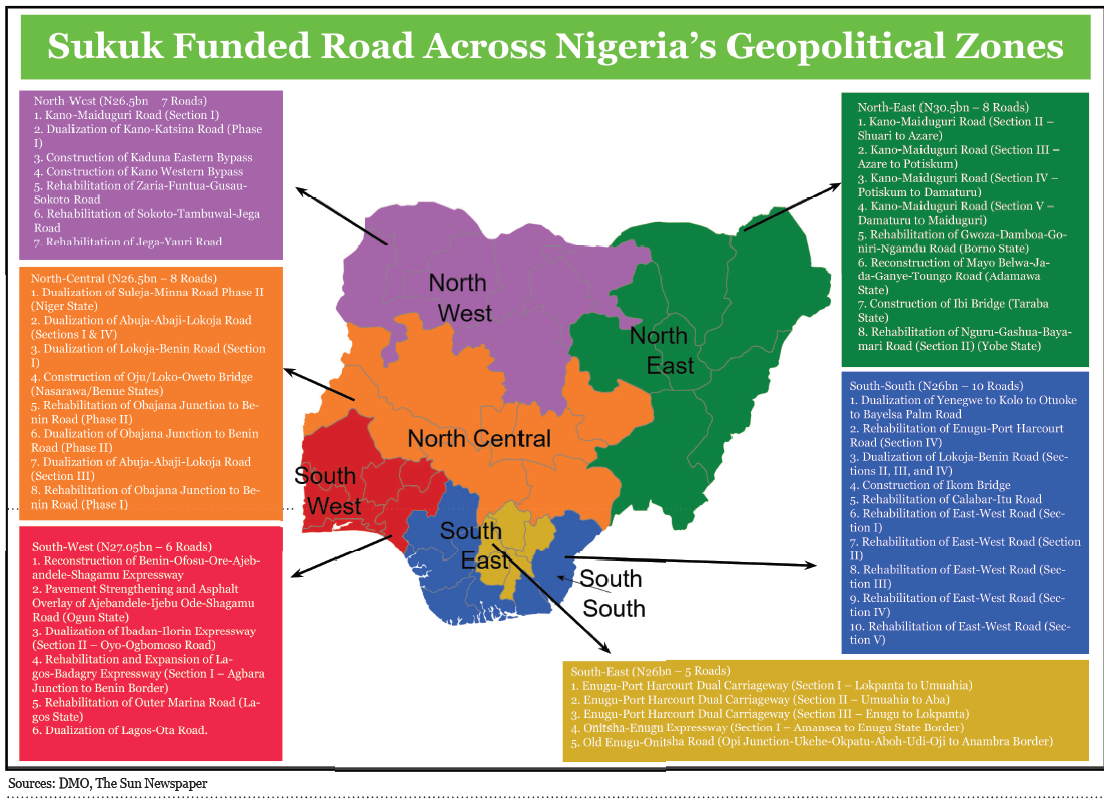
Since its debut in 2017, Nigeria’s Sukuk issuance has mobilized over N865 billion, all of which has been channeled into road construction and rehabilitation projects across the six geopolitical zones. This model ensures that the borrowed funds are directly tied to tangible development outcomes—something that many traditional borrowing frameworks often struggle to guarantee.
A Roadmap to Better Roads
DMO has embraced Sukuk not just as a fiscal instrument, but as a developmental catalyst. Working closely with the Federal Ministry of Works and the Federal Ministry of Finance, the agency has ensured that each Sukuk tranche is tied to specific projects, clearly monitored and executed under a system of checks and balances.
The results have been nothing short of impressive. Major federal highways that had languished for years due to underfunding have received new life. These include and not limited to:
Abuja–Abaji–Lokoja Road: This critical highway connects Abuja to the southern regions of Nigeria. Sukuk funding has been instrumental in the dualisation and rehabilitation of this route, improving safety and reducing congestion.
Suleja–Minna Road: Although primarily linking Niger State, this road serves as a vital corridor for commuters and goods entering Abuja. Sukuk funds have facilitated its reconstruction, enhancing regional integration.
Apo Roundabout to Mechanic Village Road: Within the FCT, this stretch has benefited from Sukuk financing, addressing urban traffic challenges and supporting local economic activities.
These projects exemplify the effective use of Sukuk as a financing tool for infrastructure development in Abuja, contributing to the broader objectives of national growth and economic diversification.
These projects are not just improving transportation and logistics; they are also creating thousands of direct and indirect jobs, enhancing regional integration, reducing road accidents, and boosting trade across states.
Driving Reforms Through Responsible Borrowing
Ms. Oniha, who has got some awards as seasoned technocrat with extensive experience in capital markets and public finance, has continuously emphasised the importance of borrowing for growth, not for consumption. The DMO has promoted greater transparency in public debt management, educating Nigerians on the difference between productive and unproductive borrowing.
Sukuk is a demonstration that debt can be used effectively when it is tied to visible, impactful projects, according to DMO whose job it is to ensure that every naira borrowed delivers value to the Nigerian people.
This philosophy mirrors the broader fiscal reforms of the President Tinubu administration, which is focused on domestic resource mobilization, reducing the cost of governance, and ensuring that every investment contributes to long-term economic resilience.
Transparency and Public Trust
One of the key reasons Sukuk has gained public acceptance in Nigeria is its transparency. Each issuance is tied to clearly defined projects, and progress reports are publicly accessible. The involvement of reputable third-party trustees and project monitoring teams has helped restore public confidence in government borrowing and spending—an essential foundation for any successful reform agenda.
The Sukuk Advantage
As Nigeria continues to grapple with the challenges of inflation, revenue shortfalls, and exchange rate instability, instruments like Sukuk provide a more stable and ethical funding option. With global interest in Islamic finance on the rise, Nigeria’s leadership in this area is positioning it as a hub for non-interest finance in West Africa.
Moreover, the DMO’s success with Sukuk is inspiring other government agencies to consider innovative funding mechanisms, while also offering state governments a blueprint for responsible, project-tied borrowing.
The transformation of Nigeria’s road infrastructure through Sukuk financing is a case study in how vision, leadership, and innovation can converge to deliver real development. Through the strategic direction of the DMO, the Federal Government’s reform agenda is not just a promise—it is becoming a visible, drivable reality.
In a nation where infrastructure was once synonymous with abandoned projects and inflated contracts, the Sukuk story is proof that with the right tools and transparent execution, Nigeria can indeed build the future it dreams of—one road at a time.