By Ahmed Ahmed
The federal government has commenced payments for outstanding 2024 capital projects, signaling a renewed effort to clear inherited backlogs and restore momentum to Nigeria’s capital budget execution. The move comes with a firm timeline, as the government has set March 31, 2026, as the deadline for full implementation of the capital components of both the 2024 and 2025 budgets.
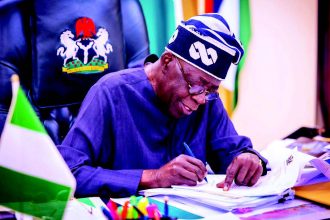
The announcement was made by the Special Adviser on Media and Public Communication to President Bola Tinubu, Mr. Sunday Dare, in a post on X last Friday. According to the Presidency, payments for verified 2024 capital projects have officially begun, alongside the settlement of obligations inherited from previous budget cycles.
The directive marks a shift from assurances to action. For months, contractors and implementing agencies have raised concerns over delayed capital releases, stalled projects and rising costs driven by inflation and currency pressures. By activating payments and fixing a completion date, the administration appears intent on tightening execution discipline and restoring confidence in the budget process.
In practical terms, the Presidency has directed all Ministries, Departments and Agencies (MDAs) to fast track their documentation. MDAs were instructed to submit and upload their 2025 cash plans by close of business on Monday, February 23, 2026. Once completed, payment processing for the 2025 capital budget is expected to begin immediately.
The timeline places responsibility squarely on MDAs. Without completed cash plans and supporting documents, agencies risk missing out on early disbursements. Officials familiar with the process say the move is designed to eliminate delays that often arise from incomplete paperwork rather than lack of funds.
The announcement follows earlier assurances from the Minister of State for Finance, Doris Uzoka-Anite, who had told lawmakers that outstanding capital payments under the 2024 and 2025 budgets would be cleared before the end of March. She made the remarks during an interactive session between the Senate Committee on Appropriations and the Federal Government’s economic team on the proposed N58.472 trillion 2026 Appropriation Bill.
At the session, Uzoka-Anite said the financial management system had been restored and urged MDAs to complete documentation requirements promptly. She confirmed that payments for outstanding 2024 capital projects would begin immediately, while 2025 disbursements would follow once agencies uploaded their cash plans. The meeting later went into a closed session before lawmakers adjourned further consideration of the budget bill.
The latest directive also fits into a broader fiscal reset that began late last year. In December 2025, President Tinubu requested the National Assembly to repeal and re enact the 2024 and 2025 budgets and extend the 2025 budget implementation period to March 31, 2026. The President explained that the move was necessary to align spending with revised revenue assumptions and execution realities.
Under the revised framework, the 2024 Appropriation Act of N35.06 trillion was repealed and re enacted with a higher total expenditure of N43.56 trillion. The adjustments were intended to accommodate carryover projects, address funding gaps and provide fiscal space for priority obligations.
Capital project payments have been a sensitive issue, particularly among indigenous contractors. In January, the Federal Government confirmed the payment of N152 billion to contractors for verified contracts, following protests in Abuja over alleged unpaid debts. To further address the backlog, the 2026 budget earmarked N100 billion specifically for settling outstanding obligations owed to local contractors nationwide.