By Majeed Salaam
The federal government has taken steps to address the acute shortage of therapy professionals in Nigeria with the inauguration of the National Committee for the Advancement of Occupational Therapy, Audiology, and Speech Therapy Education (NCAOTASTE).
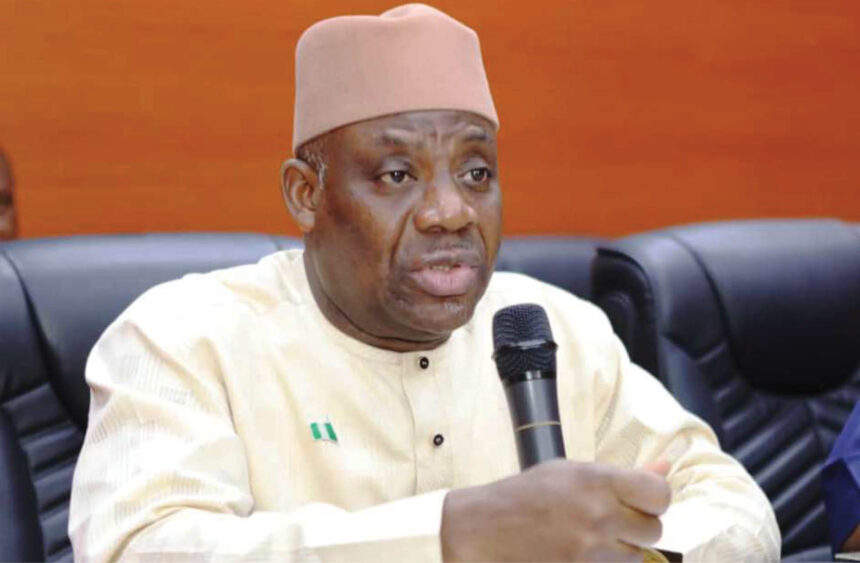
The Honourable Minister of Education, Dr. Maruf Tunji Alausa, disclosed the development, describing it as a strategic intervention to expand Nigeria’s specialised healthcare workforce and improve access to essential therapy services.
He painted a stark picture of the current situation, noting that limited access to care continues to affect vulnerable groups across the country.
“In Nigeria today, too many children are struggling in silence. Children with autism who cannot access speech therapy. Stroke patients who cannot access rehabilitation. Families are left searching for care that simply isn’t available. This is the reality,” he said.
“We face a critical shortage of professionals in occupational therapy, speech therapy, and audiology – and far too few programmes training them. That must change,” he added.
According to the minister, the establishment of NCAOTASTE is a decisive response to these gaps, aimed at scaling training capacity and strengthening professional standards.
“This week, I inaugurated the National Committee for the Advancement of Occupational Therapy, Audiology, and Speech Therapy Education (NCAOTASTE) – a decisive step to expand Nigeria’s specialised healthcare workforce,” he said.
Providing further details, Alausa explained that the committee will work with key regulatory and educational institutions to expand degree programmes and improve clinical training.
“Through this initiative, we are expanding degree programmes, strengthening clinical training and standards, and working with the Medical Rehabilitation Therapists Registration Board of Nigeria, National Universities Commission (NUC), and Tertiary Education Trust Fund (TETFUND) to ensure quality and scale,” he stated.
He emphasised that the intervention goes beyond education reform, framing it as a broader issue of social inclusion and access to care.
“This is not just about education reform. It is about dignity, inclusion, and access to care,” the minister noted.
He also acknowledged the long-standing advocacy of Victoria Omua Amu, who has championed the development of therapy education in Nigeria for over two decades.
Available data underscores the scale of the challenge. The Medical Rehabilitation Therapists Registration Board of Nigeria indicates that the country has only about 163 occupational therapists and just over 100 speech therapists and audiologists nationwide.
The shortage has left many hospitals, schools and communities without adequate support, particularly affecting children with developmental conditions such as autism and patients requiring rehabilitation after strokes or injuries.
In many instances, families are forced to rely on costly private care or forgo treatment entirely, worsening health outcomes and limiting inclusion in education and society.
The situation is further compounded by the limited number of institutions offering specialised training and the continued migration of skilled professionals abroad, intensifying pressure on an already stretched system.