By Jennette Ugo Anya
After decades of fiscal leakages, abandoned projects, and opaque asset management, the Federal Government has fixed 2027 to 2028 as the target window to complete Nigeria’s long-awaited National Asset Register.
The initiative, designed to document and value all government-owned assets, is being positioned as a structural reform that could reshape how public resources are managed, financed, and deployed for development.
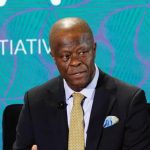
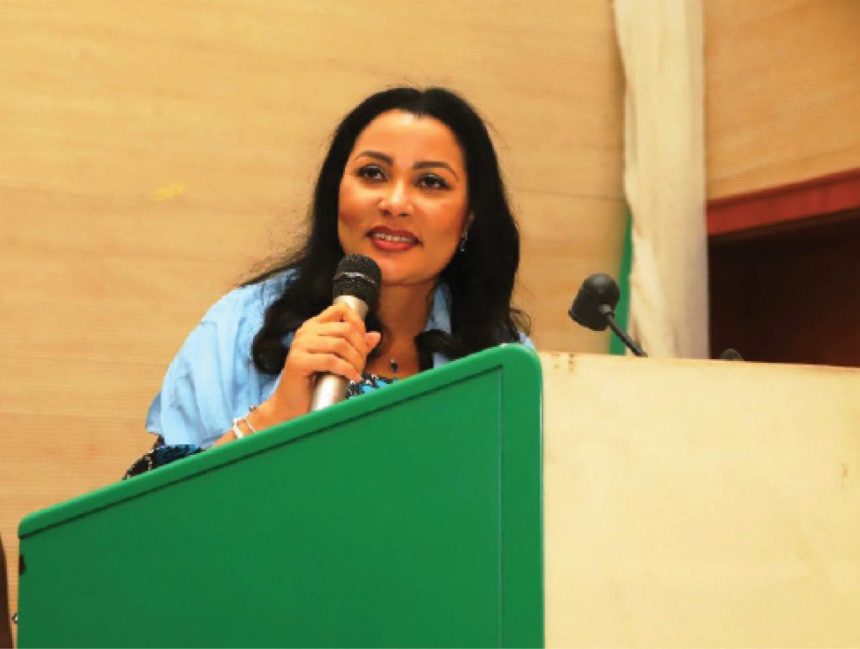
The disclosure was made by the Honourable Minister of State for Finance, Doris Uzoka-Anite, following the second National Economic Council (NEC) Conference held between February 9 and 10 at the State House Conference Centre in Abuja. According to the minister, the asset collation exercise is about 50 percent complete, with the government allowing itself another one to two years to bring the process to closure.
Uzoka-Anite’s comments come against a backdrop of persistent concerns over Nigeria’s weak asset governance framework. For years, the absence of a comprehensive inventory of public assets has enabled contract inflation, duplication of capital projects, and widespread asset abandonment. Roads, bridges, and public facilities have routinely appeared in successive budgets, not because they were new priorities, but because there was no reliable system to track what already existed, what was incomplete, and what had deteriorated.
Recent findings highlight the scale of the problem. Investigations show that the administration of Bola Ahmed Tinubu approved at least N929.06 billion as additions to road and bridge projects inherited from previous governments. Many of these projects had suffered cost escalations, prolonged delays, and repeated scope changes, often driven by poor documentation and weak continuity across administrations.
The idea of a centralised government asset registry is not new. It gained momentum under Muhammadu Buhari, whose administration initiated early efforts to consolidate public asset records. However, progress was slow and fragmented. Uzoka-Anite said the project had been in development for several years before it was formally relaunched in March 2025 under the current administration through the Office of the Accountant-General of the Federation.
At the heart of the initiative is the Ministry of Finance Incorporated (MOFI), which is responsible for managing the National Asset Register. At present, MOFI holds an estimated N18 trillion in equity value across its 52 portfolio companies, employing more than 15,000 people. While significant, this figure reflects only government shareholdings in corporate entities.
It excludes vast categories of public wealth, including land assets, transport infrastructure, oil and gas holdings, solid minerals, power infrastructure, and intellectual property. All these are expected to be captured in the full National Asset Register. MOFI has previously stated that the registry will track federal government owned lands and buildings, including overseas properties, as well as roads, airports, bridges, railways, mineral reserves, energy assets, and financial instruments.
The ambition is substantial. MOFI has set a target of growing the Federal Government’s total asset base to N100 trillion within 10 years. The National Asset Register, officials argue, is the foundational tool needed to identify, value, and unlock this dormant wealth.
Uzoka-Anite acknowledged that Nigeria’s challenge has not been a lack of resources but a failure to convert them into tangible development outcomes. She pointed to the pattern of projects that are either abandoned after completion or left underutilised due to weak operational planning.
Nigeria, she said, has consistently allocated significant funds to capital projects across multiple budgets. Yet without effective implementation mechanisms, these investments have delivered limited value. In her assessment, the absence of the right technical partners has been a critical weakness in public project delivery.
She illustrated the problem with infrastructure projects such as power plants. Government budgets may cover construction, but once contractors exit, there is often no clear framework for efficient operation, maintenance, or profitability. This gap, she argued, undermines sustainability and discourages long-term value creation.
To address this, the Federal Government is shifting towards a new public private partnership model that prioritises technical partners with what she described as “skin in the game.” Rather than relying on concessionaires who exit after construction, the new approach encourages partners to invest alongside government and remain involved in operations.
Under this model, the government’s role is to create an enabling environment, which effectively becomes its equity contribution. By de-risking projects and taking a modest stake, the state can crowd in private capital while ensuring alignment of interests.
Uzoka-Anite maintained that Nigeria has sufficient domestic resources to fund its development if properly harnessed. She cited the scale of funds absorbed by the banking system through Cash Reserve Ratio operations, the size of pension assets, and the country’s extensive natural resource base, including land, solid minerals, and hydrocarbons.
The missing link, she said, lies in the right financing and implementation mechanisms. The National Asset Register is intended to provide the data backbone for that shift, enabling policymakers to see what the country owns, what it is worth, and how it can be leveraged productively.