As Nigeria joins the rest of the world to mark the 2025 World Food Day under the theme ‘Hand in Hand for Better Food and a Better Future,’ we welcome the federal government’s renewed commitment to achieving food security through all-year-round farming. The government’s outlined series of strategic actions, if sustained, could finally move Nigeria from the rhetoric of potential to the reality of agricultural self-sufficiency.
We must, however, be clear: this is not just another policy declaration. It is a defining moment in our national effort to end hunger, reduce food inflation, and stabilise livelihoods in both rural and urban Nigeria.
The latest ‘Wet Season Agricultural Performance Survey’ offers some reasons for optimism. It shows that yields in key staples – rice, maize, sorghum, millet, cowpea, yam, and cassava – have all improved over last year’s figures. This, the government says, is due to better farming practices, modest expansion in cultivated land, and the tenacity of our farmers. These are gains worth celebrating, but they also highlight how fragile our food ecosystem remains. Seasonal dependence, post-harvest losses, and market inefficiencies continue to undermine progress.
That is why we particularly welcome the ‘Dry Season Initiative’ – a plan to cultivate 500,000 hectares of land for all-year farming. Its first phase, focused on wheat production in 15 states, has already begun, while the second phase targets rice, maize, and cassava. This kind of structured continuity is what Nigeria needs to bridge the gap between seasonal abundance and perennial scarcity. When properly managed, dry-season farming can stabilise food supplies, create jobs, and protect the naira from the strain of food imports.
We also note the rollout of Special Agro-Industrial Processing Zones (SAPZ) across eight states – Kaduna, Cross River, Kano, Kwara, Imo, Ogun, Oyo, and the FCT. This model, supported by the African Development Bank, is not just about farming but about building entire value chains around agriculture – processing, logistics, storage, and distribution. If executed transparently and inclusively, the SAPZ initiative could catalyse a 60 percent increase in output, cut post-harvest losses by 80 per cent, and unleash a new generation of agro-entrepreneurs.
The strengthening of the ‘National Strategic Food Reserve’ is another timely move. In an era of global food shocks, climatic volatility, and insecurity in farming regions, maintaining adequate reserves is essential. A well-managed food reserve will not only cushion the impact of shortages but also help stabilise prices and protect farmers from exploitative market fluctuations.
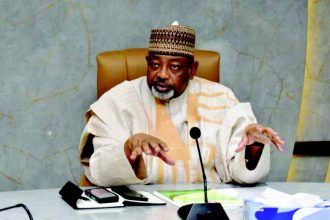
We are equally encouraged by the synergy between the newly created Ministry of Livestock Development and the Ministry of Agriculture. Nigeria’s livestock sector – long neglected and often plagued by conflict between herders and farmers – needs structured intervention, not crisis management. As Minister Idi Maiha rightly noted, livestock transformation must be seen as an economic priority, not a security burden.
We must, however, stress that these commendable initiatives will mean little without continuity, transparency, and accountability. Distribution of inputs – sprayers, organic fertilisers, water pumps – to women’s groups and youth cooperatives is a good start, but sustainability requires robust monitoring and genuine farmer inclusion. Too often, such programmes fade once the cameras leave and the political cycle resets.
As a nation, we can no longer afford to treat agriculture as a poverty-alleviation project. It must be run as a business – one that is science-driven, investment-oriented, and globally competitive. We need better extension services, rural infrastructure, access to finance, and protection for farmers against climate shocks.
We believe the federal government’s current direction represents a necessary shift toward resilience and productivity. If we can maintain momentum, empower local governments to replicate these efforts, and attract private capital into the value chain, Nigeria’s long-elusive dream of food security will be within reach.
The task before us now is to ensure that these policies do not end as another set of well-intentioned announcements. Food security is not a slogan – it is the foundation of national stability. The government has made the right moves; it is now up to all stakeholders – policymakers, private sector, farmers, and citizens – to work hand in hand for better food and a better future.