By. Kingsley Benson
The federal government has reaffirmed its commitment to implementing the National Single Window (NSW) policy by 2026.
A milestone reform expected to boost efficiency, transparency, and competitiveness at Nigeria’s ports.
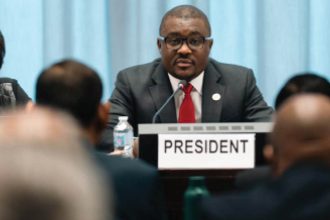
Vice President Kashim Shettima disclosed this during the second meeting of the Ports and Customs Efficiency Committee held at the Presidential Villa, Abuja.
He said that the initiative aims to harmonise documentation, reduce human interference, and cut average cargo clearance time from 21 days to less than seven.
“By the end of 2026, we aim to reduce cargo clearance time to under seven days and position our ports among Africa’s top three most efficient trade gateways,” Vice President Shettima stated.
Describing the forthcoming rollout of the Single Window in early 2026 as a ‘game changer,’ the Vice President said the policy would usher in a new era of transparency and seamless inter-agency coordination.
Vice President Shettima directed the Nigerian Ports Authority (NPA), Nigeria Customs Service (NCS), Standards Organisation of Nigeria (SON), NAFDAC, and other relevant agencies to present a clear roadmap for a weights and measures framework that ensures consumer protection and fairness in trade transactions.
He decried the high cost and prolonged dwell time of cargo at Nigerian ports – currently averaging 18 to 21 days compared to five to seven days in Ghana and four in Cotonou—describing the situation as “economically unsustainable.”
“The cost of clearing goods in Nigeria is about 30 percent higher than in many regional peers. These inefficiencies cost us investments, drive up prices, and weaken export competitiveness,” he added.
The Vice President expressed optimism that the pending Executive Order on Joint Physical Inspection, awaiting presidential assent, would transform port operations and strengthen collaboration among agencies.
“The era of siloed operations must end. Inter-agency rivalry must give way to synergy. Our success will depend on what we achieve together,” he said.
Earlier, Princess Zahrah Audu, Director-General of the Presidential Enabling Business Environment Council (PEBEC), highlighted the adverse impact of inefficient port operations on Nigeria’s Ease of Doing Business ranking, urging all stakeholders to work collectively to reverse the trend.
In his remarks, Dr. Abubakar Dantsoho, Managing Director of the Nigerian Ports Authority, emphasised that collaboration remains key to achieving operational efficiency, citing ongoing reforms such as joint inspection, technology adoption, and infrastructure upgrades as crucial steps toward modernising the nation’s port system.