By Ahmed Ahmed
The Federal Road Safety Corps (FRSC) has called on its Special Marshals to intensify efforts in promoting road safety and traffic management, while Nigeria’s roadworthiness certification system faces growing scrutiny for inefficiency and selective enforcement.
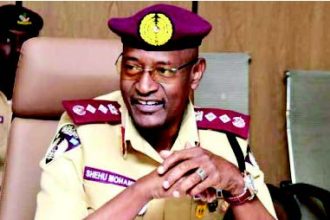
At the Special Marshal National Summit in Abuja, themed “Special Marshals Strategic Role in Road Safety Administration,” Corps Marshal Mallam Shehu Mohammed emphasized the need for collective action to address Nigeria’s traffic challenges, which mirror global road safety issues.
Mohammed commended the Special Marshals for their contributions between 2020 and 2025, including infrastructure, vehicles, devices, and knowledge-sharing, which have bolstered FRSC operations. “They have promoted road safety education, collaborated with stakeholders, and supported research for new policy decisions,” he said, urging them to elect motivated leaders to further enhance FRSC’s mission.
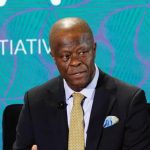
Justice Monica Dongban-Mensem, President of the Court of Appeal, praised the marshals’ volunteerism, noting it complements government efforts, while Justice Babatunde Adejumo of the National Judicial Institute highlighted the global priority of traffic management, with millions of lives lost annually to road mismanagement.
However, Nigeria’s road safety framework is under strain. The National Bureau of Statistics reports over 15 million registered vehicles, nearly half private cars, yet the roadworthiness certification process is plagued by long queues, arbitrary charges, and extortion. Motorists like Sunday Okon, a Lagos banker, endure days of bureaucratic delays and “processing charges” as high as N2,000 to renew certificates costing N5,000–N10,000 for private vehicles, N12,000–N25,000 for commercial buses, and up to N35,000 for trucks. “They treat you as though owning a car is a crime,” Okon said.
The irony is stark: while motorists are hounded, commercial vehicles like Lagos’s danfo buses often evade scrutiny despite bald tires and faulty brakes. In May 2025, Lagos’s Vehicle Inspection Service impounded over 200 unsafe danfos, yet enforcement remains inconsistent. The National Bureau of Statistics recorded a 24% rise in road accidents in Q4 2023, with over 10,600 crashes leaving 70,000 people injured or dead, two-thirds involving commercial vehicles. Fatal incidents, like a January 2025 danfo crash in Oshodi that killed one and a May 2025 Abule Egba collision injuring several, underscore the urgency.
Nigeria’s roads exacerbate the crisis. A 2023 Nigerian Society of Engineers report deemed 70% of federal roads in poor condition, costing $3 billion annually in productivity and repairs. “No amount of inspection can offset the damage caused by our roads,” said transport analyst Olalere Ajose. Motorists face additional burdens, with reports of bribes in Ondo, Kano, and Port Harcourt, where one entrepreneur, Blessing, described certification as “organised extortion.”
Experts propose solutions like decentralizing inspections to certified garages, integrating checks with insurance databases, and staggering validity periods—three years for new cars, annual for older ones. “In South Africa, inspections are seamless and corruption-proof,” said consultant Sola Adeniji. Motorists like Laide Awolola argue that transparent reinvestment of fees into road repairs would build trust. For now, as Sunday Okon quipped, “My car is certified roadworthy, but are Nigerian roads car-worthy?” With FRSC’s push for safer roads, addressing these systemic flaws is critical to saving lives and restoring public confidence.