By Ahmed Ahmed
In 2019, Nigeria’s 36 governors signed the Seattle Declaration, committing to a vision where good health would not depend on chance or location. Six years later, that pledge has grown into one of the country’s strongest accountability platforms for primary health care, and it took the center stage last recently as leaders gathered for the third edition of the Primary Health Care (PHC) Leadership Challenge Awards in Abuja.
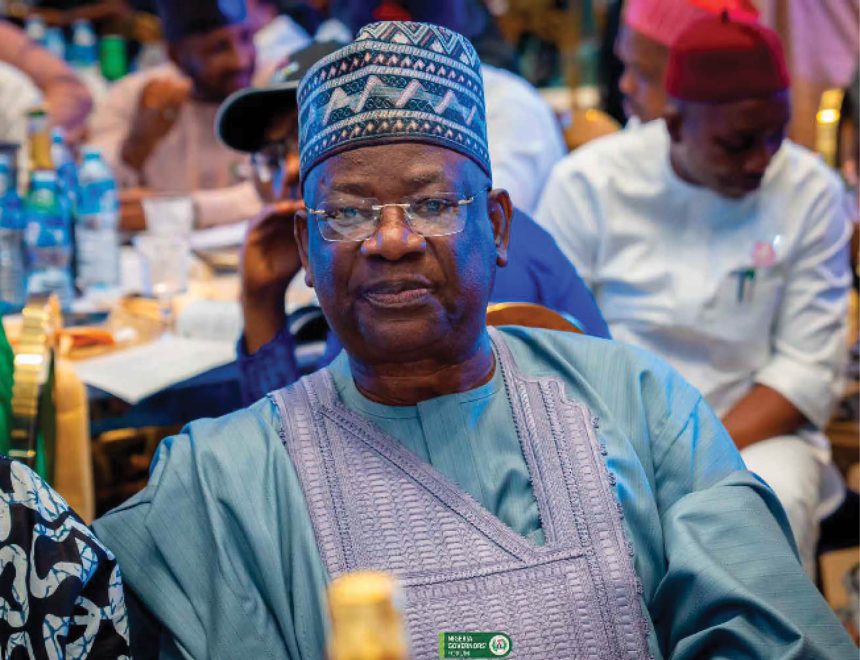
The ceremony, hosted by the Nigeria Governors’ Forum (NGF) in partnership with UNICEF and the National Primary Health Care Development Agency (NPHCDA) and supported by the Gates Foundation, celebrated states that have shown unusual commitment to strengthening primary health care for millions of Nigerians. At the event which took place on December 12, 2025, at 7:00 pm, many observered that the challenge has become one of Nigeria’s clearest examples of how political will could turn into real outcomes. An NGF representative captured this sentiment, noting that the platform “has become a beacon of what strong, accountable leadership can achieve in our health system. It celebrates results, rewards performance, and ultimately delivers better care for our people.”
A Structured Push to Fulfill Commitments
The Primary Health Care Leadership Challenge was built to keep governors focused on their promises under the Seattle Declaration. At its core is a Performance Monitoring Framework that measures how well states are strengthening governance, financing, quality of care, evidence use, and sustainability within their PHC systems. These indicators were selected by national PHC stakeholders based on the principles of meaningfulness, availability, movability, measurability, and simplicity (MAMMS).
After the first edition of the awards, the presidential indicators of the Nigeria Health Sector Renewal Investment Initiative were also integrated into the assessment framework. The result is a system that does not only reward states for what they build but for how consistently they fund it, manage it, and sustain it.
What the Judges Look For
Governors are evaluated on the performance of PHC governance structures, budget releases, availability of trained health workers, infrastructure readiness, reliable data use, and efforts to institutionalize PHC leadership at the Local Government Area (LGA) level. Independent verification agents and judges ensured that results were credible and publicly defensible.
Awards Designed to Motivate, Reinforce Progress
This year’s edition presented 13 awards: two for each of the six geopolitical zones and one national prize for the overall best performing state. A total of US$6.1 million was shared across the winning states, and every cent is earmarked for reinvestment into local PHC systems.
The awards have a strong history. In 2023, Borno emerged as the national champion, earning $700,000 as overall best performer and $500,000 as the leading state in the Northeast. Kwara, Jigawa, Ebonyi, Rivers, and Ondo emerged best performers in their zones, with FCT, Bauchi, Zamfara, Abia, Edo, and Ogun emerging runners up.
In 2024, Anambra took the national prize under Governor Charles Soludo, securing $700,000. The zonal winners were Anambra, Rivers, Osun, Yobe, Kaduna, and Kwara, while Abia, Delta, Lagos, Gombe, Jigawa, and the FCT took the runners up positions. Gombe also received a special innovation award.
A Platform That Has Become a Movement
Now entering its third cycle, the challenge is regarded as one of the most credible state-level accountability mechanisms in Nigeria’s health sector. It blends competition with peer learning and encourages governors to adopt the best-performing strategies from across the country.
“This is not just an award ceremony, it is a celebration of impact, accountability, and a commitment to the health and wellbeing of every Nigerian,” said an official associated with the program.
As stakeholders gathered at the event, one thing was certain that the PHC Leadership Challenge has grown beyond a competition. It has become a quiet but powerful movement pushing Nigeria closer to a future where every person, from Sokoto to Calabar, can walk into a functional primary health care center and receive quality care.