

By Jennete Ugo Anya
Nigeria’s long-running struggle with weak education and primary healthcare outcomes is often reduced to a debate about funding shortfalls. Yet officials driving the Human Capital Opportunities for Prosperity and Equity – Governance programme (HOPE-GOV) insist the deeper constraint lies in governance. The problem, they argue, is not simply how much Nigeria spends, but how those resources are planned, released, coordinated, verified, and converted into outcomes.
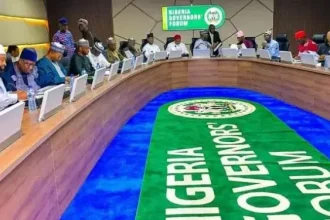
This framing has shaped recent engagements involving the Nigeria Governors’ Forum (NGF) federal ministries, implementing agencies, and development partners, positioning HOPE-GOV as a structural reform rather than a conventional social spending initiative. Designed as a World Bank–assisted Programme-for-Results, HOPE-GOV seeks to reset how Nigeria governs investments in basic education and primary healthcare.
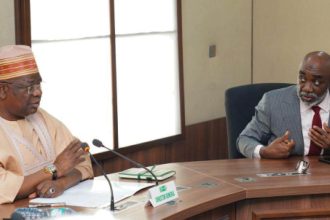
Speaking during a courtesy engagement with the NGF Secretariat, the National Coordinator of the programme, Dr. Assad Hassan, framed the initiative as a response to long-standing systemic failure.
“There’s a large consensus that we’ve had inadequate investments in education and health for quite some time,” he said. “But from time to time, it is critical that we remind ourselves where we are coming from so that we know where we are going.”
He anchored his argument in comparative data. “We spend less than half of what countries like Kenya and Ghana spend per capita in terms of education,” he said, adding that “it’s even worse when you compare four countries in sub-Saharan Africa as far as health is concerned.”
However, Dr. Hassan was clear that underperformance cannot be explained by spending gaps alone. “Historically, we know that the funds have been largely underutilised as well as overpolled for one reason or the other,” he said, pointing to weaknesses in education financing and the Basic Healthcare Provision Fund framework.
Those weaknesses, he noted, are visible on the ground. “These are pictures that were actually taken from the states here in Nigeria,” he said while referencing images of deteriorating facilities. “The right one is a delivery room somewhere in this country.” Despite years of reform attempts, “the reality is that we still have facilities that look like this.”
HOPE-GOV, he explained, is designed to intervene upstream. “HOPE comprises of three different operations,” he said. “The HOPE Governance, which is domiciled in the Federal Ministry of Budget and Economic Planning, then you have the HOPE Primary Healthcare… and last but not least, the HOPE Basic Education.”
“What HOPE Governance is out to achieve is looking at those upstream issues, those foundational issues, those critical issues that if not addressed will impact at the service delivery level,” he said.
He outlined three reform pillars. “Our three key areas for HOPE Governance, one is to improve financing to these two sectors,” he explained. “The second key area is transparency, improving transparency and accountability in these two areas,” including public financial management tools such as charts of accounts, audits, and citizens’ reports. “And the third key area is an improvement in human resources for the two sectors,” covering recruitment, retention, and equitable posting.

The expected payoff, he said, is measurable. “At the end of the day, what we expect to see is better service delivery outcomes in primary healthcare and basic education,” adding that transparency should “lead to maximum utilisation of federal and state funds.”
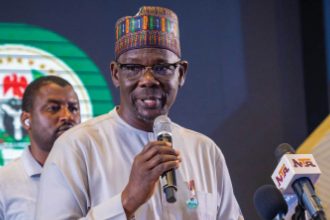
This governance-first logic was reinforced by the Director-General (DG) of the NGF, Dr. Abdulateef Shittu, who described HOPE-GOV as “one of the most consequential efforts in recent years to address Nigeria’s human capital challenge at scale.”
“Across Nigeria’s 36 states and the FCT, education and primary healthcare are delivered closest to citizens, yet they depend on a complex interplay of federal coordination, state budgeting, local government execution, and frontline service delivery,” he said. “When this chain is weak at any point… outcomes suffer, regardless of spending levels.”
For Dr. Shittu, HOPE-GOV’s value lies in its focus on incentives rather than inputs. “HOPE-GOV responds to this reality by focusing not on inputs, but on systems and incentives,” he said, linking sustainable outcomes to “strong public financial management and credible intergovernmental coordination.”
Operationally, that reform logic is being tested through HOPE-GOV’s collaboration with the Basic Health Care Provision Fund. During an implementation coordination visit to the BHCPF Ministerial Oversight Committee Secretariat, Dr. Hassan stressed that reform, not cash flow, is the programme’s anchor.
“For us it is not just about dishing out the money,” he said. “If you look at the scope of the Programme, it’s talking about reforms. Beyond the incentives that our implementing agencies are going to get, the health sector in particular is going to benefit from the reforms that the Programme is going to achieve.”
A critical voice in that engagement was the HOPE-GOV Program Officer, Mr. Jamil Abdallah, who detailed the financial architecture underpinning the programme. He explained that HOPE-GOV is a $500 million results-based package, deliberately structured to reward performance.
“For the HOPE-Governance… it’s a Programme-for-Results, where $500 million is earmarked,” he said. “$480 million is for implementing agencies and states, while the remaining $20 million is for investment project financing, covering programme coordination, fiduciary management, capacity building, verification of results, and monitoring and evaluation.”
Mr. Abdallah itemised the conditions for disbursement, noting that incentives are tied to three results areas: increased availability and effectiveness of financing for basic education and primary healthcare, enhanced transparency and accountability, and improved recruitment, deployment, and performance management of teachers and primary healthcare workers.
He also emphasised strict financial disclosure requirements. IPSAS-compliant audited financial statements, he said, “must be published on official websites within prescribed timeframes,” covering sources and uses of funds, appropriations, actual expenditures, and disclosure notes. All 36 states and the Federal Capital Territory, he confirmed, have signed on to participate.
From the perspective of the Basic Health Care Provision Fund, outgoing Secretary Dr. Ogbe Oritseweyimi played a pivotal role in aligning reform strategies. He led an interactive session between the BHCPF and the HOPE-GOV National Programme Coordinating Unit, focused on comparing approaches to achieving Disbursement-Linked Indicators.
That engagement underscored a shared recognition that results-based financing demands coordination across institutions, not parallel efforts. By comparing notes on verification, incentives, and implementation bottlenecks, both teams sought to reduce duplication and accelerate performance.
The collaborative tone was reinforced by the Acting Secretary of the BHCPF Secretariat, Dr. Aishatu Abubakar Bajoga, who pledged alignment with the programme’s objectives. “We are ready to work together and hopefully, it’s a work in progress from now on,” she said.
Taken together, the remarks from federal officials, NGF leadership, programme managers, and sector implementers frame HOPE-GOV as a fiscal and governance reform with long-term economic implications. By tying World Bank financing to verified results, aligning with BHCPF mechanisms, and embedding transparency into public financial management, the programme seeks to convert public expenditure into productive human capital.
In a country facing rapid population growth and limited fiscal space, that conversion may prove more valuable than any headline increase in budgetary allocations. HOPE-GOV’s central wager is clear. Fix the systems, align the incentives, and the money already on the table can finally begin to work.