By Jennete Ugo Anya
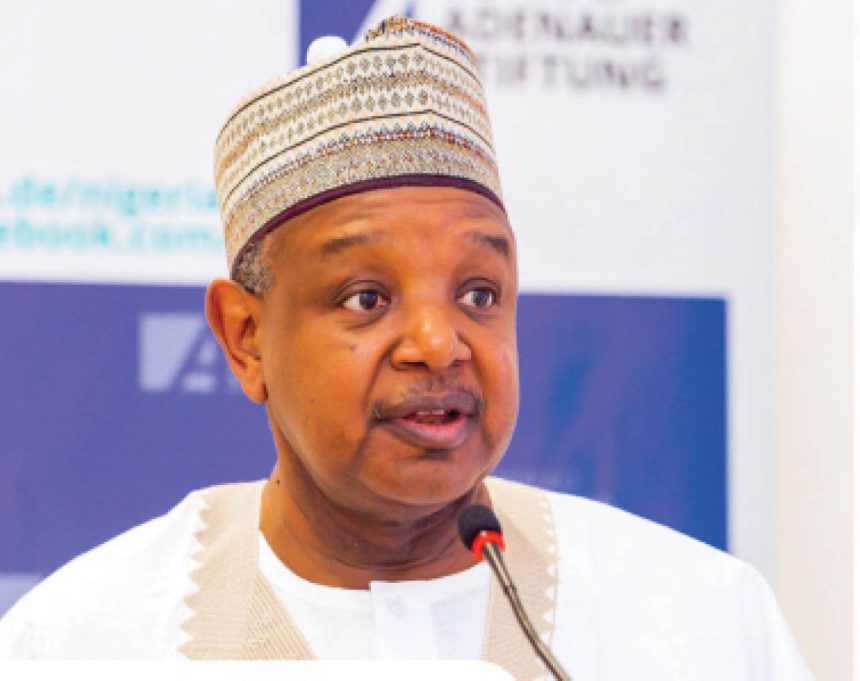
Nigeria’s economic reform programme is beginning to produce effects that extend beyond markets and fiscal indicators, reshaping political coordination and inter-governmental relations across the federation. According to the Minister of Budget and Economic Planning, Senator Abubakar Atiku Bagudu, the reforms introduced under President Bola Ahmed Tinubu have not only altered macroeconomic fundamentals but have also strengthened political stability and fostered unprecedented alignment among the federal, state, and local governments.
Sen. Bagudu made the case during a meeting in Abuja with a mission from the Agence Française de Développement (AFD), framing economic reform as both a fiscal necessity and a governance tool. His remarks suggested that policy coherence, once a persistent weakness in Nigeria’s reform history, is emerging as a defining feature of the current adjustment cycle.
At the heart of Sen. Bagudu’s argument is the idea that economic reform, when consistently pursued, can reduce political friction rather than inflame it. He pointed to improved cooperation between the executive and legislative branches as evidence. According to the Honourable Minister, the National Assembly has played a supportive role in advancing the administration’s bold macroeconomic decisions, signalling a shift away from the adversarial dynamics that have often complicated reform implementation in Nigeria.
Equally significant, Sen. Bagudu noted, is the strengthening of relationships across Nigeria’s three tiers of government. He described the current climate as one of constructive engagement between federal, state, and local authorities, enabled in part by clearer fiscal signals and shared reform priorities. In a federation where policy fragmentation has historically diluted reform outcomes, this alignment represents a structural change rather than a procedural one.
The Honourable Minister linked this political stability directly to macroeconomic reforms that have addressed long-standing distortions. Despite regional insecurity and global economic headwinds, Nigeria has pressed ahead with difficult policy choices, including measures that initially imposed adjustment costs on households and businesses. Sen. Bagudu argued that these decisions have contributed to exchange rate stabilisation and a gradual restoration of investor confidence, particularly by reducing uncertainty around electoral and policy transitions.
“The reforms have improved cooperation between the executive and legislative branches of government,” Sen. Bagudu told the AFD delegation, emphasising that political buy-in has been critical to sustaining reform momentum. He stated that coordination within the National Economic Council (NEC) has also improved, creating a more coherent platform for aligning federal and subnational economic priorities.
Beyond macroeconomic indicators, the administration is seeking to anchor reform outcomes at the grassroots level. Sen. Bagudu highlighted the Renewed Hope Ward Development Plan as a core instrument of this strategy. The plan adopts a bottom-up approach, mapping the economic potential of Nigeria’s 8,809 wards to ensure that growth is inclusive, decentralised, and responsive to local conditions.
The ward-based framework represents a departure from top-down development planning that has often struggled to translate national growth into household-level impact. By identifying comparative advantages at the community level, the government aims to link national reform objectives with local productivity, employment, and service delivery. Sen. Bagudu presented the initiative as a practical mechanism for aligning political stability with economic participation.
The broader ambition underpinning the reforms is Nigeria’s target of building a $1 trillion economy by 2031. According to the Honourable Minister, this goal is not merely aspirational but is anchored in sectoral priorities that include agriculture, local manufacturing, and value chain development. These sectors are expected to drive job creation, strengthen food security, and reduce vulnerability to external shocks.
Sen. Bagudu acknowledged that the reform path has imposed short-term hardships, particularly as subsidies were removed and market mechanisms reintroduced. However, he was unequivocal that the reforms are irreversible. In his view, reversing course would undermine fiscal sustainability and delay the transition toward private-sector-led growth. The administration’s emphasis, he said, is on building resilience rather than pursuing temporary relief.
For the AFD mission, the engagement provided an opportunity to assess the depth and direction of Nigeria’s structural reforms. AFD Country Director Jacky Amprou explained that the agency is conducting a comprehensive review of Nigeria’s reform landscape as part of an update to its country risk assessment. This review will inform future financing decisions and shape the agency’s long-term engagement with Nigeria.
Amprou acknowledged the scale of economic shifts that have occurred since 2022 and noted that the agency is keen to understand the government’s roadmap for consolidating reform gains. Of particular interest, he said, is how Nigeria intends to accelerate development outcomes while maintaining reform discipline, especially in a volatile global environment.
The AFD mission confirmed that future interventions will be strictly aligned with Nigeria’s domestic priorities. As the agency prepares a new Country Partnership Agreement to replace the current framework, alignment with national reform objectives will be a central consideration. This reflects a broader shift among development partners toward country-led strategies rather than externally driven programmes.
Permanent Secretary of the Ministry of Budget and Economic Planning, Dr. Deborah Odoh, reinforced this position, stressing that development finance must integrate seamlessly with Nigeria’s upcoming 2026–2030 National Development Plan. She argued that alignment is essential to maximise impact and avoid fragmentation of development efforts.
Odoh also restated Nigeria’s positioning as a key destination for global capital, noting that reform credibility and policy coherence are central to sustaining investor interest. She emphasised that development partners are expected to operate within Nigeria’s strategic growth framework, supporting national priorities rather than duplicating or distorting them.
Taken together, the discussions with AFD highlight how Nigeria is reframing economic reform as a foundation for political stability and institutional cooperation. The administration’s approach suggests that fiscal discipline, policy clarity, and inter-governmental synergy are mutually reinforcing rather than competing objectives.
The challenge ahead lies in sustaining this alignment as reforms mature and political pressures intensify. Exchange rate stability, subnational fiscal coordination, and ward-level implementation will serve as critical tests of whether reform-driven political stability can endure beyond the initial adjustment phase.