Champions Financial Inclusion Through Factoring Bill
By Jennete Ugo Anya
The Nigerian Export-Import Bank (NEXIM Bank), in collaboration with the German Development Cooperation (GIZ), has reaffirmed its commitment to strengthening Nigeria’s non-oil export base and empowering micro, small, and medium enterprises (MSMEs) to compete in global markets.
At a recent one-day conference held in Lagos, supported by GIZ’s Sustainable and Inclusive Economic Development for Decent Employment in Nigeria (SEDIN) programme, stakeholders gathered under the theme ‘Export Readiness and Market Access Excel Program: Empowering MSMEs for Export Opportunities.’
The event brought together players from key sectors, including government agencies, youth and women-led businesses, trade associations, and export-focused enterprises – all united by a common goal: building Nigeria’s export competitiveness beyond oil.
MSMEs as the Backbone of Diversification
Speaking at the forum, Head of Lagos Regional Office, NEXIM Bank, Daniella Jarikre-Ikazoboh, described MSMEs as the “lifeblood of Nigeria’s economy,” noting that they contribute nearly half of the nation’s gross domestic product (GDP) and employ over 88 percent of the workforce.
“Over 41 million MSMEs account for about 97 percent of registered businesses in Nigeria,” she said. “Yet, many struggle with limited access to affordable finance, poor infrastructure, and capacity gaps that hinder growth. These are the challenges NEXIM is committed to solving.”
She stated that through the NEXIM Bank Academy, the bank is onboarding MSMEs onto the African Trade Gateway (ATG) platform to facilitate seamless trade across the continent under the African Continental Free Trade Area (AfCFTA).
Knowledge, Not Just Capital
Sina Uti-Waziri, Head of Component – Access to Market and Innovation/Access to Finance at GIZ, stressed that financial support must go hand in hand with knowledge transfer.
“Nigerian goods are in high demand globally, but many businesses still struggle to meet export standards or build sustainable partnerships. With finance, the right knowledge, and access to markets, MSMEs can thrive beyond Africa,” she said.
She explained that GIZ’s intervention focuses on three pillars – export readiness, access to finance for women and youth-led enterprises, and global market linkage.
Expanding Export Opportunities
In her presentation, Bolanle Emmanuel, Southwest Coordinator of the Nigerian Export Promotion Council (NEPC), highlighted the need for more Nigerian businesses to participate in export trade.
“Out of about 42 million micro businesses and 74,000 SMEs, only 7.64 percent are engaged in export,” she revealed.
She listed sectors with high export potential – agriculture, textiles, manufactured goods, solid minerals, and entertainment – urging entrepreneurs to partner with NEPC to scale their operations and meet international standards.
Innovative Financing and Collaboration
Mohammed Awami, Head of Specialised Business at NEXIM Bank, outlined the Bank’s financing tools, including direct lending, interbank lending, and managed funds, tailored to support exporters at different growth stages.
Also speaking, Efe Usin, President of Women in Export Trade and Investments (WETI), emphasized collective action among entrepreneurs. “No one succeeds alone in export,” she said. “Forming clusters and cooperatives is key to overcoming barriers, reducing costs, and scaling faster.”
The conference ended with a shared commitment by all partners to strengthen Nigeria’s export ecosystem through innovation, partnerships, and inclusive trade development, while creating jobs and expanding non-oil revenues.
In a related development, lawmakers, regulators, and private sector leaders convened for a joint public hearing on the draft Factoring and Receivables Financing Bill aimed at improving access to finance for MSMEs and boosting Nigeria’s GDP.
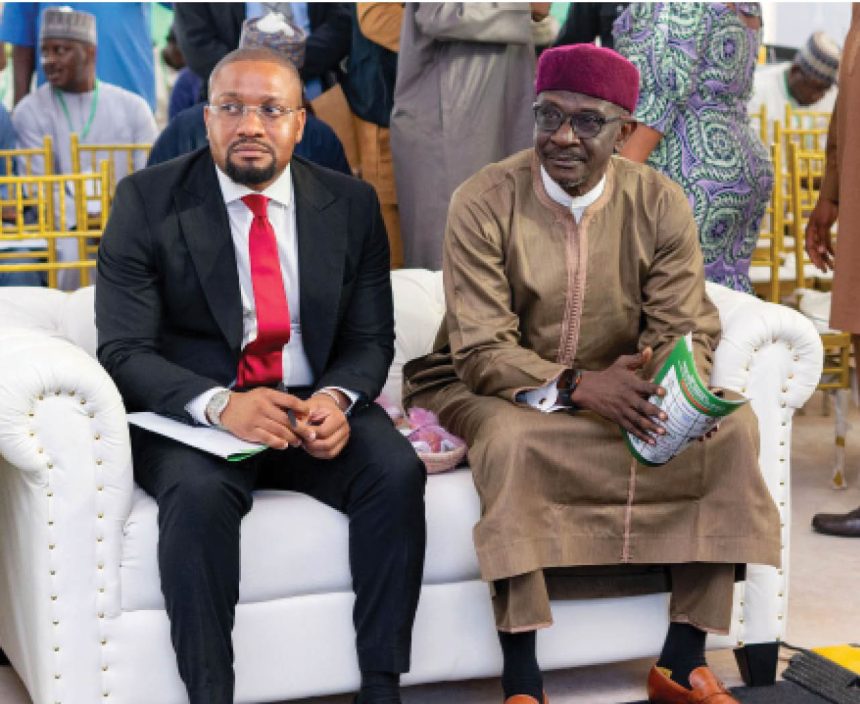
The session, chaired by Rt. Hon. Mohammed Bello El-Rufai, Chairman of the House Committee on Banking, sought public input into the proposed legislation that will make it easier for MSMEs to obtain working capital through invoice factoring services – a key step toward financial inclusion in the trade value chain.
NEXIM Bank, a member of the Nigerian Factoring Working Group, pledged its support for the initiative, describing it as a “game-changing financial sector reform” that will strengthen liquidity and enhance Nigeria’s readiness for continental trade under AfCFTA.
NEXIM Engages Globally on Export Financing
Meanwhile, NEXIM Bank received recognition for its contribution to non-oil export development during the Nigeria–Indonesia Investment and Trade Forum (NIITF) held in Jakarta.
The Bank’s Executive Director of Corporate Services, Mr. Ibrahim Gaga, who led the delegation, participated in high-level panel discussions on innovative export financing, risk mitigation in cross-border trade, and market access for SMEs.
Supporting MSMEs at the Grassroots
Similarly, NEXIM Bank’s Managing Director/Chief Executive, Mr. Abba Bello, attended the MSME Clinic in Katsina State on October 21, 2025, alongside Vice President Kashim Shettima and other key officials.
The event provided an opportunity for entrepreneurs to engage with agencies on access to finance and export expansion. Mr. Bello reaffirmed the Bank’s commitment to supporting small businesses to scale operations, add value, and integrate into global markets.