By Jennete Ugo Anya
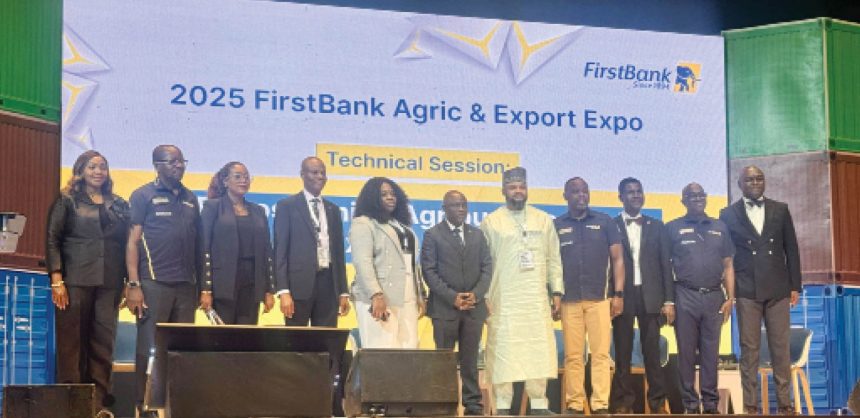
The Nigerian Export-Import Bank (NEXIM) has reaffirmed its commitment to diversifying Nigeria’s economy through agriculture and value-added exports, unveiling its flagship Produce, Add-Value & Export (PAVE) initiative at the First Bank Agric & Export Expo 2025.
The expo, held on August 19, 2025, at Eko Hotel & Suites, Victoria Island, Lagos State, brought together key players in agribusiness, finance, and government.
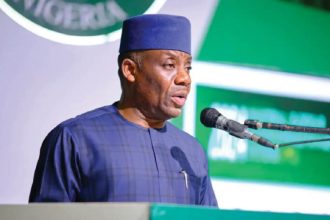
Mr. Abba Bello, the Managing Director (MD) of NEXIM Bank, who was represented by NEXIM Bank’s Head of Strategic Planning and Corporate Communications, Dr. Tayo Omidiji, introduced the PAVE strategy as a cornerstone of Nigeria’s shift from oil dependency to a sustainable non-oil export economy.
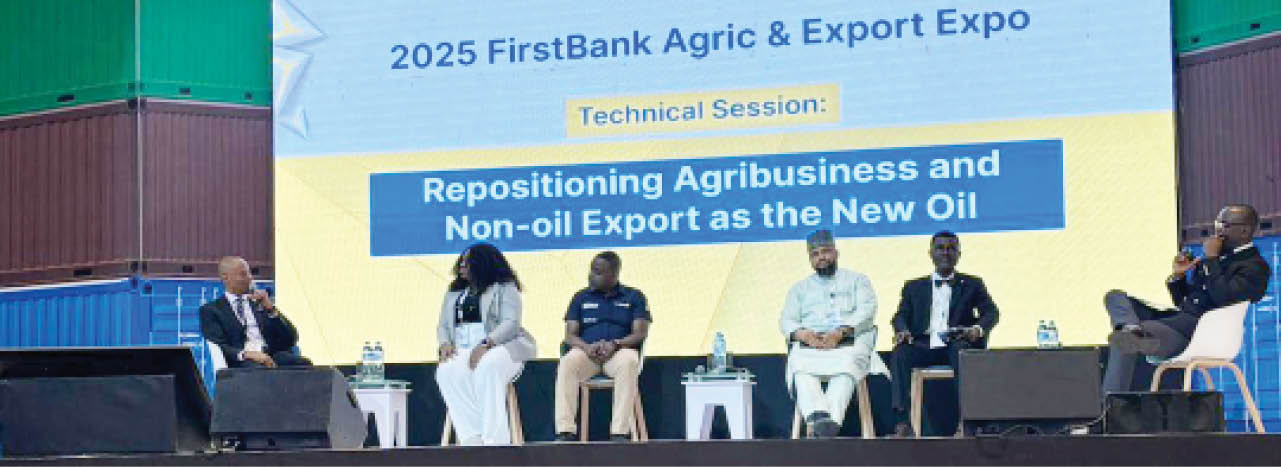
“We cannot continue exporting raw commodities and expect transformative growth. Nigeria must add value to what it produces, and that is what PAVE is designed to achieve,” NEXIM Bank told participants. He cited a World Bank report showing that value-added exports could lift Nigeria’s gross domestic product (GDP) by 2 – 3% annually, underscoring the economic logic of the initiative.
The unveiling of PAVE comes against the backdrop of Nigeria’s lingering vulnerability to oil price shocks. The 2020 crash, which wiped out 60% of oil revenues (OPEC data), reinforced the urgency of diversifying Africa’s largest economy. Despite gradual improvements, oil exports still contributed 75% of government revenues in 2023, leaving the economy exposed.
NEXIM Bank’s response, as articulated through PAVE, is to de-commoditize exports by shifting from raw produce to processed agricultural products with higher global value. This aligns with the government’s post-2021 diversification agenda, which has already boosted non-oil exports significantly.
The NEXIM Bank’s collaboration with the First Bank of Nigeria at the expo reflects a deliberate use of public-private partnerships (PPPs) to scale financing in the non-oil sector. Mr. Bello stressed that commercial banks bring depth of funding, while NEXIM Bank, as Nigeria’s export credit agency since 1991, offers tools to de-risk investments in agribusiness and exports.
Research backs this approach: A 2019 IMF study found PPPs in emerging markets could unlock $1 trillion for infrastructure and agriculture, and a 2023 IMF report confirmed that such partnerships boosted non-oil sector funding by 20% in sub-Saharan Africa.
“The lesson is clear: government cannot do it alone. Partnerships with institutions like First Bank will accelerate the transformation of agriculture into Nigeria’s true ‘new oil,’” Mr. Bello emphasized.
The Expo’s theme of treating agribusiness as “the new oil” echoes a 2022 UNCTAD analysis, which showed that countries reducing oil reliance by just 10% through non-oil exports improved their economic resilience by 7%.
For NEXIM Bank, this data-driven perspective strengthens its resolve to anchor growth in agriculture and non-oil exports. Already, initiatives like PAVE are positioned to help Nigeria climb global value chains, while also providing opportunities for youth and women entrepreneurs – a strategy that could expand inclusion and tackle unemployment.
With international studies affirming that value-added agriculture can raise GDP by up to 15% in developing economies, NEXIM Bank’s PAVE initiative is being framed as more than just a banking project. It is, in Mr. Bello’s words, “a national growth strategy, a security net against oil volatility, and a bridge to inclusive prosperity.”
The First Bank Agric & Export Expo 2025 thus served as more than a showcase; it was a stage where Nigeria’s pivot toward a new, diversified economy took one more decisive step.