By. Kingsley Benson
The Nigerian Export–Import Bank (NEXIM) has reinforced its commitment to strengthening the country’s non-oil export sector, highlighting micro, small, and medium enterprises (MSMEs) as key drivers of economic growth.
At a time when Nigeria seeks to diversify its economy and reduce reliance on oil revenues, NEXIM’s recent initiatives and strategic reforms are positioning the bank as a central enabler of global trade opportunities for Nigerian businesses.
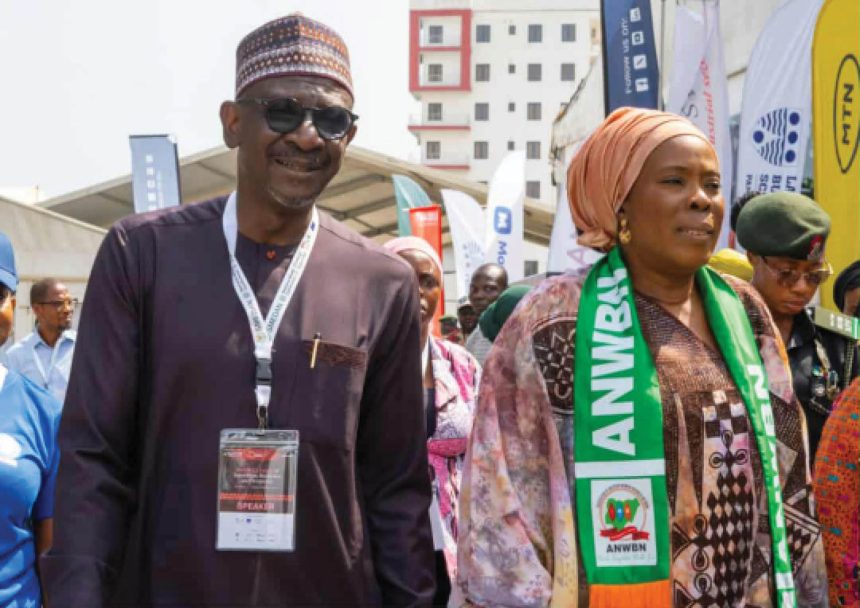
The reaffirmation came at the 2025 GROW Nigerian Conference 2.0, held from 16 to 18 November at Lagos’ Federal Palace Hotel. The conference, themed ‘Building a Future of Innovation, Resilience, and Prosperity,’ attracted policymakers, financiers, and export-ready businesses, offering a platform to discuss practical measures for expanding Nigeria’s non-oil export capacity.
During a session titled ‘Go Global, Grow Nigeria: Supporting and Financing the Next Wave of Nigerian Exports,’ NEXIM Managing Director/ CEO, Mr. Abba Bello, joined Director-General of the Nigerian Export Promotion Council (NEPC), Mrs. Nonye Ayeni, to highlight the bank’s critical role in addressing the financing challenges that continue to constrain MSMEs’ access to global markets. Their dialogue emphasized the need for tailored financial interventions, policy support, and collaborative measures to enable Nigerian businesses to scale competitively on the international stage.
“Our participation reflects the bank’s unwavering commitment to promoting Nigeria’s non-oil exports, empowering businesses, and facilitating trade growth across Africa and beyond,” Bello stated. “We aim to ensure that entrepreneurs are equipped with both the resources and knowledge necessary to navigate international markets effectively.”
For many attendees, the conference was more than a networking opportunity; it was a chance to engage directly with policymakers and financiers who shape the export landscape. According to NEXIM, the event underscored the importance of policy dialogue, targeted financing, and strategic capacity building in unlocking Nigeria’s export potential. Entrepreneurs were able to discuss sector-specific challenges, including financing gaps, market entry requirements, and regulatory hurdles, while learning about practical tools and financial solutions that could propel their businesses to global competitiveness.
These efforts build on a series of reforms and capacity-building measures NEXIM has pursued over the past year. Earlier in 2025, the bank’s presence at the Lagos International Trade Fair underscored its commitment to expanding Nigeria’s non-oil export footprint. At Tafawa Balewa Square, NEXIM staff engaged with visitors, promoting financing options across agriculture, manufacturing, and the creative sectors, highlighting opportunities for cocoa, cashew, urea, processed foods, and creative goods.
This strategic push coincided with renewed momentum in Nigeria’s export sector. According to the Nigerian Export Promotion Council (NEPC), non-oil exports rose 19.6 percent in the first half of 2025, reaching $3.225 billion, reflecting growing competitiveness in non-oil sectors and increased investor confidence. For exporters and SMEs, NEXIM’s visible presence at the fair was a concrete signal that the bank is preparing to scale its operations to match the demands of a more diversified economy.
Crucially, NEXIM is undergoing structural reforms and a proposed capital increase designed to position the bank as a cornerstone of Nigeria’s non-oil export strategy. The Nigerian Export-Import Bank Act Amendment Bill, currently before the Senate, proposes an increase in NEXIM’s capital base from N50 billion to N1 trillion, the creation of an Export Development Fund, and governance reforms that would modernize its board structure.
“The NEXIM Bank is not just a bank; it is a bridge between our factories and the world. It must be empowered to lead, not merely to lend,” said Senator Adetokunbo Abiru, Chairman of the Senate Committee on Banking, Insurance, and Other Financial Institutions, during public hearings on the amendment.
Under the proposed reforms, NEXIM would be better equipped to provide large-scale funding to MSMEs, reduce their dependence on oil-linked government cycles, and enable them to pursue opportunities in regional and global markets. Experts, including academics, financial regulators, and industry stakeholders, have praised the reform, noting that the bank’s current undercapitalization limits its impact, preventing it from fully supporting exporters and gaining global credit ratings.
The creation of an Export Promotion Trust Fund, one of the central features of the proposed reforms, is expected to provide financing for raw materials, logistics, and capital investment, further empowering Nigerian exporters to scale their operations. The fund, combined with a strengthened governance structure and modernized board, is set to enhance accountability, transparency, and strategic oversight, ensuring that NEXIM delivers on its mandate effectively.