As DMO Issues N50bn Green Bond To Boost Climate Finance
By Musa Ibrahim
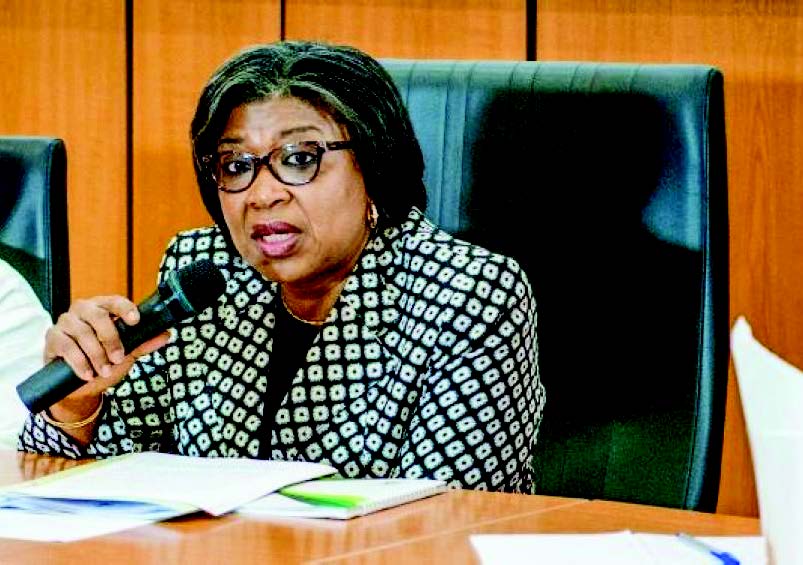
Nigeria is charting a steady course toward economic recovery, buoyed by bold fiscal reforms, stabilizing inflation, and a surge in climate-focused investments, according to Ms. Patience Oniha, Director-General (DG) of the Debt Management Office (DMO).
Speaking recently at an investors’ meeting for the Series III Sovereign Green Bond issuance in Lagos, Ms. Oniha highlighted Nigeria’s improving macroeconomic fundamentals and its ambitious push for environmental sustainability. With global credit ratings on the rise and a N50 billion green bond set to fund critical projects, Nigeria is positioning itself as a leader in Africa’s economic and climate transformation.
A Resilient Economy on the Rise
Ms. Oniha painted an optimistic picture of Nigeria’s economic trajectory. Addressing institutional investors at the launch of the Series III Sovereign Green Bond, she outlined the tangible gains of Nigeria’s reform agenda. “We are on a steady path of economic recovery,” she declared, citing improvements in macroeconomic indicators as evidence of progress.
She pointed to stabilizing inflation, which has eased from a high of 30 percent to a range of 23 to 24 percent, as a sign that monetary and fiscal policies are taking hold. Gradual gross domestic product (GDP) growth and a rebound in crude oil production—from below one million barrels per day to 1.5–1.6 million—further underscore the economy’s resilience. Reforms in the oil sector, including the transformation of the Nigerian National Petroleum Corporation into a limited liability company, are yielding dividends, she noted.
Global confidence in Nigeria is also growing. Ms. Oniha highlighted recent upgrades in the country’s outlook by credit rating agencies Moody’s and Fitch, signaling a shift from past challenges. “There is clearly a difference from where we were before,” she said. “This suggests that the reforms are working, even if the results are gradual.”
Infrastructure as the Engine of Growth
Ms. Oniha emphasized that infrastructure investment remains a cornerstone of Nigeria’s economic strategy. The government’s three-year National Development Plan, designed to be private sector-led, aims to bridge the infrastructure gap and accelerate GDP growth. “We have seen post-COVID growth, though we acknowledge it should be higher,” she admitted. “Once infrastructure improves, growth will accelerate.”
The DMO’s efforts to mobilize capital are central to this vision. By issuing bonds and fostering public-private partnerships, Nigeria is channeling funds into roads, ports, and energy projects that promise to unlock economic potential. Ms. Oniha’s remarks align with the government’s broader ambition to transform Nigeria into a $1 trillion economy, a goal that hinges on sustained investment and private sector engagement.
A Green Future with the N50 Billion Bond
A highlight of the investors’ meeting was the announcement of a N50 billion Sovereign Green Bond, the third in a series following issuances in 2017 and 2019 that raised N25.69 billion. According to the office, the offer was made available from June 16 to June 18, with a settlement date of June 23. Subscriptions begin at a minimum of N10 billion, and additional investments must be made in multiples of N1 million.
The Green Bond, according to the office, is structured as a five-year instrument, with a maturity date set for 2030. It offers a fixed interest rate ranging between 18.75 percent and 19.25 percent per annum.
The DMO confirmed that interest (coupon) payments will be disbursed semi-annually, while the principal will be paid in full at maturity—described as a bullet repayment. This five-year bond, targeted at institutional investors with a minimum investment of N10 million, was listed on the FMDQ platform and fund projects aligned with Nigeria’s commitments under the Paris Agreement. “This is not just fundraising,” Ms. Oniha stressed. “It is about our national commitment to sustainability.”
Dr. Iniobong Abiola-Awe, Director of the Department of Climate Change at the Federal Ministry of Environment, echoed Ms. Oniha’s call to action. “Climate change is not a distant threat—it is here,” she warned, citing shifting weather patterns, rising floods, and desert encroachment as evidence of Nigeria’s vulnerability. “Nigeria is shrinking geographically, and we have no planet B. What we do today is a debt or gift to the next generation.”
The green bond will support Nigeria’s Nationally Determined Contributions (NDCs), targeting a 20 percent unconditional reduction in greenhouse gas emissions and up to 47 percent with international support. Projects funded by previous issuances, such as renewable energy initiatives in universities, have already delivered multidimensional impacts, from improved internet access to enhanced academic performance. “These bonds are homegrown, innovative solutions to climate finance,” Dr. Abiola-Awe said, citing the 2021–2030 Climate Change Policy and Energy Transition Plan as key frameworks.
Building Trust and Momentum
The investors’ meeting was a platform to build confidence in Nigeria’s green financing strategy. Ms. Oniha underscored the importance of transparency, noting that the event allowed institutional investors to ask questions and engage with the bond’s objectives. The successful repayment of earlier bonds has bolstered trust, with Private Debt Market Makers encouraged to support the new issuance.
The Federal Ministry of Environment, in partnership with the Ministry of Finance, has provided robust policy frameworks to ensure the bonds deliver on their promise. Dr. Abiola-Awe highlighted past projects in agriculture, energy, transport, and forestry, which have strengthened Nigeria’s climate resilience. “Our progress so far, and this third issuance, reaffirm Nigeria’s commitment to sustainable financing,” she said.
A Nation Poised for Transformation
As Nigeria navigates global economic challenges, Ms. Oniha’s message was one of cautious optimism. The stabilization of inflation, growth in oil production, and improved credit ratings signal a turning point. The green bond initiative, backed by a clear commitment to climate action, positions Nigeria as a leader in sustainable development.
In Lagos, the DMO’s efforts are laying the foundation for a future where economic growth and environmental stewardship go hand in hand. As Dr. Abiola-Awe stated: “The time to act was yesterday, but what we are doing today is one of the biggest contributions we can make.” With reforms gaining traction and global investors taking notice, Nigeria is steadily carving a path toward a prosperous, sustainable future.