
By Ahmed Ahmed
Nigeria closed 2025 with a rare run of steady economic momentum, recording expansion in economic activity for 12 straight months despite persistent global and domestic pressures. For a country long accustomed to stop-start growth, the signal is modest but meaningful.
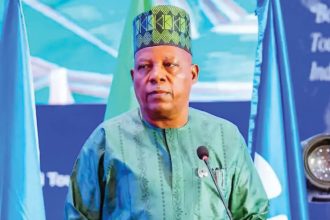
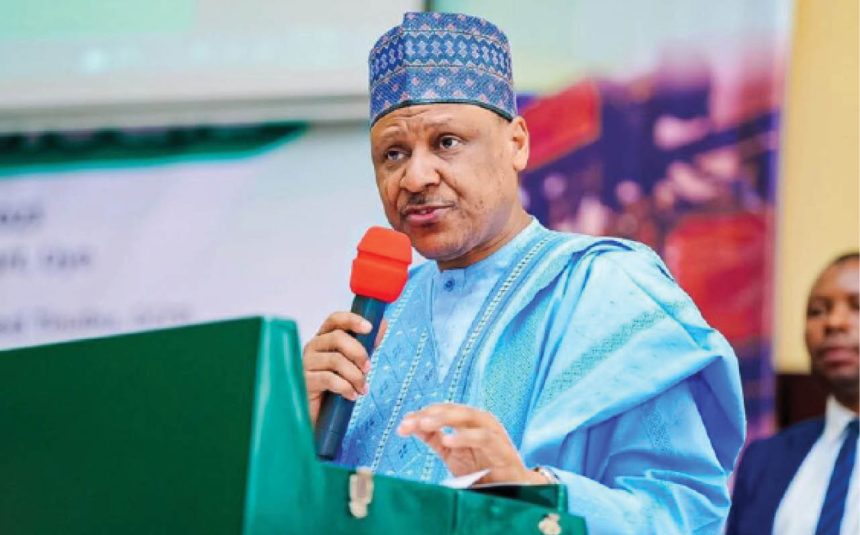
Presenting the federal government’s end-of-year scorecard in Abuja recently, Honourable Minister of Information and National Orientation, Mr. Mohammed Idris, said the consistent expansion reflected a gradual strengthening of business confidence and productive activity across key sectors of the economy.
At the centre of the assessment is the Purchasing Managers’ Index (PMI), a widely tracked indicator that measures business conditions in manufacturing and services. Mr. Idris said PMI data showed uninterrupted expansion throughout the year, suggesting that firms were recording higher output, new orders and employment compared to previous periods.
The Honourable Minister described the trend as evidence that economic reforms introduced by the current administration were beginning to stabilise the operating environment for businesses, even as inflationary pressures and global uncertainties persisted.
More concrete growth figures supported the narrative. According to him, Nigeria’s Gross Domestic Product (GDP) grew by 3.98 percent in the third quarter of 2025, with services, trade and manufacturing accounting for the bulk of the expansion. The performance, he noted, highlighted the resilience of the non-oil sector, which has increasingly carried the economy at a time when oil revenues remain volatile.
For years, policymakers have spoken about diversifying Nigeria’s economy away from crude oil. The latest figures suggest that, at least in output terms, that shift is gaining traction. Services such as telecommunications, finance and transport, alongside wholesale and retail trade, continued to expand, while manufacturing showed signs of recovery after years of capacity constraints and rising input costs.
Inflation, which has dominated household and business conversations in recent times, also showed signs of easing. Mr. Idris said headline inflation declined for eight consecutive months to 14.45 percent in November 2025. While still elevated, the downward trend offered relief to consumers whose purchasing power had been eroded by prolonged price increases.
Economists caution that lower inflation does not immediately translate to cheaper goods, but a sustained slowdown can ease pressure on incomes and support consumption over time. For small and medium-sized enterprises, a more predictable price environment also improves planning and investment decisions.
Another bright spot highlighted by the Honourable Minister was the strengthening of Nigeria’s external reserves, which stood at approximately 44.56 billion dollars by the end of the year. The improved reserve position, he said, provides a buffer for the economy, supports currency stability and reassures foreign investors wary of sudden shocks.
Foreign exchange management has been one of the most sensitive areas of economic policy, with businesses often struggling to access dollars for imports and operations. Stronger reserves do not resolve all challenges, but they give monetary authorities more room to manage volatility and maintain confidence.
Beyond the statistics, the government is keen to frame the year’s performance as a foundation rather than a destination. Mr. Idris stressed that the administration remains focused on consolidating macroeconomic stability and ensuring that growth indicators translate into better living standards for Nigerians.
This focus is expected to shape the 2026 budget, which the Honourable Minister said would prioritise security, infrastructure development, youth empowerment and social welfare. These areas, long recognised as critical to inclusive growth, are also where public expectations are highest.
Security remains a key concern, as persistent insecurity disrupts farming, trade and investment in several parts of the country. Infrastructure gaps continue to raise the cost of doing business, while unemployment and underemployment among young people pose social and economic risks. Addressing these challenges, Mr. Idris suggested, is essential to sustaining the current economic momentum.
He described the mission of the 2026 fiscal year as building a secure, competitive and prosperous Nigeria, adding that reforms undertaken by the administration were designed to deliver long-term benefits rather than quick fixes. President Bola Tinubu’s economic vision, he said, is bold and focused, aimed at placing the country on a path of inclusive and sustainable growth.
For ordinary Nigerians, the real test lies beyond official briefings and scorecards. Growth figures and reserve levels matter, but their impact is ultimately measured in jobs, stable prices and improved public services. Many households continue to navigate high living costs, while businesses grapple with financing constraints and infrastructure bottlenecks.
Still, the picture painted by the government suggests that the economy is showing greater consistency than in recent years. 12 consecutive months of expansion may not signal a boom, but in a fragile global environment, it points to resilience and cautious progress.
As 2026 approaches, attention will shift to whether this momentum can be sustained and broadened. The challenge for policymakers will be to turn improving indicators into tangible gains that Nigerians can feel in their daily lives. If that connection is made, the story of 2025 may be remembered as the year Nigeria’s economy began to find steadier footing again.