By Anita Dennis
Nigeria is actively seeking partnerships with investors willing to commit long-term capital to support its development agenda, as ongoing reforms continue to bolster trust in the country’s economic framework.
This position was articulated at the Africa Capital Forum (ACF) in London, where government officials, investors, and development financiers converged to discuss the next phase of economic growth.
Mrs. Sanyade Okoli, Special Adviser to the President on Finance and the Economy, representing Honourable Minister of Finance Wale Edun, said the government cannot achieve sustainable growth alone.
“We need to work with partners who will bring the sticky, equity capital,” Mrs. Okoli said, stressing that, long-term investments are critical for supporting key sectors of the economy.
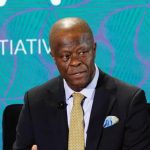
Deputy Governor of the Central Bank of Nigeria (CBN) in charge of Economic Policy, Mr. Muhammad Abdullahi, highlighted the stability achieved through recent reforms.
“Nigeria’s economy has achieved a notable level of stability. Our net and gross reserves are strong, foreign reserves are above $50 billion, the foreign exchange market is stable, and inflation is trending downward,” he said, adding that the apex bank remains cautious in managing risks.
Philip Ikeazor, Deputy Governor in charge of Financial System Stability, emphasised the long-term nature of the reforms.
“These policies involve multiple stakeholders, making them resilient to changes in government. Continuity is essential for maintaining investor confidence and long-term growth,” he said.
Global stakeholders at the forum commended Nigeria’s reform efforts. Jonny Baxter, British Deputy High Commissioner to Nigeria, said the UK continues to see Nigeria as a strategic partner in banking and capital markets.
“The next phase of the reforms should focus on converting renewed investor interest into long-term sustainable investments,” Baxter said, affirming UK support for Nigeria’s economic transformation.
The President of the European Bank for Reconstruction and Development (EBRD), Odile Renaud-Basso, highlighted Nigeria’s potential.
“We see strong prospects in Nigeria’s economic stabilisation, population growth, and adoption of new technologies,” she said.
Steve Gray of UK Export Finance noted the importance of transparency in building investor confidence.
“Confidence is built through full fiscal transparency. The reforms in Nigeria are providing transparency and building confidence. We need to reflect Nigeria’s strengths more clearly to support its priorities,” he said.
Melis Ekmen Tabojer of the EBRD added that the reforms are already attracting investors and influencing policy design. “Recent reforms have had a significant impact in attracting investors and shaping how policies are implemented,” she said.
Top Nigerian banking executives, including Segun Alebiosu, Oliver Alawuba, Miriam Olusanya, Yemisi Edun, Roosevelt Ogbonna, and Akin Oguranti, expressed support for the reforms, noting that increased confidence in the banking system has enabled more robust financing of projects.
Economic data presented at the forum emphasized the impact of reforms over the past two years. Inflation has dropped from 34 percent to 15 percent under CBN leadership, exchange rate volatility has eased, and foreign reserves have surpassed $50 billion. The recapitalisation of banks and the unification of the foreign exchange market have further strengthened investor confidence.
The forum also highlighted opportunities for attracting long-term capital from Nigerians in the diaspora. By connecting domestic reforms with global capital markets, Nigeria aims to create a pipeline for sustainable investment, ensuring that economic growth is resilient and inclusive.
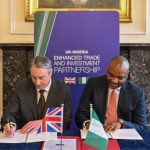
The ACF, jointly organised by the CBN and the UK Foreign, Commonwealth and Development Office, provides a platform to strengthen ties between Nigeria, London, and the global financial community. The discussions are expected to translate into practical investment opportunities, reinforcing the country’s efforts to stabilise the economy and drive long-term development.
With stability in policy, improved fiscal transparency, and a clear roadmap for reform, Nigeria is positioning itself to convert investor trust into actionable, long-term capital flows that can support infrastructure, industrial growth, and broader economic expansion.