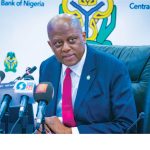
In a year where global economies continue to navigate turbulence, from higher tariffs and weak oil prices to shifting trade alliances, Nigeria has emerged with a renewed sense of economic confidence. The International Monetary Fund (IMF), in its October 2025 World Economic Outlook, has commended the country’s reform momentum, crediting decisive actions by the Central Bank of Nigeria (CBN), under leadership of Mr. Olayemi Cardoso, for restoring balance to critical economic indicators. Below, Enam Obiosio tells how Nigeria’s deliberate policies are repositioning Africa’s largest economy for sustained growth and renewed global confidence.
The IMF’s recognition marks a significant shift in tone for Africa’s largest economy, which not long ago faced what experts described as its most complex economic challenge in over a decade. Inflation was galloping, the naira was volatile, and investor confidence had thinned. Two years on, the narrative has begun to change.
According to the IMF’s Economic Counsellor, Pierre-Olivier Gourinchas, Nigeria’s growth projection has been revised upward – to 3.9 percent in 2025 and 4.1 percent in 2026 – driven by improved oil output, investor confidence, and a stronger fiscal framework. “Whereas growth in Nigeria is revised upward on account of supportive domestic factors, many other economies see downward revisions because of the changing international trade and aid landscape,” he said.
These projections come against the backdrop of stabilizing inflation, a rebounding foreign reserve base, and renewed exchange rate stability – developments that the IMF attributes to structural reforms pursued by the CBN.
A Decisive Turn from Crisis
When Mr. Cardoso took the helm of the apex bank in 2023, the outlook was bleak. Inflation was spiralling, foreign reserves were waning, and the naira was under immense pressure. “It was a moment that demanded not just technical skill but leadership rooted in courage, credibility, and accountability,” Cardoso recalled at the Lagos Business School Leadership Programme.
His response was swift and firm. The CBN tightened monetary policy aggressively, raising interest rates by over 800 basis points and halting the era of fiscal indiscipline. “We restored orthodoxy by halting central bank financing of government beyond statutory limits and re-anchoring monetary policy on its core mandate,” he said.
On the foreign exchange front, the Bank unified multiple exchange rate windows, introduced a transparent willing-buyer, willing-seller system, and cleared a backlog of verified foreign exchange obligations that had dampened business confidence. The results have been telling.
Reserves, which had plunged to $33.22 billion by December 2023, now stand above $42 billion. The naira, once the symbol of economic instability, has regained a measure of competitiveness and predictability. Meanwhile, the introduction of the Non-Resident Bank Verification Number platform has deepened diaspora inflows and improved financial inclusion.
Building Buffers in a Volatile World
The IMF’s October report situates Nigeria’s progress within a fragile global context. Trade disruptions, a weakening dollar, and the expiration of preferential US market access under the African Growth and Opportunity Act have reshaped the playing field for emerging economies. Yet, Nigeria’s resilience has stood out.
Petya Koeva Brooks, IMF’s Deputy Director of Research, noted that while growth across sub-Saharan Africa remains modest – at about 4.1 percent in 2025 – Nigeria’s trajectory reflects a disciplined policy approach. She attributed this to “improving macroeconomic indicators, supportive domestic factors, and a strengthened fiscal posture.”
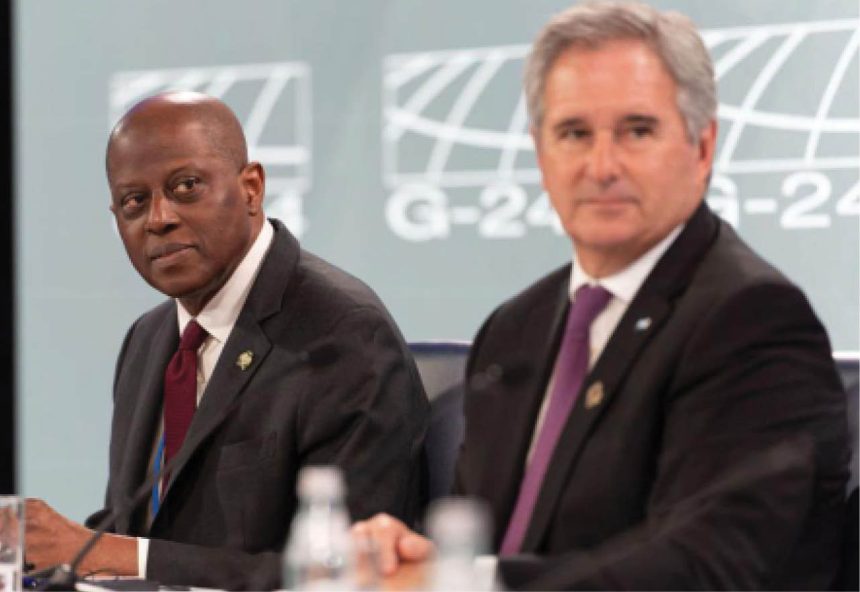
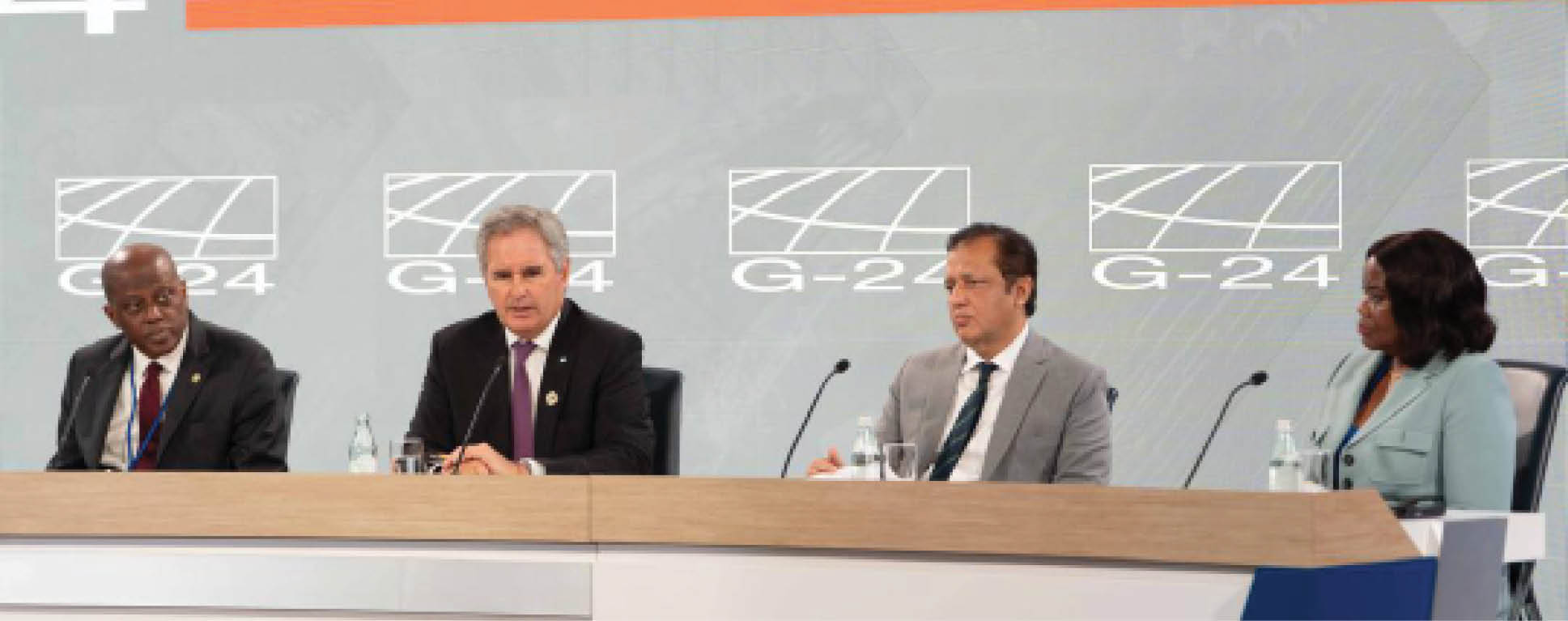
For Mr. Cardoso, the resilience stems from timing and foresight. “We were fortunate because many of the reforms that needed to be implemented were done much earlier. As a result, we were able to create buffers against potential shocks,” he said during the Intergovernmental Group of Twenty-Four (G-24) briefing in Washington, D.C.
Those buffers, he explained, were crucial as global tariffs rose and oil prices dipped. While oil remains Nigeria’s major export, the impact of higher tariffs on the sector was “relatively modest,” thanks to the country’s shift toward domestic production and non-oil exports. The CBN projects a positive trade balance equivalent to six percent of gross domestic product (GDP) – an achievement unseen in recent years.
Restoring Investor Confidence
CBN data show that real GDP expanded by 4.2 percent in the second quarter of 2025, reflecting a return of investor confidence and a rebound in capital inflows. International credit rating agencies have also taken notice, upgrading Nigeria’s outlook from “negative” to “stable.”
“Together, these shifts suggest more than a cyclical adjustment,” Mr. Cardoso observed. “They mark the outlines of a developmental inflection point. Investor confidence is gradually restored, and Nigeria positions itself, two years on, at the threshold of structural renewal.”
Analysts agree that the IMF’s commendation is more than symbolic. It sends a reassuring signal to investors still weighing Nigeria’s reform credibility. “The IMF’s endorsement represents a vote of confidence in Nigeria’s trajectory,” said Dr. Abiodun Adedeji, a Lagos-based economist. “It validates the idea that consistency in reform – no matter how tough – can yield results.”
From Stabilization to Sustainability
Despite the positive reviews, both the IMF and the CBN acknowledge that the path forward requires discipline and inclusivity. Mr. Cardoso has emphasized that the next phase must focus on ensuring these gains translate into real prosperity for Nigerians.
An electronic FX matching system, set to launch soon, will further improve transparency in currency trading. The CBN also expects commercial banks to take on greater responsibility in market-making and risk management. “An FX market defined solely by when and how the Central Bank buys or sells dollars is inadequate,” he said. “Banks must now step up and play their part in sustaining market stability.”
He also revealed that Nigeria lost an estimated N6.2 trillion in potential revenue in 2022 due to a rigid foreign exchange regime – surpassing the N4.5 trillion lost to fuel subsidies. “Those funds could have significantly contributed to critical investments in education, healthcare, and infrastructure,” he noted.
The Broader Global View
At the global level, the IMF projected that overall growth will slow slightly – from 3.3 percent in 2024 to 3.2 percent in 2025 and 3.1 percent in 2026 – highlighting the need for fiscal prudence and cooperation among developing economies. G-24 Chairman Pablo Quirno warned that policy uncertainty and weaker trade flows remain significant risks.
Still, Nigeria’s case offers a rare glimmer of optimism. Through disciplined monetary management, policy coordination, and political will, Africa’s largest economy is proving that reform, though painful, can deliver resilience.
In the words of Mr. Cardoso, “This is only the beginning. The real task is to ensure that the hard-won gains translate into durable prosperity, especially for the next generation.”
Nigeria’s economic story is being rewritten – not as a tale of fragility, but as one of recovery, reform, and resilience. And with global institutions now acknowledging the turnaround, the country stands on the cusp of a new economic dawn, defined not by short-term relief, but by long-term renewal.