
REFORM TALKS with Enam Obiosio
When I first heard the announcement from Paris that Nigeria had finally been delisted from the Financial Action Task Force (FATF) grey list, I felt a rare and honest surge of pride. Not the perfunctory kind that comes from routine government declarations, but the deep, reflective satisfaction that springs from knowing that, against many odds, our country had stayed the course and achieved a milestone that has both symbolic and practical weight.
For years, Nigeria’s relationship with global financial watchdogs has been uneasy. We have often found ourselves on the wrong side of global compliance systems – branded as ‘high-risk,’ ‘opaque,’ or ‘vulnerable to illicit flows.’ When the FATF placed us on the grey list in February 2023, it felt like a public rebuke, a red mark on our financial report card. The world was, in essence, saying: “Nigeria, you are not doing enough.”
But what many people forget is that this wasn’t a political sanction – it was a technical warning. And in the complex world of international finance, such warnings carry real-world consequences. Grey listing signals to banks, investors, and development partners that a country’s financial systems are under enhanced monitoring, often prompting stricter due diligence requirements. In simple terms, it makes it harder for Nigerian businesses and citizens to move money, attract investment, or be trusted by the global financial ecosystem.
So, when President Bola Ahmed Tinubu welcomed the FATF’s decision to delist Nigeria, it wasn’t just another headline in a long list of policy wins but a pivot point in our quest for economic credibility.
It’s easy to underestimate how much work goes into exiting a FATF grey list. The process is not political; it’s procedural, data-driven, and intensely demanding. Nigeria had to demonstrate that it could identify, prevent, investigate, and prosecute financial crimes – from money laundering to terrorism financing – in line with international standards.
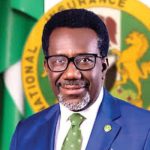
This required not only updating our laws but also changing our institutional culture. The Nigerian Financial Intelligence Unit (NFIU) became the nerve centre of this transformation. Under the leadership of Ms. Hafsat Abubakar Bakari, the NFIU coordinated multiple agencies – from the EFCC and ICPC to the Central Bank, DSS, and Corporate Affairs Commission – to prove that Nigeria’s compliance was not on paper but in practice.
It’s important to remember that FATF monitoring is not an event; it’s a continuous evaluation process that scrutinises everything from inter-agency cooperation to beneficial ownership transparency. Every recommendation requires evidence, not promises. And for a country like Nigeria, where bureaucracy often chokes progress, sustaining such inter-agency momentum was no small feat.
I find it particularly symbolic that this victory came under the Tinubu administration – one that has made reform, fiscal discipline, and institutional rebuilding central to its economic narrative. Whether it’s the unification of the exchange rate, subsidy reform, or public finance restructuring, the overarching message has been that Nigeria wants to be seen, not as a risk, but as a partner. The FATF delisting affirms that commitment.
When I consider what this means in practical terms, several layers unfold.
First, Nigeria’s removal from the grey list sends a strong signal to international financial institutions and investors. It tells them that the country is serious about transparency, compliance, and governance. That confidence is crucial in a period where Nigeria is actively seeking foreign investment to stabilise its economy, fund infrastructure, and support small businesses.
Second, this milestone reinforces the credibility of Nigeria’s financial regulators. For too long, our enforcement agencies have been viewed as reactive rather than preventive – chasing crimes after they happen. Now, with the systems strengthened, data-sharing improved, and coordination institutionalised, Nigeria is better positioned to detect and deter illicit flows before they damage the economy.
Third, it enhances Nigeria’s standing in the regional and global anti-money laundering ecosystem. Through the Inter-Governmental Action Group Against Money Laundering in West Africa (GIABA), Nigeria now re-emerges not as a laggard but as a leader – one capable of sharing lessons and setting examples for neighbouring countries still struggling with compliance gaps.
Some may ask, “How does this affect me?” It’s a fair question. After all, the FATF is an elite acronym, far removed from the markets of Mushin or the farms of Nasarawa. But the truth is that financial integrity touches every part of national life.
When a country is on the FATF grey list, foreign banks treat transactions involving its citizens with suspicion. This makes international trade, remittances, and investment more expensive. A grey-listed country also risks capital flight, reduced investor confidence, and slower economic recovery.
Conversely, delisting helps reverse those perceptions. It eases restrictions on Nigerian companies engaging in cross-border business. It reassures investors that compliance risk is lower. It also improves Nigeria’s ability to access global credit, attract partnerships, and strengthen its currency. In short, the impact trickles down to jobs, exchange rates, and the cost of doing business.
In the long run, that’s what makes this achievement not just technical, but transformational.
President Tinubu’s statement called this development “a major milestone in Nigeria’s journey towards economic reform, institutional integrity and global credibility.” And I agree. What strikes me most is that this didn’t happen in isolation. It fits into a broader architecture of reform that his administration has pursued – one that ties governance integrity directly to economic growth.
Tinubu’s approach to reform has been unapologetically structural. He understands that no economy can thrive on leaks, loopholes, and opacity. His consistent emphasis on transparency – from fiscal reforms to financial governance – underscores a simple truth: credibility is the new currency.
The decision to coordinate this effort through the NFIU, under the supervision of the Attorney-General, Minister of Finance, and Coordinating Minister of the Economy, was strategic. It ensured that the legal, financial, and operational arms of government worked in sync – something that has often been missing in our anti-corruption frameworks.
Equally commendable was the involvement of a wide cast of institutional actors: from the CBN and CAC to the Customs, NDLEA, SEC, and Police. This multi-agency synergy proved that Nigeria can deliver when interests align and leadership is clear.
It’s also worth acknowledging the role of our international partners. FATF reforms are not implemented in a vacuum; they require technical support and collaboration. The governments of France, Germany, the UK, and the US, as well as the United Nations and the European Commission, provided invaluable assistance throughout this process.
Their involvement is more than diplomatic courtesy. It represents a renewed vote of confidence – an acknowledgment that Nigeria can be trusted again in the global financial ecosystem. And trust, as every investor knows, is the most valuable asset a nation can hold.
Yet, as proud as I am of this accomplishment, I remain cautious. History teaches us that Nigeria is excellent at achieving milestones but often struggles to sustain them. The FATF delisting should not become a reason for complacency; it should be a call to consistency.