It was with an unusual mix of optimism, when industry veterans and regulators from Nigeria’s energy and financial sectors met recently in Abuja, and by the time the ribbon was cut, a new chapter had begun for Nigeria’s gas industry. After years of opaque deals, one-on-one contracts and unclear pricing, President Bola Ahmed Tinubu-led government unveiled a modern gas trading and payment system designed to transform natural gas from a hidden national resource into a transparent, tradable market asset. Enam Obiosio, captures the development.
The new system is anchored by Nigeria’s first Gas Trading Licence, a technology-enabled Clearing House, and a Settlement System, all designed to formalise how gas is bought, sold, priced, and paid for across the country. The licence was granted to JEX Markets Limited, empowering it to operate a digital marketplace where producers, transporters, traders and industrial users can transact with confidence.
Speaking at the launch, Honourable Ekperikpe Ekpo, the Honourable Minister of State for Petroleum Resources (Gas), framed the initiative as a turning point. “Our country is richly endowed with natural gas reserves, among the biggest in the world,” he said, “but if the underlying market where the gas will flow is not efficient, reliable and well-regulated, it will not be possible for us to realise the ultimate potential of the resource.” With those words, he captured a deep shift in emphasis from simply possessing resources to managing them with global best practices.
Hon. Ekpo described the new market structure as aligned with President Bola Tinubu’s energy security objectives, underscoring predictability, investor confidence and value unlocking. He emphasised that reliable traders would now feel safe doing business in what had previously been a fragmented and uncertain sector.
For Mr. Farouk Ahmed, Chief Executive of the Nigerian Midstream and Downstream Petroleum Regulatory Authority (NMDPRA), the implications reach far beyond domestic commerce. “There is a firm, transparent and technology-enabled regulatory framework under the Petroleum Industry Act,” Ahmed said, “giving investors the certainty and confidence required to commit long-term capital to the gas value chain.” Under his stewardship the system aims to resolve pricing opacity, strengthen contract sanctity and attract fresh capital into the sector.
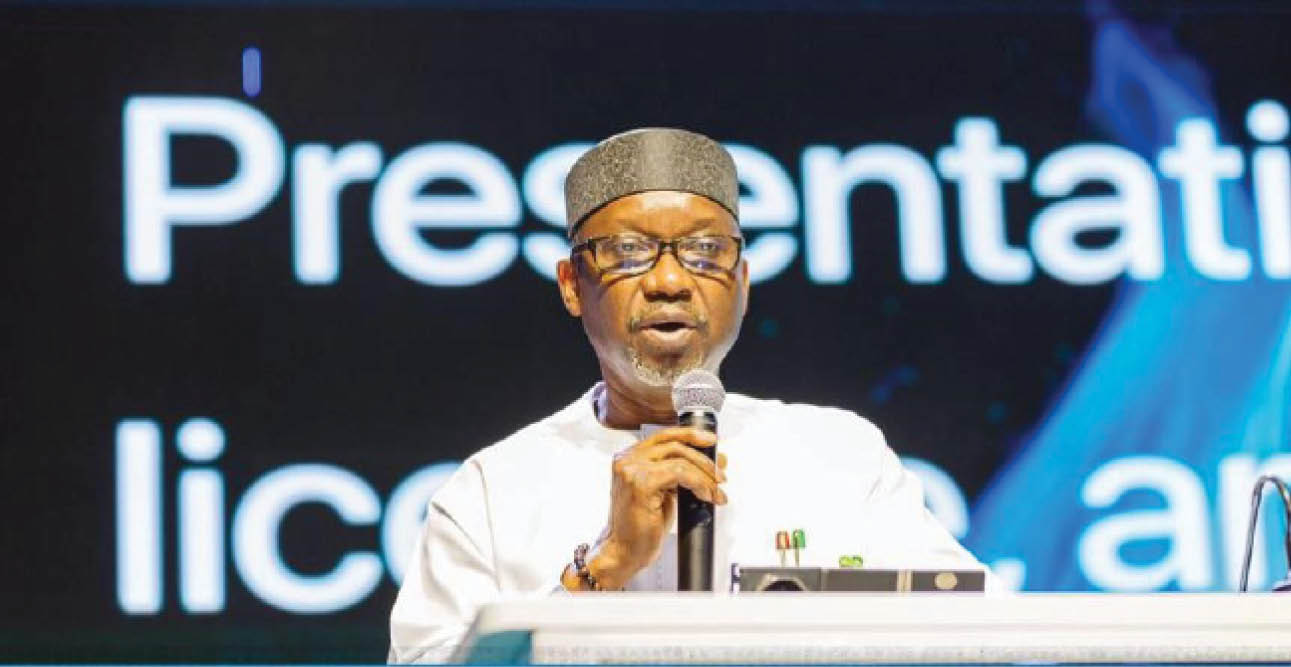
From where he sat, the clearing and settlement component was especially important. By standardising contracts, declaring prices publicly and guaranteeing payment finality, the system converts natural gas into a verifiable financial asset. Market liquidity, price discovery and broader participation are no longer theoretical aims but operational realities.
Mr. Ahmed stated that the latest development was in compliance with the provisions of section 159 of the PIA for the trading and settlement of wholesale gas in Nigeria.
He explained that Nigeria’s gas-focused strategic policies, initiatives and fiscal and regulatory frameworks such as the Decade of Gas (DoGas) Initiative, Presidential CNG initiative (PiCNG), Nigerian Gas flare Commercialisation Programme (NGFCP) and executive orders of President Bola Tinubu, on investment promotion and incentives have continued to position Nigerian’s gas sector as an attractive investment environment on the African continent.
The Gas Trading Licence and other relevant regulatory instruments administered by the NMDPRA, he said, have continued to promote the sustainable development of the gas markets through the application of global best practices.
According to him, this is to ensure transparency and efficiency; price discovery and reporting; safe and reliable market trading practices; automated online and real-time market trading; market liquidity and inclusive participation as well as enhanced market access.
As the regulator of Nigeria’s midstream and downstream petroleum sector, the Authority Chief Executive stated that NMDPRA recognises that the true test of licensing JEX markets is not in the ceremony, but in the transformation it must deliver.
“To ensure that JEX succeeds as Nigeria’s pioneering gas trading, clearing and settlement platform, we will provide a firm, transparent and technology enabled regulatory framework under the PIA, giving investors the certainty and confidence required to commit long term capital to the gas value chain. We will continue to work closely with our sister regulators, including the Securities and Exchange Commission (SEC) and key financial market institutions, harmonise market rules, standardise transaction contracts, and ensure that clearing and settlement arrangements meet the highest global standards,” he assured.
The National Security Adviser (NSA), Mallam Nuhu Ribadu, represented by his Special Adviser on Oil and Gas, Goodluck Ebelo, stressed that the success of the new trading architecture depends on a safe operating environment.

Mallam Ribadu stated that coordinated security operations have sharply reduced pipeline vandalism, illegal refining networks and crude theft, restoring confidence to producers and midstream operators. He pledged continued protection of existing and emerging gas corridors, including strategic pipelines critical to power supply, industrial expansion and regional exports.
He noted that the achievement represented much more than regulatory progress, but a decisive step in the federal government’s commitment to actualising the ‘Decade of Gas’ agenda and unlocking the full potential of Nigeria’s vast natural gas resources.
“More gas is flowing to power plants, industries, and export systems, contributing to increased national revenue and greater economic stability. As we secure existing infrastructure, the NSA’s office is also prioritising the protection of new and strategic gas pipeline systems vital to Nigeria’s industrial expansion and regional energy leadership,” Mallam Ribadu stated.
The Securities and Exchange Commission (SEC), which also authorised the Clearing House, described the initiative as a major shift from the physical handling of gas to its emergence as a fully tradable financial asset.
Dr. Emomotimi Agama, Director-General (DG) of SEC, said the new framework will create a credible Nigeria Gas Price Index, enable market-making, de-risk infrastructure investment and broaden Nigeria’s capital market with a new asset class. He urged producers, off-takers and financiers to participate actively, arguing that a deep, transparent market will anchor industrialisation, strengthen energy security and support long-term economic diversification.
The theme: “Gas Trading on Recognised Platform and Economic Diversification,” he said, cuts to the very heart of Nigeria’s national ambition, noting that it declares that the country’s vast hydrocarbon resources, particularly gas, will no longer be just a commodity for export or domestic use, but a financially traded asset on a transparent, efficient, and regulated market platform. “In short, we are building not just a market, but a credible and resilient market infrastructure. This ‘regulatory readiness’ is what converts potential into lasting investment,” he also stated.
House Committee Chairman on Petroleum Resources (Downstream), Hon. Ugochinyere Ikeagwuonu, spoke with a sense of relief and ambition: “For years we have spoken about gas as the cornerstone of Nigeria’s energy future. What we are witnessing here today is the operationalisation of those ideas, a move from policy to practice.”
Why This Matters Now
Nigeria’s proven gas reserves exceed 200 trillion cubic feet. For years, that staggering figure sat largely untapped while domestic pricing remained opaque and investment lagged. The new trading and payment system is expected to reshape that landscape. The system also comes as part of a broader suite of reforms unfolding across Nigeria’s energy sector. Recent government actions include clearing longstanding debts to gas producers in an effort to stabilise power supply and signal reliability to investors. Such moves, the presidency has said, aim to almost double gas output to 12 billion cubic feet per day by 2030.
A Short History of Gas Policy
To understand today’s launch, it helps to remember how far the country has come. In 2021, former President Muhammadu Buhari launched what was known as the Decade of Gas Initiative, an ambitious framework to fully utilise Nigeria’s enormous gas reserves for economic growth. Buhari spoke plainly about a paradox Nigeria faced: a gas-rich nation that consumed only a fraction of its own resource. His goal was to fuel industries, drive power generation and reduce waste through policies that included flare gas commercialisation and cleaner fuels adoption.
The Morocco Connection
Beyond domestic reform, Nigeria’s gas ambitions carry a regional and continental dimension, especially in its planned cooperation with Morocco. Long in discussion, the Nigeria-Morocco Gas Pipeline project envisions carrying Nigerian gas across a dozen West African nations to Morocco and on to European markets. Officials say the roughly $25 billion project could supply up to 30 billion cubic metres of natural gas annually to roughly 400 million people.
The presence of Morocco in Nigeria’s gas narrative is not incidental. It reflects a broader economic vision of regional integration and export diversification. The pipeline project sits at the intersection of energy infrastructure, continental trade and geopolitics. Nigerian officials, including the Vice President, have courted investors and reiterated President Tinubu’s commitment to the project as a strategic priority.