By Jennete Ugo Anya
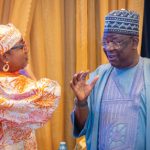
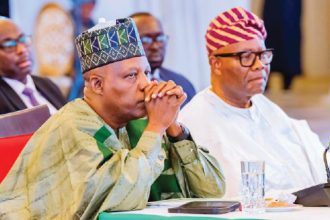
In the stately confines of the Vice President’s Conference Room at the State House, a sense of urgency filled the air on December 16, 2025. As sunlight streamed through the windows, a diverse group of Nigeria’s top policymakers, donors, private sector leaders, and development experts gathered for the Quarter Four (Q4) meeting of the Human Capital Development (HCD) Core Working Group (CWG).
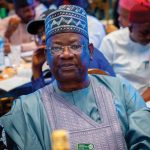
Chaired by Senator Ibrahim Hassan Hadejia, the Deputy Chief of Staff to the President, the session was not just another bureaucratic huddle – it was a critical checkpoint in Nigeria’s ambitious journey to transform its human capital amid daunting challenges like child stunting, youth unemployment, and regional disparities.
The meeting, themed ‘HCD 2.0 Roadmap: Implementation Progress and Partners’ Updates,’ built on the foundations laid by the National HCD program under the National Economic Council (NEC). Established to foster synergy across education, health, and workforce development, the initiative has evolved since its inception, with a pivotal gathering in February 2024 reaffirming the government’s commitment to bolstering institutional capacities. Now, in its 2.0 phase, the roadmap aims to accelerate progress through collaborative action, addressing gaps that have long hindered Nigeria’s growth.
Senator Hadejia kicked off proceedings at 11:34 a.m., setting a tone of determination. “We must assess our strides and push harder,” he urged, as participants – from federal ministries to international organizations like the World Bank and Gates Foundation – introduced themselves, underscoring the meeting’s inclusive spirit.
At the heart of the discussions was the Secretariat’s update, delivered by the HCD National Coordinator, Ms. Rukaiya el-Rufai. She painted a picture of steady momentum: the shift in technical support from the Nigeria Governors’ Forum (NGF) to Development Alternatives, Inc. (DAI) Nigeria, the reconstitution of the Steering Committee, and an expanded CWG. A highlight was the Vice President’s approval of a partnership with Germany’s Hertie School of Governance to enhance leadership skills. States like Ekiti and Oyo are already seeking assistance to craft their own HCD plans, while plans for a data-driven Early Childhood Development (ECD) program and monthly advocacy meetings signal a proactive shift. Yet, Ms. Rukaiya emphasized the need for full-time staffing and capacity building to truly empower states.
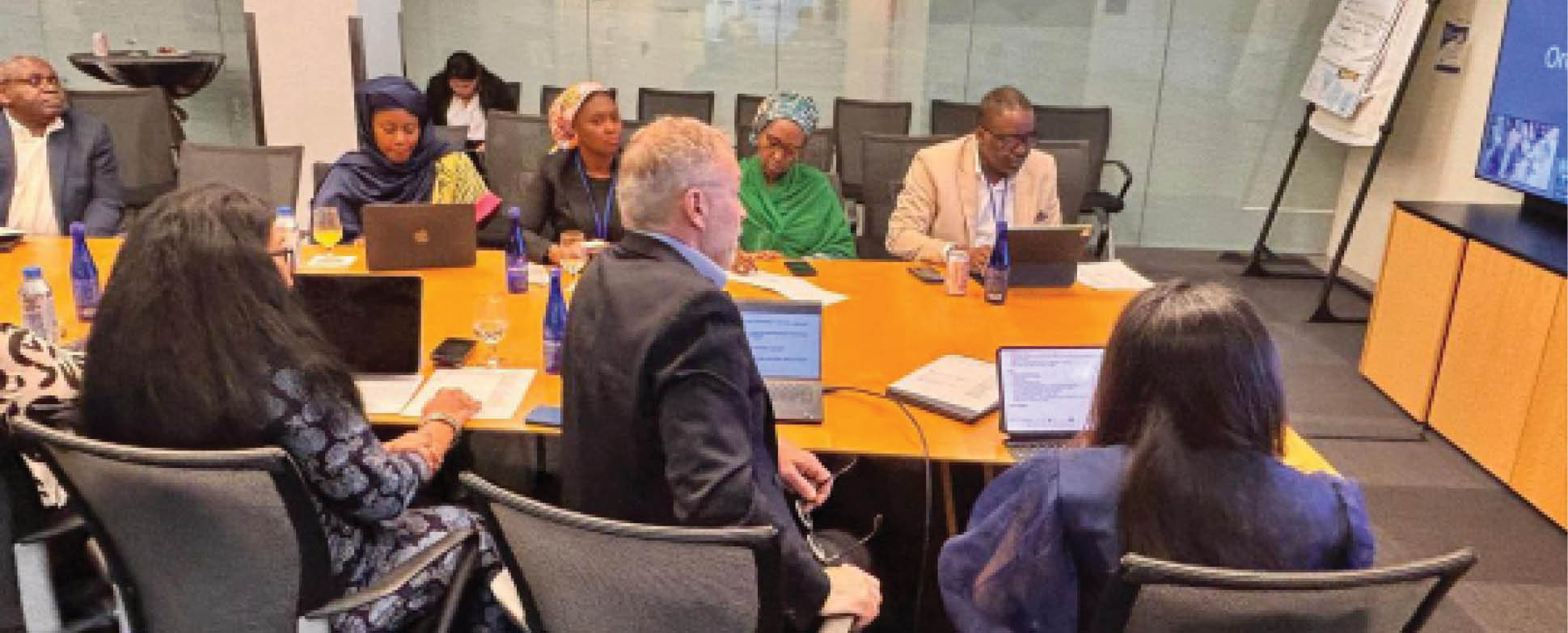
The spotlight then turned to Nigeria’s youngest citizens, where Dr. Ritgak Tilley-Gyado from the World Bank delivered a sobering reality check on Early Childhood Development (ECD) and stunting. “Ninety percent of brain development happens before age five,” she stressed, highlighting grim statistics: 40 percent of children under five are stunted, only 43 percent of three- to four-year-olds meet basic milestones, and a mere 24 percent of four- to six-year-olds can write a simple word. These issues, she warned, ripple into adulthood, slashing productivity, job prospects, and even national gross domestic product (GDP). Calling for a multi-sectoral blitz involving nutrition, health, education, and sanitation, Dr. Tilley positioned the CWG as the linchpin for policy translation and a unified national narrative. “This is about securing Nigeria’s future workforce,” she said, urging decisive leadership.
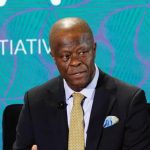
Funding and partnerships emerged as beacons of hope. Dr. Joe Abah, Nigeria’s Country Director at DAI, detailed a new Secretariat Support Grant from the Gates Foundation, aimed at forging accountability frameworks, boosting knowledge sharing, and deploying regional consultants. Outcomes? Tangible targets such as bumping immunization coverage from 36 percent to 45 percent, slashing learning poverty from 70 percent to 60 percent, and trimming youth unemployment from 14.4 percent to 12 percent. “Through collaboration, we are improving lives for millions, especially children and youth,” Dr. Abah noted, outlining deliverables like policy briefs, workshops, and a national HCD dashboard.
Dr. Abah also led on donor coordination, advocating for a synchronized template to track HCD interventions across partners in 2026, ensuring funds from ministries and agencies are efficiently deployed. Meanwhile, Seun Ojo from the Nigeria Economic Summit Group (NESG) showcased the Private Sector Partners Group (PSPG), a powerhouse mobilizing corporate giants such as UAC Foods and Oando. In harnessing private expertise in health, education, and skills, the PSPG complements public efforts. Upcoming steps include surveying corporate social responsibility (CSR) initiatives, visioning workshops, and a dedicated database – all aligned with national priorities to amplify impact.
The meeting drew participation from an impressive array of stakeholders, including the Gates Foundation, the United Kingdom’s Foreign, Commonwealth and Development Office, the World Bank, the Tony Elumelu Foundation, the Japan International Cooperation Agency, the Aliquot-Ongote Foundation, ECOWAS, and several Federal MDAs. Key ministries represented included the Ministry of Budget and Economic Planning and the Ministry of Education, reinforcing the cross-government nature of the agenda.
From the regional front, H.E. Madam Finda Koroma’s HCD+ organization brought global flair, drawing on 35 years of experience from the UN, private sector, and ECOWAS reforms. Despite hurdles like unresponsive agencies, HCD+ is rolling out tools like a Fragility Nexus Dashboard and citizen-data systems to fuel evidence-based planning. Plans for 2026 focus on strategy validation and state-level expansion, aiming to scale HCD across Nigeria and beyond.
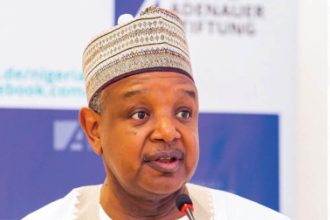
A particularly poignant segment addressed Northern Nigeria’s acute challenges. Engr. Gambo of the Ahmadu Bello Foundation outlined the 2026 Summit on Enhancing HCD in the North, tackling an HDI of just 0.493 (versus 0.625 in the South), where 79.4 percent of extreme poverty resides. High maternal mortality, child stunting, and low education rates paint a crisis, but the summit promises a turnaround: uniting leaders for the “Kaduna Compact,” a five-year framework with policy recommendations, financing pledges, and an accountability mechanism issuing annual scorecards. “This is our chance to unlock the North’s potential,” Engr. Gambo declared.
Adding fresh energy was the onboarding of Dr. Ado Muhammad as Federal Coordinator, welcomed with applause. Reporting to Ms. Rukaiya, he will drive federal synergy, transparency, and accountability in HCD funding and execution.
Discussions buzzed with forward-thinking ideas. Senator Hadejia called for inclusivity in the Northern Summit’s delegate selection to foster knowledge exchange. A Gates Foundation rep pushed for data-driven programming amid election-year timing, suggesting visuals to spotlight Northern disparities. The World Bank advocated involving state budget commissioners and securing comparable regional data. On the Secretariat’s timeline, Ms. Rukaiya assured ongoing alignments, with updates via 2026’s monthly meetings.
As next steps, DAI Nigeria will craft a uniform tracking template, while the Secretariat commits to those monthly CWG sessions for the first half of 2026 -ensuring momentum does not wane.
In his closing remarks, Senator Hadejia thanked all for their dedication. As the meeting ended it left a clear message that Nigeria’s human capital revolution is gaining steam, but it demands unwavering collaboration to turn plans into prosperity. With partnerships deepening and roadmaps sharpening, 2026 could mark a pivotal year in bridging the nation’s divides and building a brighter future for its people.