Nigeria’s economic reform agenda is drawing global recognition, with the World Trade Organization’s Director-General, Dr. Ngozi Okonjo-Iweala, commending President Bola Tinubu for steering the nation economy toward stability. Last week, her visit to the State House after the launch of a Women Exporters in Digital Economy (WEIDE) fund – a $50 million programme designed to empower women-led businesses in Nigeria and other developing countries, marked a deliberate shift toward inclusive growth. Enam Obiosio gives us the insights of the event.
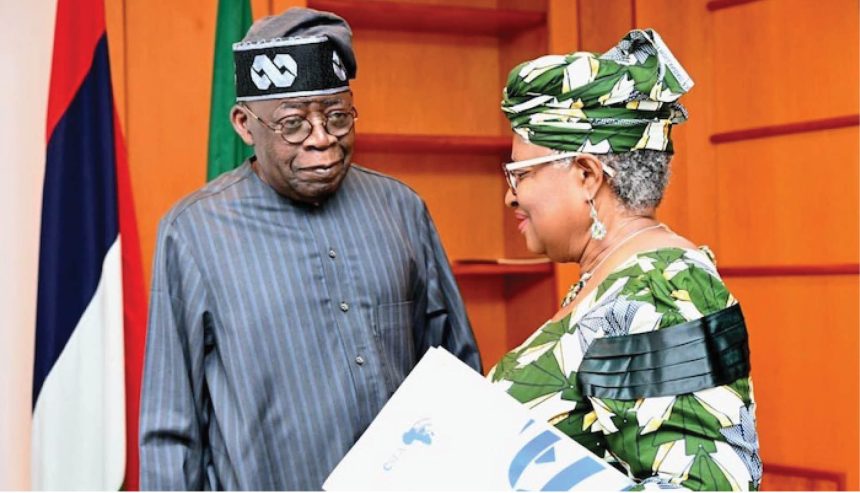
The Director-General (DG) of the World Trade Organization (WTO), Dr. Ngozi Okonjo-Iweala, has thrown her weight behind President Bola Tinubu’s economic reforms, describing them as steps in the right direction toward stabilizing Nigeria’s economy.
Speaking to State House correspondents after a courtesy visit to the President at the State House, Dr. Okonjo-Iweala commended the administration for laying a stable foundation, which she said is essential for growth. “You cannot really improve an economy unless it is stable. So, the President and his team deserve credit for achieving that stability,” she stated.
While lauding the reforms so far, Dr. Okonjo-Iweala stressed the importance of the next phase – expanding growth and building social safety nets to cushion the short-term impact of the reforms on citizens.
“What is needed next is growth,” she said. “We need to put in place social safety nets so people feeling the pinch of the reforms can weather the hardship. Then we must grow the economy to create more jobs and put more money in people’s pockets.”
The visit coincided with the launch of a landmark initiative – the Women Exporters in Digital Economy (WEIDE) Fund – a $50 million programme designed to empower women-led businesses in Nigeria and other developing countries.
Empowering Women, Boosting the Economy
The fund, jointly managed by the WTO and the International Trade Centre (ITC), aims to give women entrepreneurs access to finance, training, and global markets. Nigeria emerged as one of only four countries worldwide to participate in the pilot phase.
From a pool of 67,000 applicants, 146 Nigerian women were selected for direct funding and business support. Sixteen of them, under the “booster track,” will receive up to $30,000 each, alongside 18 months of technical assistance to scale their existing businesses. The remaining 130 women, on the “discovery track,” will get $5,000 each plus a year of training to grow their enterprises.
The beneficiaries span sectors including beauty, food and beverages, agriculture, IT, and agro-processing – with Nigeria designated as the flagship country for the initiative.
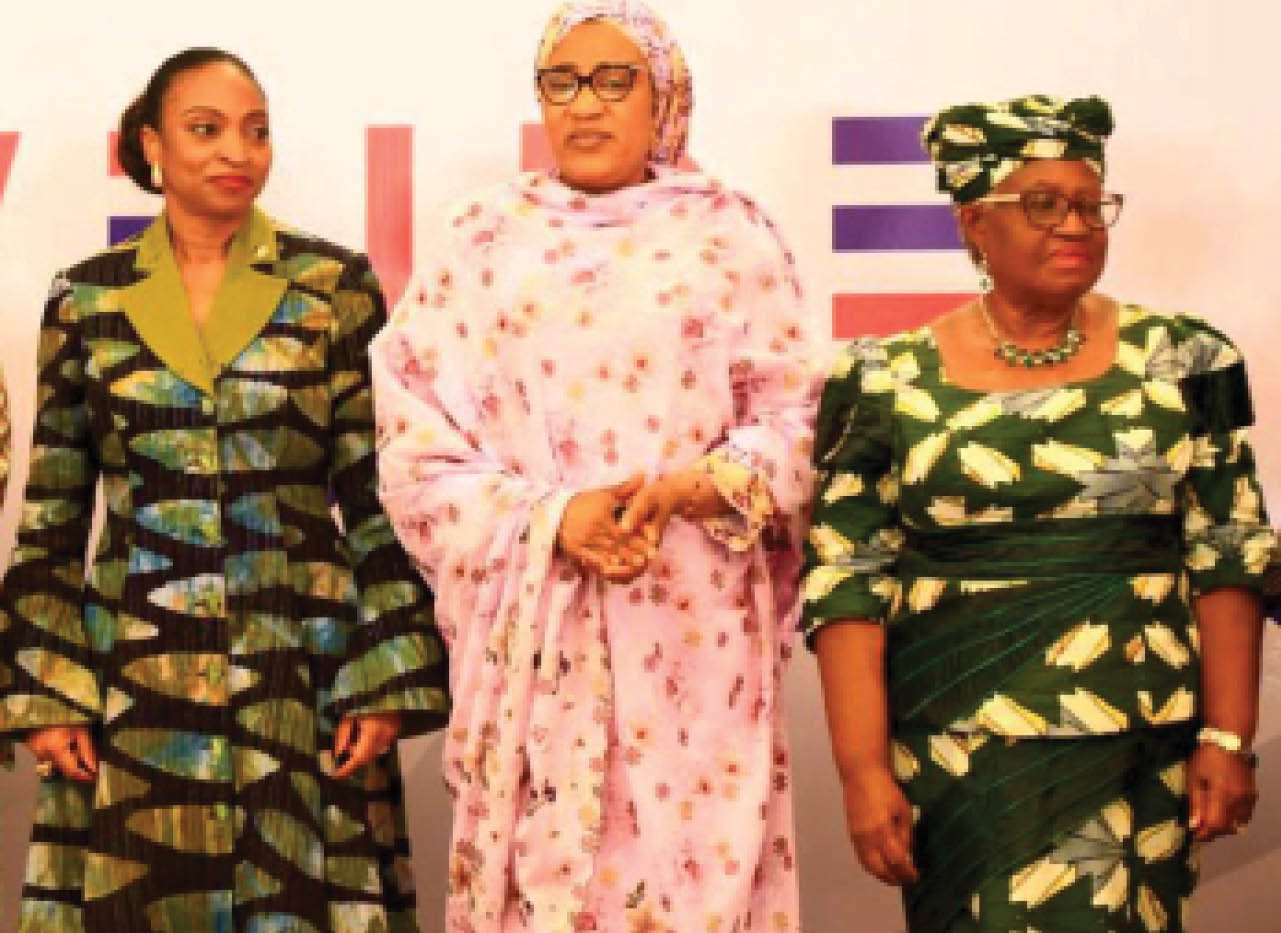
First Lady, Mrs. Oluremi Tinubu, represented at the launch by Mrs. Nana Shettima, wife of the Vice President, described the programme as a powerful tool to strengthen women’s participation in trade and the digital economy.
Honourable Minister of Industry, Trade, and Investment, Dr. Jumoke Oduwole, underscored that women-led exporters are key drivers of Nigeria’s economy. She said that the ministry is working with global partners to accelerate market access for such businesses, positioning them as digital trade champions under the African Continental Free Trade Area (AfCFTA) – a move aligned with Nigeria’s target of becoming a $1 trillion economy by 2030.
The Executive Director of the Nigerian Export Promotion Council (NEPC), Mrs. Nonye Ayeni, outlined the broader ambition of the WEIDE programme – to empower 10,000 women-owned export-ready businesses by 2030, open international markets to 3,000 women-led small, medium enterprises (SMEs) by 2027, and deliver grassroots export training in every state.
Aligning Trade, Reform, and Inclusion
For the President Tinubu administration, the WTO’s endorsement and the launch of WEIDE reflect a convergence of economic reform and inclusive growth. By pairing macroeconomic stability with targeted initiatives for women entrepreneurs, the government aims to show that reform is not just about numbers, but about real opportunities for citizens.
As Okonjo-Iweala noted, stability is the first step. Growth – and the inclusive policies to sustain it – must follow.
Reforms Deliver Consistent Economic Growth
On the same note, the federal government says its reform-driven policies are beginning to yield visible results, with the Nigerian economy posting consistent growth despite global headwinds.
Mr. Wale Edun, Honourable Minister of Finance and Coordinating Minister of the Economy, told the media men in Abuja that gross revenues jumped by 37.4% in the first half of 2025. He credited this leap to fiscal discipline, structural reforms, and a clear focus on private sector-led growth under President Tinubu.
According to him, the medium-term ambition is to push annual gross domestic product (GDP) growth to 7%. This, he explained, would be fuelled by investment-friendly policies, new jobs, and better household incomes.
States Spend More, Grow More
One of the clearest indicators of progress, Mr. Edun said, is the improved fiscal health of state governments. Their combined balance rose from 1.8% of GDP in 2023 to 3.1% this year, translating into a surplus of N7.1 trillion compared to N2.8 trillion previously. This, in turn, has driven higher capital spending in infrastructure and services across the country.
Oil, Gas, and Power Getting a Boost
Mr. Edun noted that Nigeria’s oil sector, while producing below the 2.06 million barrels per day budget benchmark, has maintained compliance with OPEC quotas. The average output of 1.67 million barrels per day in H1 2025 came at a global average price of $67 per barrel.
The power sector, according to him, has recorded a rare milestone – no national grid collapse so far this year. Noting that the government has also secured approval to clear N4 trillion in legacy electricity debts. He equally noted that Nigeria is further tapping into the World Bank and AfDB-backed ‘Mission 300’ programme to expand electricity access for industries and communities, spurring growth in manufacturing and agro-processing.
Monetary Stability and Investor Confidence
On monetary policy, Mr. Edun stressed the government’s focus on bringing down inflation through tighter coordination between fiscal and monetary authorities. He stated that a more competitive exchange rate now supports export growth under the African Continental Free Trade Area (AfCFTA), while stable macroeconomic conditions are helping businesses plan with greater certainty.
Transparency as a Growth Driver
The Honourable Minister of Finance was emphatic that the administration’s transparency is central to building trust. “We are open for business,” he said. “Nigeria has stable conditions that encourage investment in agriculture, manufacturing, technology, infrastructure, and services. We are disciplined in saving, investing wisely, and focusing on education, health, and infrastructure for inclusive growth.”
With these reforms, he stated that the government’s goal remains clear – an economy that works for all Nigerians, built on transparency, resilience, and shared prosperity.