
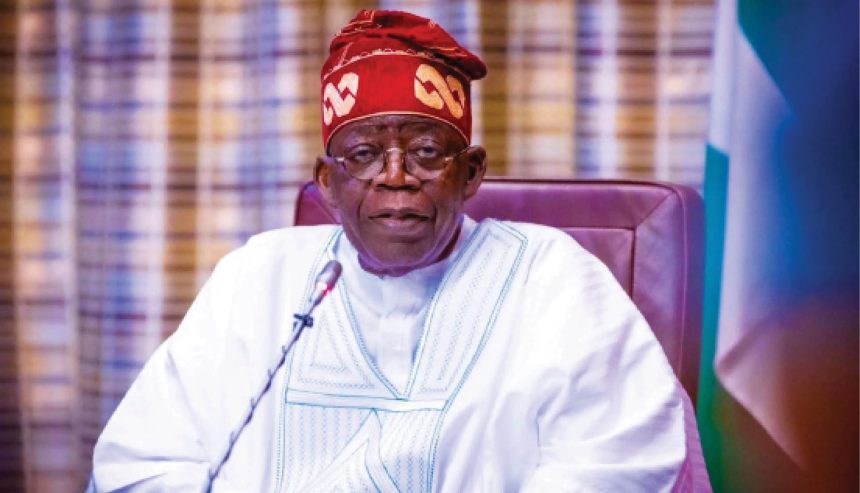
President Bola Ahmed Tinubu’s approval of a 15 percent import duty on petrol and diesel is more than a fiscal directive; it’s a strategic move that could reshape Nigeria’s downstream oil market. The policy aims to protect local refineries, stabilise prices, and strengthen the naira-based oil economy. Yet, beneath this economic rationale lies a delicate balancing act: boosting domestic production without inflicting more pain on consumers already battling inflation and high living costs. Enam Obiosio writes…
President Tinubu’s decision to impose a 15 percent ad-valorem import duty on petrol and diesel imports signals a decisive shift in Nigeria’s energy policy.
The directive, contained in a letter dated October 21, 2025, and made public on October 30, was addressed to the Federal Inland Revenue Service (FIRS) and the Nigerian Midstream and Downstream Petroleum Regulatory Authority (NMDPRA).
Signed by his Private Secretary, Damilotun Aderemi, the letter conveyed the President’s approval following a proposal by Dr. Zacch Adedeji, Executive Chairman of FIRS. The policy is part of what the government describes as a “market-responsive import tariff framework,” aimed at aligning import costs with domestic market realities and creating a level playing field for local refiners.
According to Dr. Adedeji, the measure is essential to Nigeria’s broader energy reform and fiscal sustainability drive. “The core objective of this initiative is to operationalise crude transactions in local currency, strengthen local refining capacity, and ensure a stable, affordable supply of petroleum products across Nigeria,” he explained in his memo to the President.
A Step Toward Energy Self-Sufficiency
Nigeria’s reliance on imported fuel has long been a paradox. Despite being Africa’s largest crude producer, the country imports over 67 percent of its petrol needs. For decades, this dependence has drained foreign reserves, weakened the naira, and left the economy vulnerable to global price shocks.
With the new import duty, President Tinubu’s administration hopes to reverse that trend. The tariff, pegged on the cost, insurance, and freight (CIF) value of imported petrol and diesel, is designed to make imported products less attractive compared to those refined locally.
Projections from the FIRS suggest that the new duty could raise the landing cost of petrol by about N99.72 per litre, nudging the estimated pump price in Lagos to around N964.72. Despite this increase, Nigeria’s fuel prices would still remain below regional averages – Senegal ($1.76 per litre), Côte d’Ivoire ($1.52 per litre), and Ghana ($1.37 per litre).
For the administration, this pricing balance is critical. It seeks to protect local producers while avoiding sharp consumer price spikes that could fuel discontent.

Aligning Market Prices with Local Realities
Dr. Adedeji’s proposal to the President outlined a core problem: the misalignment between locally refined products and import parity pricing. The current pricing model often favours importers, leaving domestic refiners at a disadvantage.
“While domestic refining of petrol has begun to increase and diesel sufficiency has been achieved, price instability persists, partly due to the misalignment between local refiners and marketers,” he wrote.
He warned that when import parity prices fall below cost recovery levels for local producers – due to foreign exchange fluctuations and freight costs – it discourages domestic investment. The new tariff, therefore, seeks to bridge that gap by ensuring fair competition and long-term sustai ability.
Boosting Local Refining Capacity
The timing of this policy coincides with growing domestic refining activity. The 650,000 barrels-per-day Dangote Refinery in Lagos has started producing diesel and aviation fuel and is preparing to ramp up petrol production. Smaller modular refineries in Edo, Rivers, and Imo states have also begun refining limited quantities of petrol.
In imposing an import duty, the federal government aims to create a protective cushion for these facilities, allowing them to compete fairly and recoup investments. It’s a strategy reminiscent of global practices where infant industries are shielded from external competition until they achieve operational efficiency.
Energy experts view the move as a calculated step. “You can’t build local refining capacity in a market where imports dominate,” said Dr. Bola Sofoluwe, an economist and energy analyst. “President Tinubu’s approach is about correcting structural distortions. The short-term pain could lead to long-term stability if managed well.”
The Fiscal and Economic Context
Beyond the refinery protection argument, the policy also ties into the President’s broader fiscal reform agenda. Since coming into office, the administration has pursued a sequence of bold, sometimes unpopular, economic policies – from subsidy removal to exchange rate unification – all aimed at stabilising Nigeria’s fiscal framework.
This new import duty aligns with that trajectory. It supports the administration’s goal of boosting non-oil revenues, reducing import dependency, and conserving foreign exchange reserves. Every litre of fuel refined locally represents foreign currency saved, a stronger naira, and a more resilient domestic economy.
Dr. Adedeji highlighted this dual benefit in his memo, stating that the government’s role was “twofold – to protect consumers and domestic producers from unfair pricing practices and collusion while ensuring a level playing field for refiners to recover costs and attract investments.”
Concerns About Price Impact
Despite the strategic logic, many Nigerians worry about the immediate implications. Fuel price adjustments often trigger a chain reaction across the economy. From higher transportation costs to increased food prices. In a country already grappling with double-digit inflation, any additional cost at the pump could deepen hardship.
However, government officials insist the framework is designed to avoid “price shocks.” The projected increase, they argue, is modest compared to regional benchmarks and necessary for long-term stability.
Still, the real test will lie in implementation. Analysts warn that without proper monitoring, the new tariff could be exploited by middlemen and marketers to justify excessive price hikes. Transparency and enforcement by the NMDPRA will therefore be crucial to maintaining public trust.
Nigeria’s path to energy self-sufficiency has been long and fraught, but the signs of progress are visible. The combination of private sector investment, deregulation, and now tariff protection suggests a deliberate shift from dependence to domestic strength.
President Tinubu administration’s message is consistent: the era of import reliance must end. The government envisions a future where Nigeria refines its crude, prices its products in naira, and exports surplus fuel to regional markets. If achieved, this could redefine the country’s role in Africa’s energy landscape.
The introduction of a 15 percent import duty on petrol and diesel is both a policy statement and a test of political will. It challenges the old order where importers dominated the fuel market and opens a new chapter for local producers to thrive.
Yet, as with all reforms, the outcome will depend on execution. If managed efficiently, the policy could strengthen the downstream sector, enhance fiscal stability, and lay the foundation for true energy independence. But if mismanaged, it risks eroding public confidence and reigniting the same market chaos it seeks to cure.
For now, President Tinubu’s move reflects a government willing to take calculated risks for long-term gain. It’s a bold step toward reclaiming Nigeria’s energy future – one refinery, one litre, and one policy at a time.