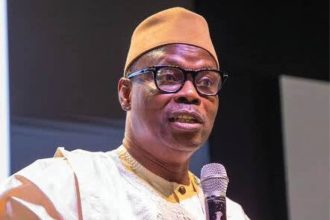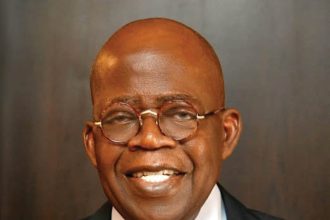


As the country navigates a key phase of economic transformation, the call for a larger national budget in 2026 is echoing from the very top. Dr. Tope Fasua, Special Adviser to President Bola Ahmed Tinubu on Economic Affairs, says the country must think big, spend bold, and build fast – if it hopes to break the cycle of poverty and reposition itself for long-term prosperity.
Speaking at the Lagos Chamber of Commerce and Industry (LCCI) 2025 Mid-Year Review and Outlook Conference recently, Dr. Fasua did not hold back. His virtual presentation, titled ‘Half-Year Economic Review and Performance of 2025 Budget: Implications and Opportunities for Business,’ was both an analytic and a rallying cry. The message: Nigeria must double down on infrastructure investment and economic restructuring if it wants to lift millions out of what he described as a “vicious circle of multidimensional poverty.”
Poverty and Infrastructure’s Direct Link
Citing reports that place 130 million Nigerians in multidimensional poverty, Dr. Fasua was emphatic that this hardship is tightly linked to the country’s chronic infrastructure gaps. “Multidimensional poverty is solely about the level of Nigeria’s infrastructural development,” he said, stressing that progress on roads, schools, power, and healthcare could change those numbers drastically.
“If we repeat that same report early next year, we may find that 20 to 30 million people have been lifted out of that poverty,” he projected, attributing the potential turnaround to the President Bola Ahmed Tinubu’s administration’s increased focus on infrastructure at both federal and state levels.
New Economic Order Emerging
Dr. Fasua painted a picture of a changing economic structure – one that is shedding dependence on oil exports and building resilience through diversification. Crude oil exports declined by 50% in 2024, he revealed, while Nigeria saved $15 billion in petroleum imports thanks to improved local refining capacity. That figure dropped to $10 billion in 2024, and the goal now is to eliminate petroleum imports entirely. “This economy is changing irrespective of our biases,” Dr. Fasua declared, pointing to the creative industry and non-oil exports such as cocoa – Nigeria’s second-highest export earner in 2024, climbing from $800 million to $2.6 billion.
Budget for the People
While larger national budgets often trigger debate about funding sources and deficit worries, Dr. Fasua believes that perspective is missing the point. “The whole idea of a budget is what you want to do for your people,” he said. “I am of the opinion that we need a larger budget. I am hoping that the 2026 budget will be much larger than 2025.” It is a vision anchored in investing to grow, rather than cutting to survive.
Made in Nigeria, Backed by Policy
Dr. Fasua also challenged the business community to make the government live up to its “Buy Made in Nigeria” policy, arguing that it is a direct channel for boosting local production and empowering the Naira. “It is a plus and plus for Nigerian businesses,” he said. “Position to get the benefits. Remind the government of what it has promised in that policy.”
Reimagining the Fiscal Framework
Also speaking at the conference, Mr. Taiwo Oyedele, Chairman of the Presidential Committee on Fiscal Policy and Tax Reforms, echoed the theme of systemic overhaul. According to him, tax reform is just one piece of the puzzle. His committee is also tackling spending efficiency, revenue from government assets, and constitutional amendments to rebalance fiscal federalism.
“Our analysis suggests that NNPC Limited alone should give government between $10 billion and $15 billion every year… that is more than our combined collections from many taxes,” Oyedele noted.
He also raised concerns about local government finances, revealing that in 2023, all local governments across Nigeria reported less than N15 billion in total revenue – a number that fails to reflect the taxes citizens pay.
“How do we ask questions on accountability if we do not know what you are doing with your budget?” Mr. Oyedele asked, calling for public access to local government budgets and audited accounts.
For Dr. Fasua and Mr. Oyedele, the moment is ripe for transformation. With reforms in motion, petroleum dependency fading, and infrastructure in focus, 2026 could be a watershed year – if the country dares to dream big with its budget.
The takeaway from the LCCI conference was clear: Nigeria’s economy is evolving. The challenge now is to match that evolution with bold policy, bigger investments, and unwavering accountability.