

By. Kingsley Benson
N
igeria’s journey toward a cleaner, self-reliant energy future is gaining new momentum as global off-grid solar giant the Rural Electrification Agency (REA) and Sun King signed a landmark Memorandum of Understanding (MoU) to boost local manufacturing and expand renewable energy access across the country.
The agreement, sealed during the Nigeria Renewable Energy Innovation Forum (NREIF) in Abuja, was witnessed by Vice President Kashim Shettima and Sun King’s Co-founder and Chief Executive Officer, Mr. Patrick Walsh. It marks a major step forward in aligning private innovation with government ambition to fast-track the nation’s clean energy transition.
Under the deal, Sun King plans to establish local manufacturing facilities in Nigeria – a move that could replace imports worth up to $150 million over the next five years. With enabling support from REA and other government agencies, the initiative aims to strengthen domestic value chains, create new jobs, and accelerate the country’s shift toward sustainable energy independence.
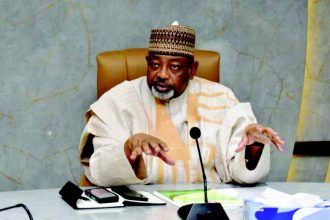
“Sun King was the largest partner on REA’s Nigeria Electrification Programme. This next chapter goes further – linking energy access, industrial growth, and supportive policy into one unified push for Nigeria’s clean-energy future,” said REA’s Mr. Abba Aliyu. Managing Director /Chief Executive Officer (CEO).
For Sun King, which already sells more than 330,000 solar kits monthly across Africa, the Nigerian market is becoming an engine of expansion. In just five years, its sales in the country have grown from 3,000 kits per month in 2020 to 75,000 per month today – a surge driven by rising demand for affordable, reliable electricity in rural and peri-urban areas. The company says it plans to triple those numbers in the coming years.
Beyond solar kits, Sun King has also diversified its offerings, introducing energy-efficient appliances such as televisions, freezers, and smartphones designed to work seamlessly with its solar solutions – products that are improving comfort, productivity, and connectivity for households and small businesses.
The newly signed MoU lays out three core pillars of collaboration: local manufacturing, data-driven technical cooperation, and joint advocacy for renewable energy policy reform.
First, on local manufacturing, both parties pledged to promote the federal government’s “Nigeria First” agenda by supporting the domestic assembly of high-value solar and energy-efficient appliances. The effort is expected to stimulate industrial growth, reduce dependence on imports, and open thousands of skilled and semi-skilled jobs along the renewable energy value chain.
Second, the partnership focuses on technical cooperation – sharing data, market intelligence, and research insights to enhance operational efficiency and expand the reach of energy access programmes such as the Nigeria Electrification Project (NEP) and Distributed Access through Renewable Energy Scale-Up (DARES). The collaboration also aims to identify and close gaps in skills, infrastructure, and financing that often slow progress in the energy sector.
“This cooperation will strengthen Nigeria’s renewable energy ecosystem,” the company said in a statement. “By combining REA’s institutional experience with Sun King’s innovation and data systems, the partnership will improve policy design and accelerate access to clean power.”
Finally, the MoU commits both organisations to joint advocacy that positions standalone solar solutions as a cornerstone of Nigeria’s national energy strategy. Through coordinated communication and outreach, REA and Sun King will highlight the transformative impact of off-grid solar – from powering schools and health centres to supporting small enterprises and rural livelihoods.
Mr. Walsh, described the agreement as a meeting point of two major visions – the global Mission 300 initiative, which seeks to connect 300 million Africans to electricity by 2030, and the Nigerian government’s industrialisation drive.
“This partnership unites two powerful goals,” he said. “It’s about making clean energy affordable, unlocking new manufacturing opportunities, and using shared insight to build stronger renewable energy and electronics industries across Nigeria.”
Already, Sun King’s rapid growth has created over 12,000 jobs in Nigeria – spanning sales, installation, engineering, marketing, and logistics. The company’s local footprint continues to expand, reinforcing the idea that renewable energy can be both a source of power and prosperity.